


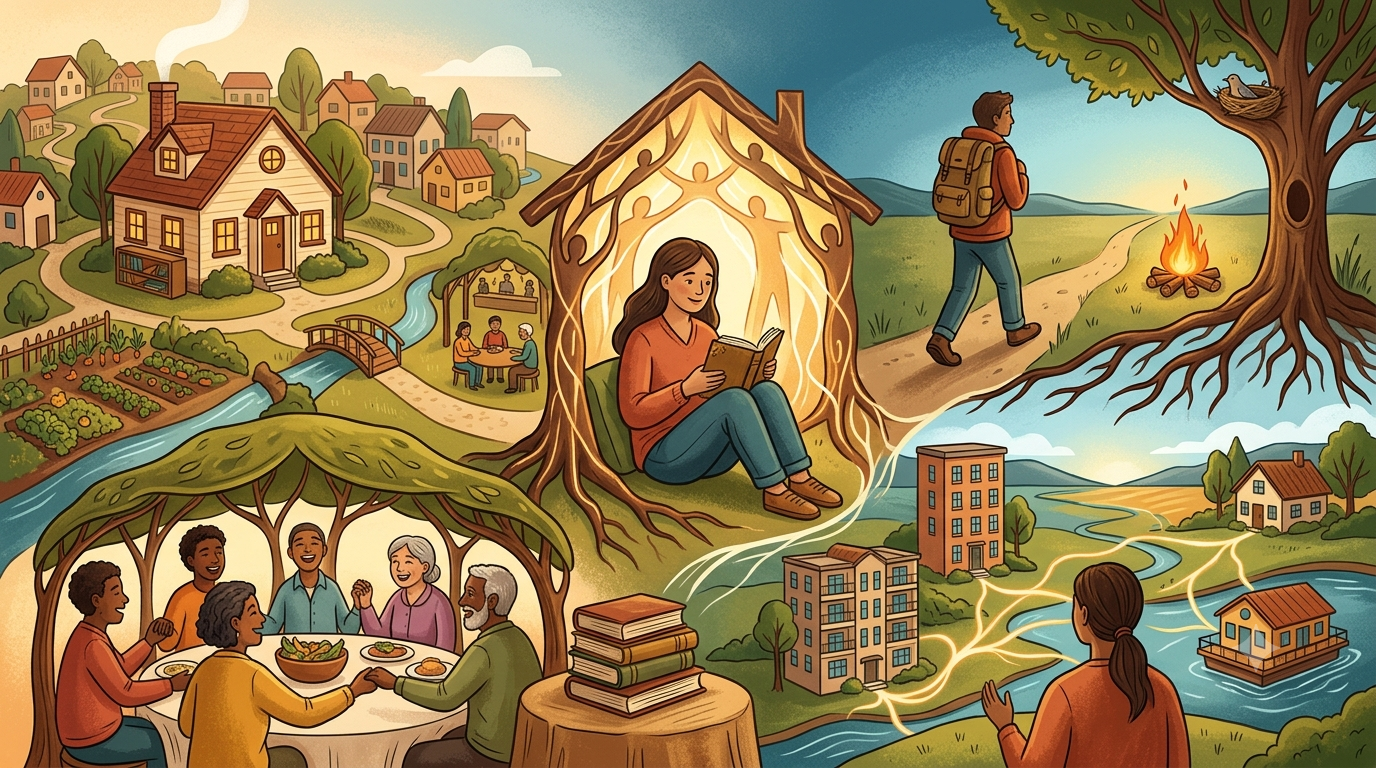
Understanding Home: Exploring Identity Through Literature
Home often transcends mere bricks and mortar; it embodies emotions like safety, memories, and a sense of self. For many, home signifies a connection to family, community, culture, or a person who provides acceptance. The pursuit of belonging stands as a deeply universal human endeavor. Individuals frequently spend years seeking where they fit in, what forms their identity, and what transforms a location into a true home. Literature uniquely delves into these feelings, portraying characters who depart from places, seek approval, reconstruct their lives, or uncover the reality that belonging is not necessarily bound to a geographical location.
Books Exploring the Concept of Home
The Namesake by Jhumpa Lahiri
The Namesake by Jhumpa Lahiri delves into the intricate ties between identity, family, and cultural belonging. This novel follows Gogol Ganguli, the American-born son of Indian immigrants, as he grapples with his name, heritage, and his position within two cultures. Gogol’s experiences highlight how home can exist amid differing worlds. His journey illustrates the challenges of balancing family expectations with personal wishes, ultimately conveying that belonging involves embracing all facets of one’s identity.
A Man Called Ove by Fredrik Backman
A Man Called Ove narrates the tale of a solitary man who believes his purpose has ended following personal tragedy. Nonetheless, unexpected bonds with his neighbours gradually reshape his notions of connection and belonging. Ove’s character demonstrates that home encompasses more than just physical surroundings; it includes the people we hold dear. The relationships he cultivates remind him that, even following loss, warmth, care, and community persist. This narrative explores how human connections can alleviate loneliness and foster belonging.
The House on Mango Street by Sandra Cisneros
The House on Mango Street, authored by Sandra Cisneros, traces the life of Esperanza Cordero, a young girl dreaming of a place to truly call her own while growing up in a modest neighbourhood. Through impactful short stories, the narrative investigates themes of identity, culture, gender, and the essence of home. Esperanza’s ties to her environment illustrate how physical spaces shape our memories and evolve our identities. The novel conveys that while home may not be flawless, it is integral to our individual stories and can motivate us to aspire to a better future.
The Joy Luck Club by Amy Tan
Amy Tan’s The Joy Luck Club examines the bonds between immigrant mothers and their daughters, highlighting their navigation through cultural disparities, familial history, and identity. The story reveals how belonging is influenced by the legacy of experiences spanning generations. Characters often struggle to understand one another due to their diverse backgrounds but ultimately realise the significance of their common narratives. The novel indicates that home is often constructed through memories, traditions, and emotional ties transmitted within families.
The Little Prince by Antoine de Saint-Exupéry
Although The Little Prince may appear as a children’s tale, it contemplates profound themes surrounding love, relationships, and what infuses a place with meaning. Through the Little Prince’s journey across various planets, the narrative conveys that belonging originates from the connections we forge and the people we cherish. His relationship with his rose underscores that love and responsibility bring depth to our existence—reminding readers that home may not simply represent a location but where our hearts feel a connection.
Pachinko by Min Jin Lee
Pachinko by Min Jin Lee follows several generations of a Korean family in Japan, exploring migration, identity, discrimination, and survival. The characters confront the complexities of feeling like outsiders while striving to establish themselves in an unfriendly environment. Their experiences illustrate that belonging can be intricate when individuals find themselves caught between diverse cultures and histories. The book demonstrates that home is frequently something crafted through resilience, familial bonds, and shared journeys.
Where the Crawdads Sing by Delia Owens
Where the Crawdads Sing presents Kya Clark, a young woman raised in isolation within North Carolina’s marshlands. Abandoned by society, she discovers belonging through her relationship with nature. Kya’s narrative examines the effects of social connection versus a bond with the natural world, revealing humanity’s intrinsic need for acceptance and understanding. This story teaches that belonging can flourish in unanticipated contexts and that a sense of home begins with self-acceptance.
These literary works demonstrate that home is not merely a destination to return to but is often something shaped by relationships, memories, and individual acceptance. The quest for belonging is an inherent aspect of the human experience. Through familial ties, friendships, cultural connections, or personal identity, these narratives underscore the universal search for a place where individuals feel valued and genuinely at home.