


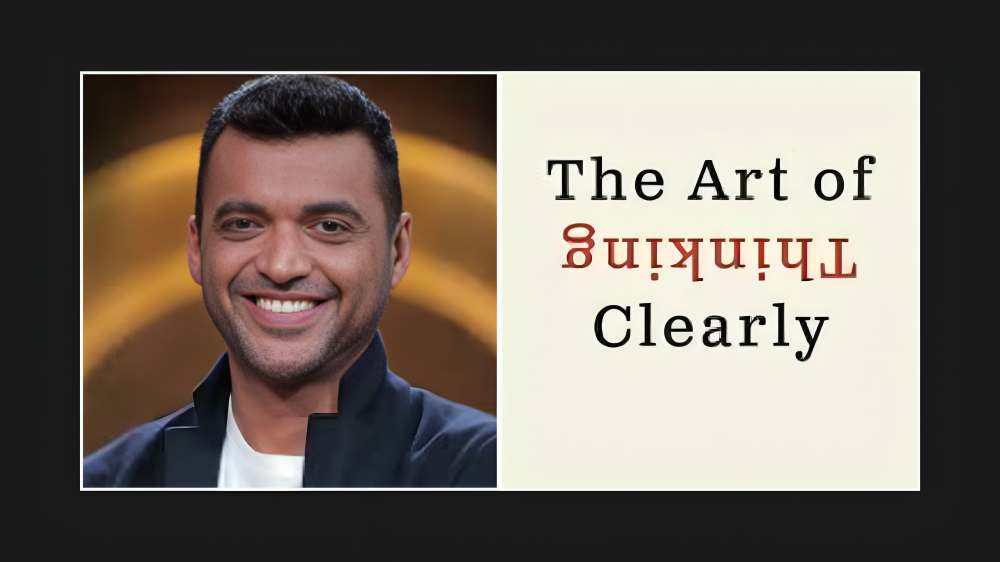
In the dynamic arena of entrepreneurship, where choices are made almost instantaneously, the capacity for clear thinking distinguishes successful leaders. Deepinder Goyal, the CEO and co-founder of Zomato—a leading global platform for restaurant discovery and food delivery—embodies this distinction. His leadership approach, anchored in data-driven decision-making and innovation, has enabled Zomato to navigate challenges and achieve impressive growth.
Concerning his mental clarity, Goyal credits a specific book that has profoundly influenced his thinking and is among the most frequently gifted items in his possession. In a recent podcast with TRS Clips Hindi, Goyal shared that his top recommendation is The Art of Thinking Clearly by Rolf Dobelli. This insightful book delves into the biases, logical fallacies, and cognitive errors that can cloud our judgment, providing readers with practical strategies for more rational thought processes.
Goyal’s appreciation for this book highlights his commitment to thoughtful, analytical decision-making. Let’s explore why The Art of Thinking Clearly is his most gifted title and how its principles can empower everyone to make more informed choices.
Why The Art of Thinking Clearly?
Rolf Dobelli’s The Art of Thinking Clearly serves as an essential resource for identifying and avoiding the common cognitive biases that can distort our decision-making process. Comprising 99 concise chapters, each focusing on a particular bias or mental shortcut that often leads us astray, this book is invaluable for anyone in a leadership role.
Deepinder Goyal frequently emphasizes how the book’s concepts have influenced his thinking. It has refined his decision-making practices and aided him in navigating the complexities of managing a global enterprise. By comprehending how cognitive biases such as confirmation bias, anchoring, and the availability heuristic impact judgment, Goyal has sharpened his strategic thinking and made more objective decisions, particularly crucial for leading a rapidly expanding tech company like Zomato.
For instance, Goyal underscores the necessity of separating personal emotions from business decisions. This perspective is strongly influenced by the book’s discussion on the affect heuristic, which elucidates how emotions can impair our judgment. Recognising this has empowered Goyal to make more rational, data-informed decisions that drive Zomato’s growth trajectory.
Lessons from The Art of Thinking Clearly for Entrepreneurs
The book is replete with insights that entrepreneurs and leaders can incorporate into their decision-making frameworks. Key lessons that echo Deepinder Goyal’s approach to leadership include:
Recognising Cognitive Biases
A fundamental lesson from the book is the ability to identify cognitive biases in our thinking. Entrepreneurs regularly face critical decisions, and these biases can negatively affect those choices. Examples include:
– Overconfidence bias leading to risky investments
– Sunk cost fallacy prompting continued investment in failing projects
Recognising these biases is essential. Goyal’s capacity for swift yet informed decisions is likely rooted in his awareness of these cognitive pitfalls.
The Importance of Objective Thinking
Dobelli stresses the necessity of clear, objective thinking. For leaders like Deepinder Goyal, whose role demands clarity and strategic insight, this lesson is paramount. He often articulates the significance of maintaining a long-term vision as opposed to succumbing to short-term rewards. Insights regarding the planning fallacy and hindsight bias assist in avoiding the traps of excessive optimism or second-guessing previously made decisions.
Avoiding Groupthink
As an entrepreneur, Goyal has encountered instances when the pressure for consensus within a team could have compromised crucial decisions. The Art of Thinking Clearly sheds light on the hazards of groupthink, where teams may opt for decisions aligned with majority opinion instead of pursuing rational, independent thought. Goyal’s dedication to fostering independent thinking at Zomato is likely influenced by this critical lesson.
Learning from Mistakes
Dobelli also discusses the halo effect, which can lead to an overly positive view of individuals or ideas based on initial impressions. Entrepreneurs, particularly in high-pressure scenarios, must recognize when they are being swayed by first impressions and adjust accordingly. For Goyal, learning from both successes and failures has been vital in propelling Zomato to its current standing.
How Deepinder Goyal Lives by the Book’s Principles
Deepinder Goyal’s leadership style exemplifies the lessons he has absorbed from literature such as The Art of Thinking Clearly. He has successfully maintained Zomato’s focus on delivering value to customers while continually adapting to market dynamics. In interviews, Goyal has articulated how rational thinking helps him cut through distractions, allowing him to concentrate on what genuinely matters for the company.
Moreover, Goyal’s strategy in developing Zomato is anchored in learning from both setbacks and achievements. For instance, during Zomato’s expansion into international markets, he adopted a clear approach, steering clear of typical pitfalls such as overexpansion or poor management. He prioritized understanding each market’s specific needs, relying on data and objective analysis rather than instinctive feelings or biases.
Additionally, the principles derived from The Art of Thinking Clearly are evident throughout Zomato’s product development cycle. The company’s agility in pivoting and iterating its services—from restaurant discovery to food delivery and table reservations—reflects a strong commitment to making clear, informed decisions.
The Influence of The Art of Thinking Clearly on His Leadership
Goyal’s admiration for this book speaks volumes, revealing its critical role in shaping Zomato’s decision-making framework. In an environment overwhelmed with information and competing interests, the ability to think clearly and avoid cognitive traps is invaluable. Goyal’s focus on rational decision-making and analytical strategies closely aligns with the guidance Dobelli provides in his book.
By gifting this book to fellow colleagues and peers, Goyal shares the tools that have contributed to his achievements. This gesture reflects his leadership philosophy of empowering others to think critically, make well-informed decisions, and circumvent mental shortcuts that can obscure judgment.
Deepinder Goyal’s preferred and most frequently gifted book, The Art of Thinking Clearly by Rolf Dobelli, transcends mere personal preference; it serves as an essential tool for entrepreneurs and leaders alike. In today’s rapid-paced landscape, the ability to think clearly and objectively is crucial for making informed decisions that shape the future.
[ad_1]