


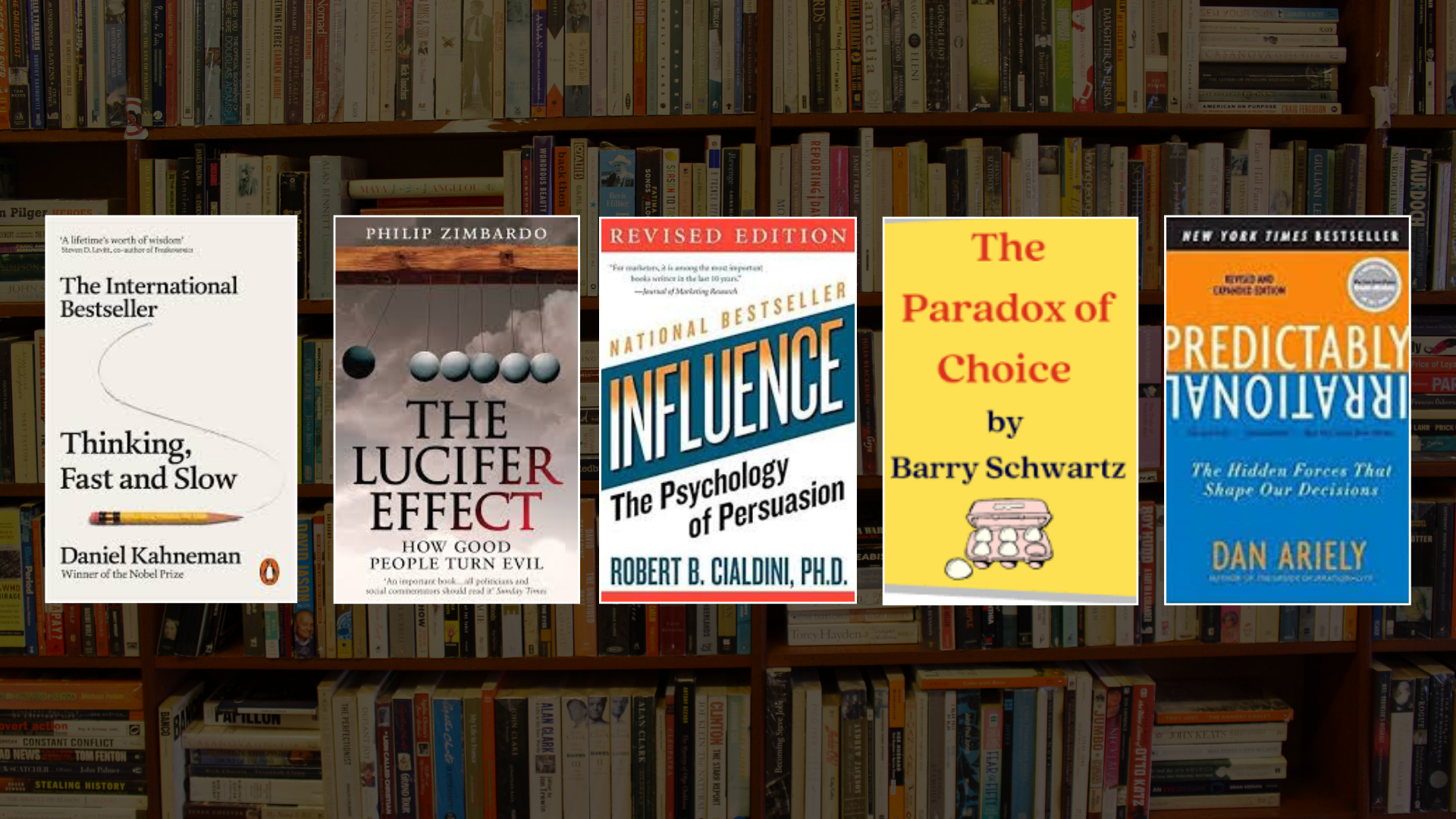
Understanding Human Behaviour Through Five Must-Read Psychology Books
Understanding human behaviour reveals a complex interplay of thoughts, emotions, and actions shaped by influences we often overlook. From cognitive biases that guide our choices to the subconscious drivers behind our conduct, the mind presents a captivating puzzle. But what if there was a way to clarify these hidden aspects? What if one could comprehend why individuals act as they do, while also gaining insights into their personal thought processes? This is precisely the purpose of psychology books. These texts are not merely academic; they are engaging works that disclose the unseen dynamics that govern human nature. They challenge our preconceived notions and unveil the unexpected—sometimes uneasy—truths about the mind. For those aiming to enhance their understanding of human behaviour, improve decision-making abilities, or perceive the world through a different lens, the following five enlightening books promise to transform perceptions of self and others.
Five Books to Understand Human Behaviour
1. Thinking, Fast and Slow – Daniel Kahneman
Nobel Prize winner Daniel Kahneman invites readers to explore the two distinct systems that drive human thought:
- System 1: Quick, instinctive, and emotional
- System 2: Slow, thoughtful, and rational
This book highlights the cognitive biases that can result in poor decisions in various spheres of life, including business and relationships. It demonstrates how the brain often relies on shortcuts rather than logical analysis, frequently leading to flawed judgments.
Key insight: People frequently rely on their instincts, but those instincts can be misleading.
Best for: Individuals aiming to enhance their decision-making skills and gain awareness of the influence of biases.
2. The Lucifer Effect – Philip Zimbardo
What drives ordinary people to engage in terrible acts? In this unsettling book, Philip Zimbardo, who is known for the notorious Stanford Prison Experiment, investigates the roots of evil. By examining historical events and social experiments, Zimbardo reveals how situational factors and group dynamics can transform even the most virtuous people into culprits of cruelty.
Key insight: Evil is not an inherent trait but rather a product of circumstances and societal influence.
Best for: Those curious about human morality, social influence, and strategies to resist unethical pressures.
3. Influence: The Psychology of Persuasion – Robert Cialdini
Have you ever pondered why you purchase unnecessary products or comply with requests you would prefer to decline? In this foundational book, Robert Cialdini elucidates the six psychological principles of persuasion:
- Reciprocity – The tendency to feel obligated to return favours.
- Commitment & consistency – The inclination to stick with prior commitments.
- Social proof – The tendency to mimic the behaviour of others.
- Authority – An inclination to trust experts and authoritative figures.
- Liking – Being influenced by individuals we feel positively about.
- Scarcity – The desire for what is limited or exclusive.
These strategies are frequently employed by marketers, politicians, and salespeople to sway decisions, often without individuals even recognising it.
Key insight: The most effective way to guard against manipulation is to understand the mechanics of persuasion.
Best for: Anyone interested in avoiding manipulation or enhancing their communication skills.
4. The Paradox of Choice – Barry Schwartz
Many people operate under the belief that having more choices equates to increased freedom. However, Barry Schwartz argues that an abundance of options often leads to stress, decision paralysis, and dissatisfaction. In a world overflowing with selections—from professions to online dating options—individuals frequently find themselves struggling to make choices and regretting them thereafter.
Key insight: In some instances, having fewer options can lead to enhanced happiness and tranquillity.
Best for: Those wrestling with overthinking or anxiety related to decision-making.
5. Predictably Irrational – Dan Ariely
What causes individuals to pay extra for “free” offerings, succumb to brand marketing, or value items more after purchasing them? Behavioural economist Dan Ariely exposes the illogical aspects of human decision-making, highlighting how emotions, social norms, and subconscious biases can unduly shape choices, often in illogical ways. From pricing psychology to attraction dynamics and the influence of expectations, this book provides an entertaining yet enlightening exploration of why humans rarely act as rationally as they believe.
Key insight: Decisions are frequently influenced by factors of which we remain completely unaware.
Best for: Anyone intrigued by consumer psychology and the understanding of irrational behaviours.