


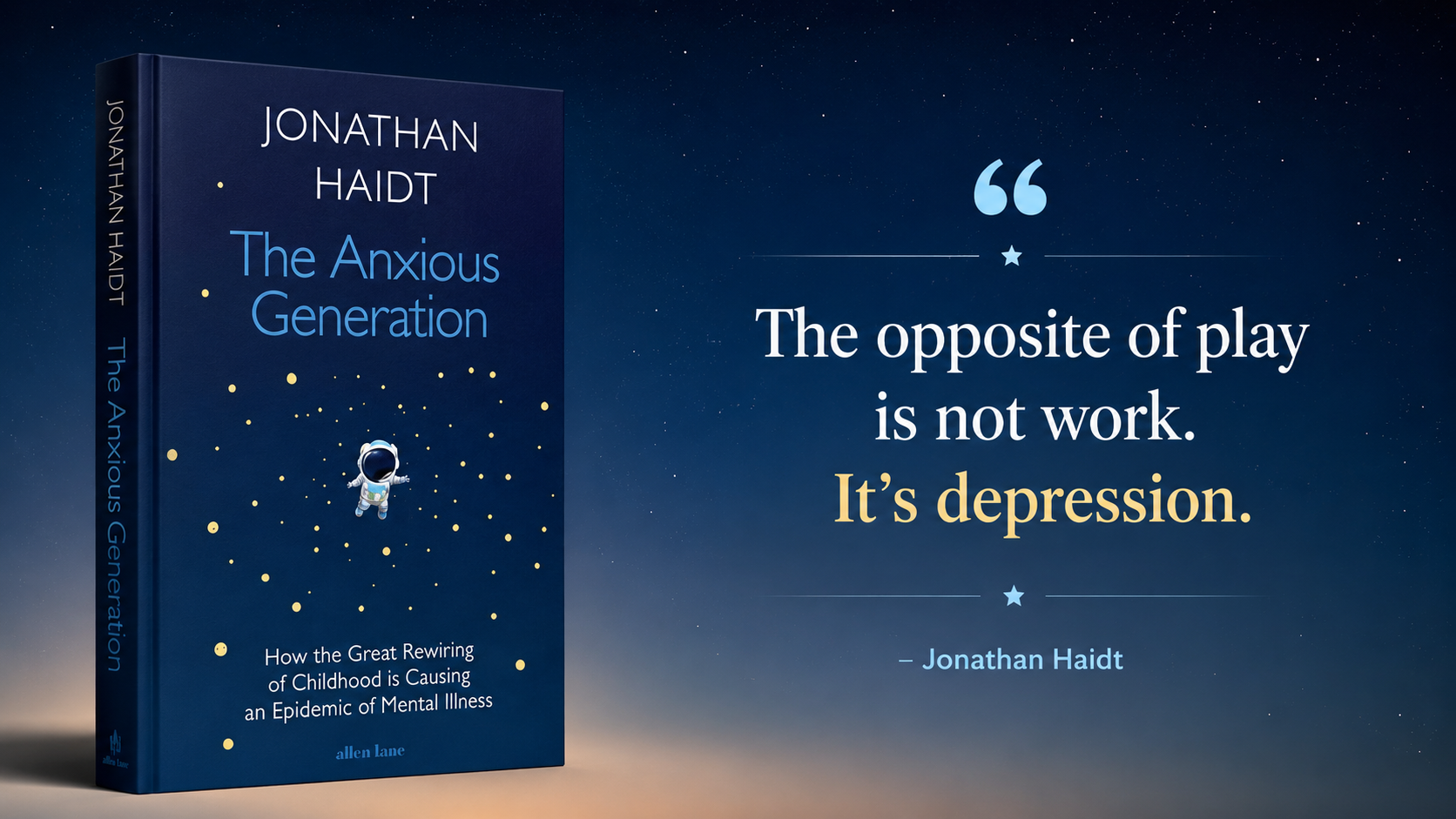
The Anxious Generation: Understanding Mental Health in Modern Youth
The Anxious Generation delves into the changes in childhood influenced by technology, specifically smartphones and social media. Social psychologist Jonathan Haidt discusses how these transformations have affected mental health among young people. As social media became integrated into daily life, anxieties, depression, loneliness, and self-harm rates increased, prompting important discussions among various stakeholders including parents, educators, and policy makers.
5 Powerful Lessons from The Anxious Generation
1. Childhood needs real-world experiences
Haidt strongly believes that crucial life skills are learned through genuine, real-world interactions. Engaging in activities such as playing outdoors and resolving conflicts with peers fosters confidence and emotional resilience. The book indicates a significant decline in these opportunities, as childhood has shifted towards increased supervision and structured environments. This limitation has deprived many young people of essential experiences that contribute to their emotional wellbeing.
2. Smartphones have changed childhood dramatically
The adoption of smartphones led to a monumental change in childhood dynamics beginning in the early 2010s. Rather than interacting face-to-face, many young people turned to online platforms for entertainment and socialisation. Haidt asserts that this has given rise to a “phone-based childhood,” which has largely displaced traditional experiences crucial for social and emotional development.
3. Mental health is shaped by more than individual choices
A vital lesson from Haidt’s work is that mental health trends are often products of broader societal influences. The increasing rates of anxiety, depression, and loneliness among adolescents cannot solely be attributed to personal choices. Instead, Haidt highlights the impact of cultural shifts and technological advancements that collectively affect entire generations. This prompts a deeper examination of how societal systems and norms influence mental health.
4. Connection is more powerful than constant connectivity
While modern technology provides instant communication, many young individuals report feelings of loneliness. Haidt emphasises that digital interactions cannot substitute for face-to-face relationships. He argues that real-life conversations, shared experiences, and authentic communities are critical for emotional health. Meaningful human connections form a cornerstone for overall wellbeing and happiness.
5. Solving modern problems requires collective action
One of the most actionable insights from the book is that families often find it challenging to tackle these issues in isolation. Parents may wish to limit smartphone usage or delay social media exposure, but they often fear their children will miss out if other youngsters are engaged. Haidt posits that substantial change necessitates collective efforts from parents, schools, communities, technology firms, and governments. By joining forces to establish healthier norms regarding childhood and technology, societies can cultivate environments that better support young people’s growth.
Why this book resonates with so many readers
The Anxious Generation resonates widely as it confronts a pressing question: why are numerous young people facing difficulties despite having unprecedented access to technology and information? Haidt provides a thoughtful examination of how childhood has evolved and what these transitions may imply for mental health. The book invites readers to engage in critical conversations about how society can assist the next generation in becoming healthier and more resilient.
@media (max-width: 769px) {
.thumbnailWrapper{
width:6.62rem !important;
}
.alsoReadTitleImage{
min-width: 81px !important;
min-height: 81px !important;
}
.alsoReadMainTitleText{
font-size: 14px !important;
line-height: 20px !important;
}
.alsoReadHeadText{
font-size: 24px !important;
line-height: 20px !important;
}
}
Also Read
Emotional burnout: 7 quiet warning signs to watch out for