


Executives often find themselves immersed in the dynamic environment of meetings, deadlines, and strategic planning in an age that demands continuous innovation, flexibility, and decisive action. In the midst of this relentless pace, it is easy to neglect a crucial element of growth—ongoing education. While boardroom experiences shape leadership capabilities, books frequently offer the insights and clarity required to navigate complexities adeptly.
Consider the most influential leaders in the world, such as Bill Gates, Warren Buffett, and Indra Nooyi. Many attribute a significant part of their success to a strong passion for reading. Books provide a unique advantage that no meeting or webinar can replicate—perspective. They condense decades of knowledge, research, and experiences into digestible pages that can be consumed over a weekend.
As we approach 2025, characterised by rapid technological progress and shifting global dynamics, specific books emerge as essential resources for executives. These are not merely texts to glance over; they serve as guides for mastering leadership, fostering innovation, and promoting personal development. Whether you are an experienced C-suite executive, an entrepreneur scaling your enterprise, or an aspiring leader, these five enduring reads will equip you with lessons that span various industries and eras.
Explore these titles to understand why they should find a place on your bedside table, at your workspace, or even in your luggage for travel.
Five Books Offering Timeless Wisdom for 2025
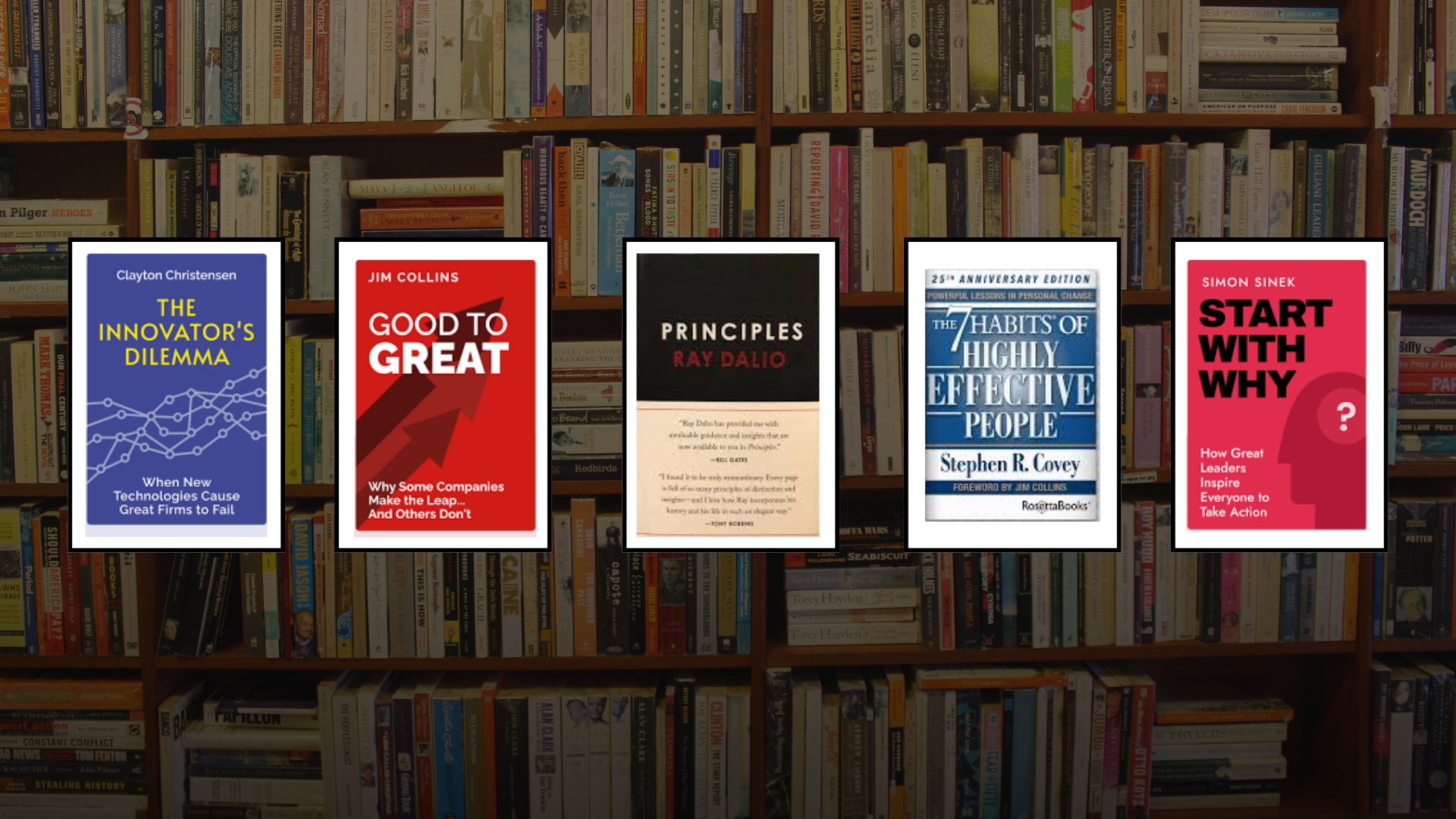
1. The Innovator’s Dilemma by Clayton M. Christensen
This essential read is crucial for any executive navigating the challenges of disruptive innovation. Christensen investigates why previously successful companies often falter when confronted with revolutionary technology and provides actionable strategies to maintain a competitive edge.
Why it’s relevant in 2025:
As industries increasingly adopt AI, automation, and innovative business models, grasping how to innovate while preserving core competencies is essential.
2. Good to Great by Jim Collins
Collins examines the factors that set exceptional companies apart from merely adequate ones. Grounded in extensive research, this book underscores essential principles such as disciplined leadership, a culture of excellence, and assembling the right team.
Why it’s relevant in 2025:
In a time when organisations aim to establish lasting legacies, this guide acts as a framework for evolving businesses into enduring institutions.
3. Principles: Life and Work by Ray Dalio
Ray Dalio, the founder of Bridgewater Associates, reveals the life and business principles that have steered him through triumphs and setbacks. The book combines personal stories with practical frameworks for making decisions and addressing challenges.
Why it’s relevant in 2025:
In an increasingly uncertain global economy, Dalio’s principles create a strong base for making considered and effective choices under duress.
4. The 7 Habits of Highly Effective People by Stephen R. Covey
A classic in personal development, Covey’s book emphasises building character and adopting habits that nurture meaningful relationships and sustained productivity.
Why it’s relevant in 2025:
In a fast-moving world rife with distractions, this book provides a blueprint to regain focus, prioritise efficiently, and lead with integrity.
5. Start with Why by Simon Sinek
Sinek’s pioneering work examines why certain leaders and organisations can inspire while others do not. By emphasising the significance of purpose, Sinek guides readers in constructing a loyal following and motivating action.
Why it’s relevant in 2025:
As employees and customers increasingly align with brands that reflect their values, understanding and articulating your “why” has never been more important.
[ad_1]