


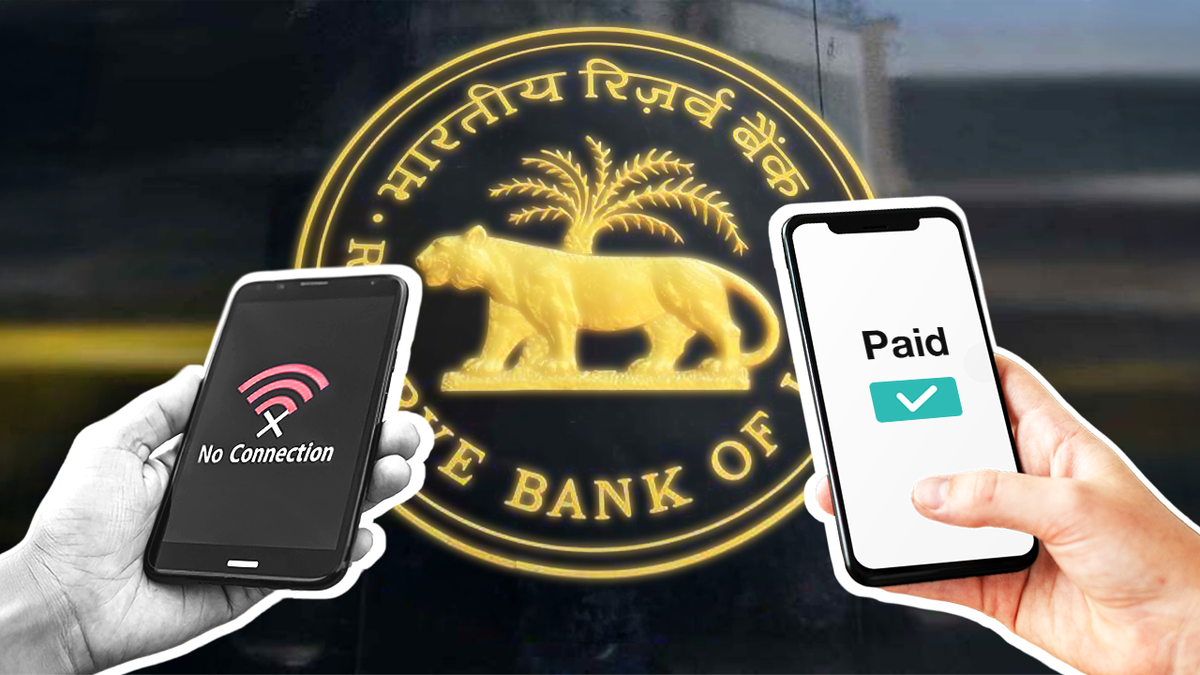
Offline Digital Rupee represents a significant advancement in India’s digital payments landscape, as the Reserve Bank of India (RBI) introduces a pioneering solution allowing transactions without internet or telecom services. This innovation enables users to conduct payments via a simple tap or QR code, effectively integrating digital currency seamlessly into everyday life, much like physical cash. Unveiled at the Global Fintech Fest (GFF) 2025 in Mumbai, this initiative marks a landmark achievement in the RBI’s Central Bank Digital Currency (CBDC) journey, placing India among the first nations to activate an offline version of a CBDC.
Cash, but Digital: India’s Programmable CBDC Becomes Truly Offline
The initiative is branded under the tagline “Cash, but Digital!” and has been developed in collaboration with HDFC Bank, an essential partner in the RBI’s pilot initiative. Visual demonstrations presented at the event illustrated practical applications, such as making tea purchases in the Himalayas or buying goods in rural markets without any connectivity. This rollout is part of the RBI’s Programmable Central Bank Digital Currency (PCBDC) initiative, which supports offline transactions and introduces programmability, enabling specific restrictions or conditions on digital rupees for targeted schemes, subsidies, and corporate payouts.
How It Works: Tap, Transact, and Go
Unlike UPI, which necessitates an active internet connection and routing through banking servers, Offline Digital Rupee transactions take place directly between two digital wallets utilizing near-field communication (NFC) or alternative secure proximity technologies. The payment process is seamless: users simply tap their devices together, and the value is transferred from one wallet to another, even in areas where connectivity is limited or non-existent. The RBI promotes this as an instantaneous cash-equivalent settlement, finalised, and directly supported by the central bank. Each transaction happens in digital rupee denominations, with change automatically calculated in the wallet, replicating the experience of using physical cash.
Faster, Cheaper, and Connection-less
The RBI, along with participating banks, has conveyed that the offline CBDC will not only be more economical but also quicker than UPI. This is achievable as it bypasses intermediary processes, payment gateways, and network dependencies. While UPI transformed online transactions, the offline digital rupee is set to push this transformation further into the realm of payments devoid of connectivity.
The offline feature facilitates both Person-to-Person (P2P) transfers and Person-to-Merchant (P2M) payments, ensuring compatibility with existing UPI QR infrastructures. A senior banker, speaking on the condition of anonymity, remarked that this is not just a mere technological upgrade; it represents a fundamental change in the way money can be transferred in both connected and unconnected regions of India. As India continues to establish global standards in digital finance, the Offline Digital Rupee has the potential to motivate central banks across the globe to reconsider the future of sovereign digital currencies.