


Swiggy Instamart: Growth and Challenges in Quick Commerce
Swiggy Instamart has been witnessing rapid growth in both order volumes and user numbers, even though achieving profitability remains a challenge for the quick commerce sector. In the quarter ending December 2025, Instamart managed to process 106.4 million orders from 12.8 million users, with an average order value (AOV) standing at Rs 746. The company maintained 1,136 active dark stores throughout this period.
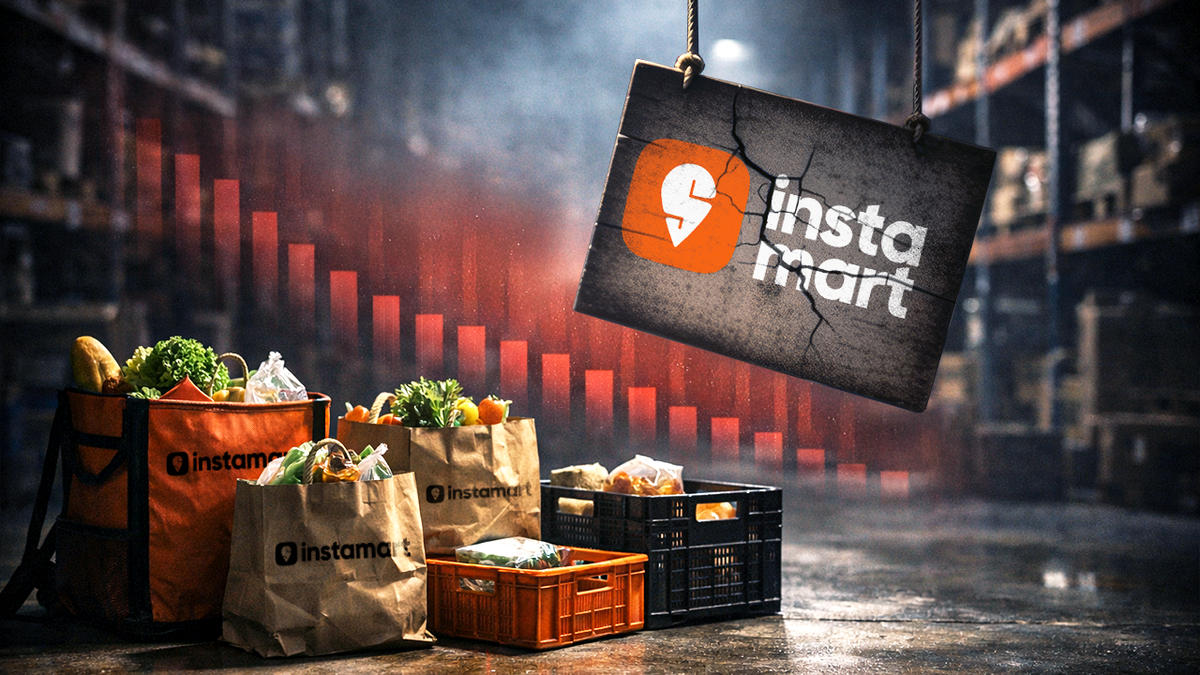
Despite this growth, the costs have considerably impacted financial outcomes. Instamart reported a staggering loss of Rs 908 crore for the quarter, making it Swiggy’s largest loss-making segment. Even though the quarterly revenue surpassed Rs 1,000 crore (Rs 7,938 crore GOV), the losses increased due to significant expenditure on dark store operations, warehousing rentals, last-mile delivery, inventory management, and customer incentives.
Over a nine-month period, Instamart generated Rs 2,802 crore in revenue while the losses escalated to Rs 2,327 crore. Despite an increase in order volumes and a rise in AOV, quick commerce orders, which are fulfillment-heavy, continue to find it challenging to manage high fixed and variable costs linked to the commitment of sub-30-minute deliveries.
Contrast with Swiggy’s Food Delivery Business
The differences between Instamart and Swiggy’s core food delivery business are stark. The food delivery segment showed positive results during the quarter, enhancing unit economics within a more mature and asset-light framework.
Comparison with Blinkit
A comparison with Blinkit, owned by Zomato, further accentuates the disparities within quick commerce. Blinkit achieved EBITDA-level profitability in Q3 FY26, supported by better control over store density, increased throughput per dark store, and a more streamlined approach to discounts and incentives. During Q3, Blinkit reported a GOV of Rs 12,256 crore. Although Blinkit’s profitability is still in its nascent stages, it hints that focused expansion and improved operational efficiency are vital for enhancing quick commerce economics.
For Swiggy, the wider losses from Instamart imply that mere scaling may not yield immediate profitability. As competition intensifies and capital needs continue to be elevated, quick commerce remains a growth factor, though it has not yet evolved into a reliable profit generator.
As of December 31, 2025, Swiggy held cash and cash equivalents amounting to Rs 13,512 crore, which included Rs 9,931 crore derived from net QIP proceeds. Additionally, the company raised around Rs 2,400 crore from selling its share in Rapido, enhancing its proforma cash balance to approximately Rs 15,900 crore.