


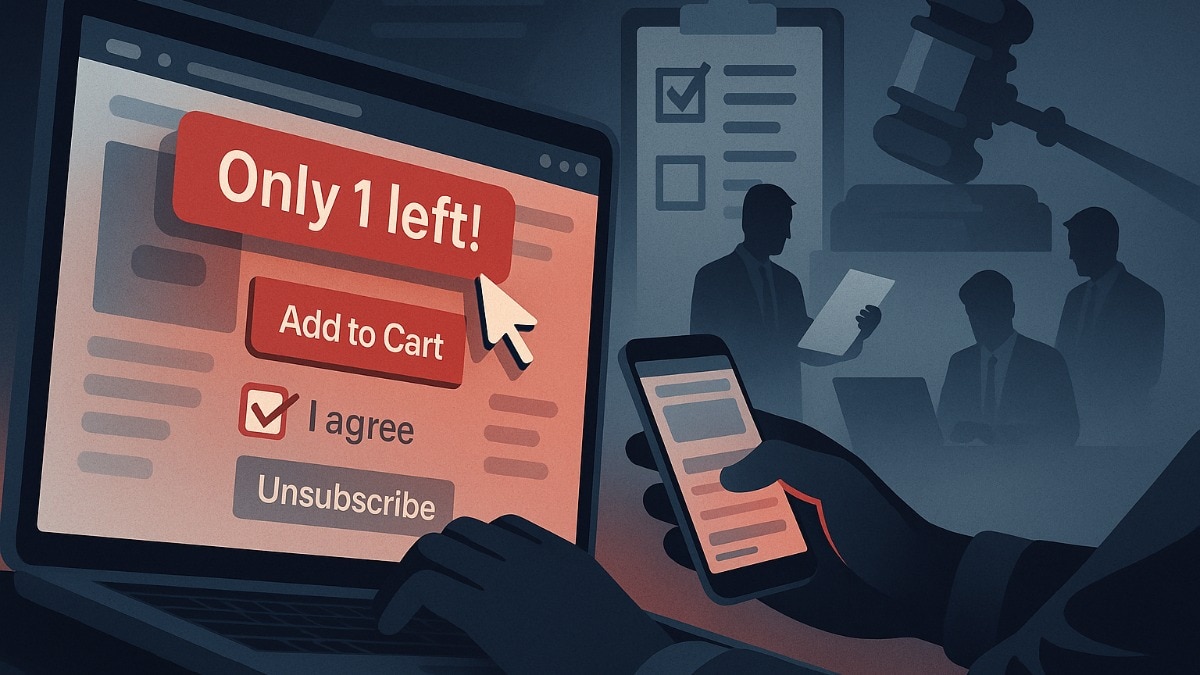
The Union Ministry of Consumer Affairs is taking significant measures against dark patterns, which are deceptive design strategies used by e-commerce platforms. To enhance consumer protection, the Ministry has mandated annual internal audits for e-commerce companies to identify and eliminate these manipulative user interface and user experience practices. Such tactics often mislead users into making unintended choices, like unwanted purchases or the unintentional sharing of personal information.
New Compliance Strategy and Joint Committee
The directives were announced during a high-level meeting with stakeholders in New Delhi on May 28, led by Union Minister for Consumer Affairs, Pralhad Joshi. The discussion included over 50 participants from major digital firms including Amazon, Flipkart, Apple, Google, Meta, Swiggy, Zomato, Paytm, WhatsApp, and MakeMyTrip, along with industry associations like NASSCOM, FICCI, CAIT, and various consumer organisations.
Under the new compliance strategy, these platforms are now required to perform annual internal audits and report their findings to the Department of Consumer Affairs (DoCA). The documentation must detail how dark patterns are being addressed and how user interfaces are being modified to respect consumer autonomy.
A joint working committee consisting of government officials, representatives from digital platforms, and consumer rights advocates will be formed to oversee adherence to these guidelines and review audit outcomes. Joshi stated that companies have been instructed to submit annual reports to the ministry, outlining the adjustments made to eliminate misleading interfaces that impede consumer autonomy and lead to unintended choices. These companies have also committed to conducting the necessary audits.
Expanding Accountability to Third-Party Sellers and Ride-Hailing Services
The newly revised guidelines will also apply accountability to third-party sellers operating on these platforms. Joshi remarked that platforms must ensure that no third-party merchants use dark patterns that may trap consumers.
This initiative follows a notice issued by the Central Consumer Protection Authority (CCPA) to Uber concerning its “advance tip” option, which reportedly pressured users to provide a gratuity upfront for quicker rides. The investigation has since been broadened to include Ola and Rapido. Joshi noted that tips should be given as a gesture of appreciation, not as an obligation.
Since the introduction of dark pattern guidelines in November 2023, the CCPA has issued 11 formal notices to various companies operating in sectors such as pharmaceuticals, ticketing, and ride-hailing.
Understanding Dark Patterns
Dark patterns are manipulative UX/UI tactics designed to sway users into making decisions they would not otherwise make. The guidelines classify 13 specific practices as violations of consumer rights according to the Consumer Protection Act. Examples of these tactics include:
- False urgency: Generating artificial time constraints.
- Basket sneaking: Adding items to a shopping cart without consent at checkout.
- Subscription traps: Complicating the cancellation of services.
- Confirm shaming: Guilt-inducing users into agreeing.
- Trick-to-click: Concealing ads or options to mislead users.
A report from the Advertising Standards Council of India (ASCI) in 2024 highlighted that 52 out of the top 53 most-downloaded apps in India employed at least one dark pattern, indicating the widespread nature of the issue.
Digital Tools and Heightened Public Awareness
To facilitate strict enforcement of the guidelines, the government has launched three new digital tools, developed in collaboration with IIT BHU during the 2023 Dark Patterns Buster Hackathon:
- Jagriti App: Enables consumers to report dark pattern occurrences.
- Jago Grahak Jago App: Provides real-time safety ratings for e-commerce platforms.
- Jagriti Dashboard: Offers regulators analytics and insights on consumer complaints and platform behaviour.
Nidhi Khare, Secretary of Consumer Affairs, mentioned a rise in complaints about dark patterns received through the National Consumer Helpline, noting that users are actively reporting misleading features. She stated that the time for platforms to respond is now.