


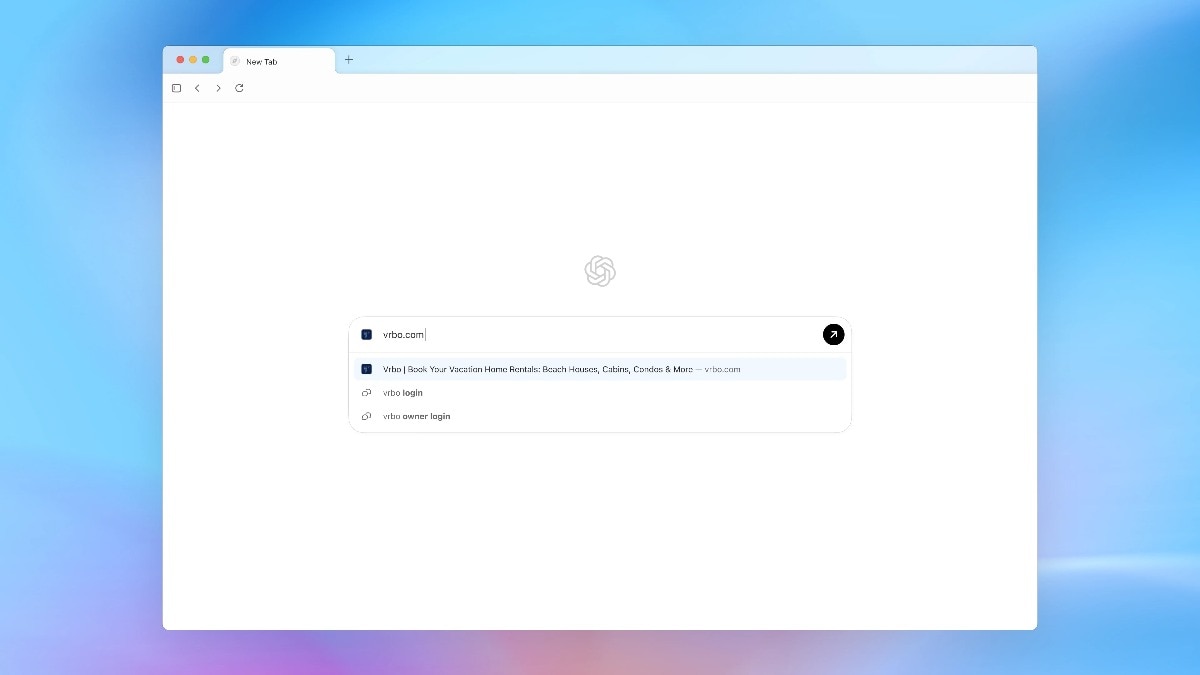
ChatGPT Atlas is the latest offering from OpenAI, designed to integrate its powerful AI assistant directly into the web browsing experience. This innovative browser transforms how users navigate the internet, enabling them to interact, research, and complete tasks through smooth conversations.
The launch of Atlas builds on OpenAI’s prior integration of web search capabilities within ChatGPT, a feature that quickly gained popularity on the platform. With Atlas, the AI evolves into a helpful digital companion that can assist users throughout their online activities, grasping user context and performing tasks seamlessly within the browser.
According to OpenAI, Atlas merges browsing, productivity, and artificial intelligence into a single cohesive experience. Users can initiate a tab, pose a question to ChatGPT, or enter a URL to receive results featuring search links, images, videos, and news.
Yogya Kalra, a college student and an early tester of ChatGPT Atlas, expressed how the tool enhances learning. Kalra noted that utilizing practice questions and real-life examples helps in grasping complex materials. Previously, switching between slides and ChatGPT was cumbersome, as it required taking screenshots simply to pose a question. Now, with ChatGPT’s ability to understand the context instantly, Kalra can significantly enhance knowledge retention.
Atlas also incorporates browser memories, enabling ChatGPT to retain context from previously accessed sites. This feature allows for more pertinent responses. For example, users can request the AI to summarise job listings they reviewed the previous week or compile research notes based on recent activities.
These memories are kept private and are optional, allowing users full control through their settings. They can manage what ChatGPT can access on particular sites, and turning off visibility safeguards against the AI reading page content or creating memories from it.
The browser’s Incognito mode also protects user privacy by temporarily logging them out of ChatGPT, ensuring that browsing and chat logs are not preserved.
Atlas enhances functionality with an upgraded agent mode, permitting ChatGPT to perform tasks on behalf of the user directly in the browser. This capability includes researching, event planning, filling forms, and even ordering groceries.
For instance, users can instruct ChatGPT to extract ingredients from a recipe, add them to a shopping cart, and proceed with the order through integrated shopping services. Businesses can benefit from this feature by automating competitive analysis or compiling team summaries.
OpenAI has stated that safety was a top priority during the development of these features. The agent mode is restricted from executing code, downloading files, or installing extensions, and it pauses when interacting with sensitive sites such as those related to finance. Users can also opt for a logged-out mode to limit data access further.
ChatGPT Atlas is currently accessible globally on macOS for Free, Plus, Pro, and Go users, and is in beta for Business accounts. Versions for Windows, iOS, and Android are expected to launch soon.
OpenAI indicated that its commitment to enhancing Atlas will continue, with future additions like multi-profile support, improved developer tools, and mechanisms for app developers to enhance visibility within the browser.
OpenAI articulated that this launch is a stride towards a future where a significant portion of web usage will occur through intelligent systems that automate routine tasks, allowing users to concentrate on creativity and important decision-making.