


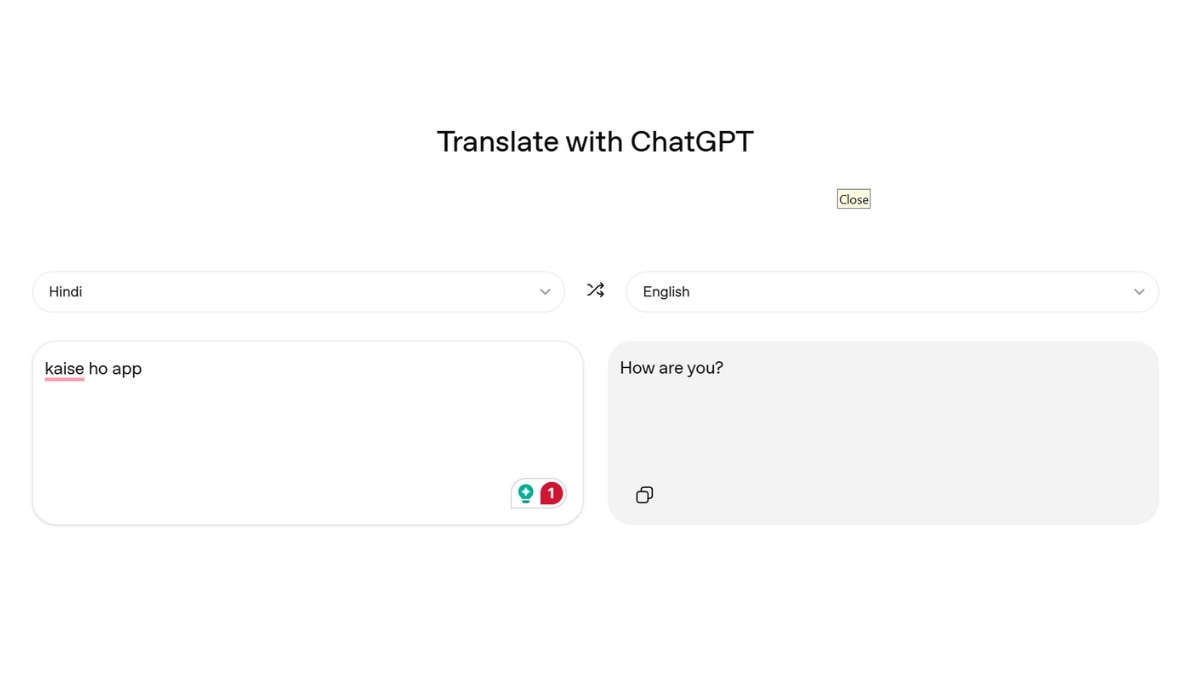
ChatGPT Translate: OpenAI’s New Web Translation Service
ChatGPT Translate has been launched by OpenAI as a standalone web service for translation, enhancing competition with Google Translate from Alphabet Inc. This marks the company’s latest effort to broaden its offerings beyond the signature chatbot interface.
Features of ChatGPT Translate
The new translation tool resembles the familiar dual-pane layout seen in Google Translate. It enables text, voice, and image translations in more than 50 languages, which also includes Indian languages like Hindi, Marathi, Tamil, and Telugu. Automatic language detection is incorporated, and users can adjust translations to reflect various tones such as business-formal, casual, and region-specific expressions.
Transition from ChatGPT’s Main Interface
Users previously depended on ChatGPT’s main chatbot for translations. With the introduction of a dedicated translation website, OpenAI aims to establish ChatGPT as a prime alternative to conventional consumer productivity tools.
Limitations Compared to Google Translate
In contrast to Google Translate, ChatGPT Translate is currently accessible only via web and requires a steady internet connection. This absence of a mobile app or offline option limits usability for individuals who need translation while on the move.
Google Translate’s Advantages
Google Translate is available across both web and mobile platforms, supports offline capabilities, and provides translation services in over 200 languages. While Google’s offering primarily focuses on quick and functional translation, it does not include the interactive tone-rewriting features OpenAI highlights as a unique selling point.
Google’s Response: TranslateGemma
The introduction of ChatGPT Translate comes during a period of growing competition in AI-driven language services. Shortly after OpenAI’s announcement, Google revealed TranslateGemma, a collection of open-source AI translation models aimed at facilitating quicker and more efficient deployment across various devices.
Technical Specifications of TranslateGemma
These models are built on Google’s latest Gemma 3 architecture and support translations in 55 languages. They are designed for compatibility with a range of devices, from smartphones to cloud servers.
Versions of TranslateGemma Models
TranslateGemma includes three different versions: a lightweight 4-billion-parameter model intended for mobile devices, a 12-billion-parameter version for consumer laptops, and a 27-billion-parameter model engineered for cloud servers and high-performance AI hardware, such as Nvidia’s H100 GPUs and Google’s TPUs.