


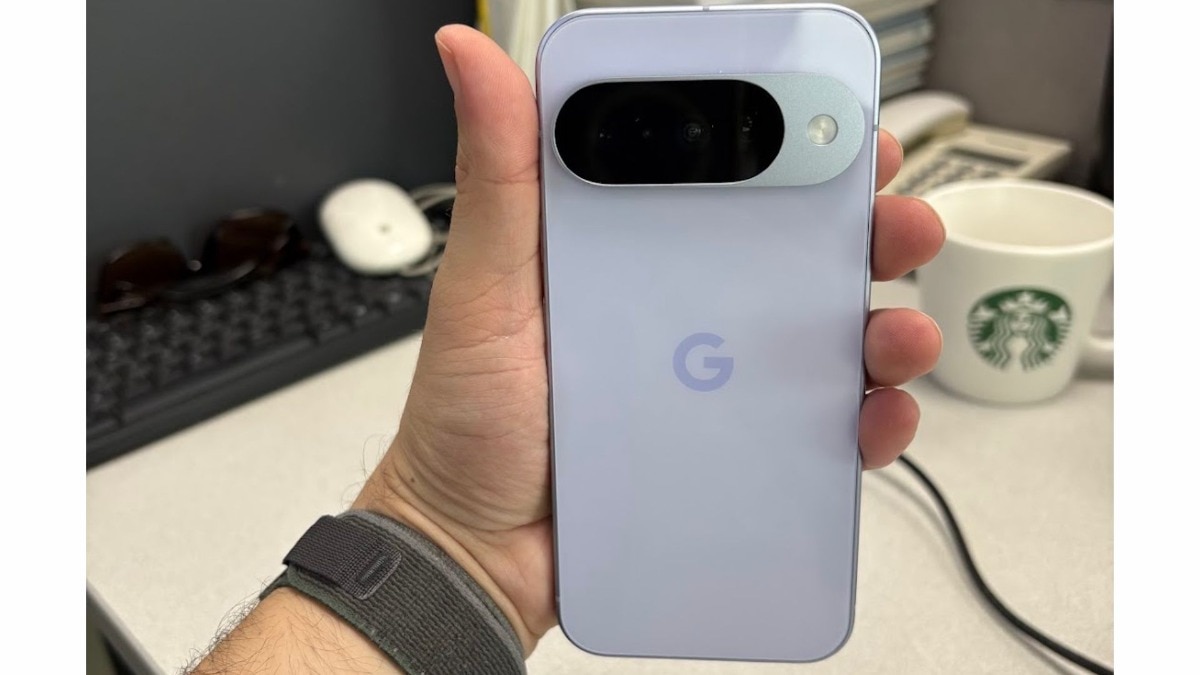
When Google launched the Pixel 10, a phone to commemorate a decade of its hardware innovation, there was a sense of cautious excitement. The AI capabilities were promising, the specifications appeared solid, and the design was… distinctly Pixel.
After several weeks of usage, it becomes clear that the Pixel 10 truly feels like a phone crafted with purpose. While it still faces some of the typical challenges, it recovers quickly this time, and occasionally leads the way.
Familiar Design, but Executed Well
Let’s discuss the design. Google hasn’t drastically changed its approach. The camera visor returns, a divisive feature, and the overall dimensions will seem instantly recognisable to anyone who has used a Pixel in recent years.
However, the Pixel 10 feels more cohesive. The 6.3-inch size is perfect for those who find today’s flagship devices a bit too large. Weighing in at 204 grams, it feels substantial yet manageable, and the aluminium frame adds just enough weight without being cumbersome. The glass back is attractive, although slightly precarious to hold without a case, as users may find themselves prone to slips.
It strikes a balance among the iPhone 16, Galaxy S25, and Vivo X200 FE in terms of ergonomics. It is not the thinnest or the flashiest, but it remains one of the most comfortable phones to use with one hand.
Display: Beautiful and Functional
The display has become quite appealing. It is not merely bright, with an impressive peak brightness of 3,000 nits, but also finely tuned. The OLED technology delivers contrast, vivid colours, and remains vibrant even at unconventional angles. HDR content shines, and outdoor visibility is robust, even under Delhi’s intense afternoon sun.
The 120Hz refresh rate adds to the smoothness of the display.
Performance: Tensor G5 is Not a Benchmark Champion, and That’s Acceptable
The Tensor G5 chip is intriguing. While its specifications might seem lacklustre, with benchmark scores landing between upper-midrange and flagship levels, the actual experience proves seamless.
Phone operations run smoothly without lag, and multitasking shows no hiccups. Extended gaming sessions in BGMI at Ultra Extreme settings were handled well. Despite minor frame drops after 30-40 minutes, the device did not overheat or crash. For a device that doesn’t advertise itself as a gaming powerhouse, this is commendable.
Notably, this is the first Tensor chip produced using TSMC’s process, which enhances efficiency, improves thermal management, and provides a more refined experience.
Battery: Finally, a Reliable Power Source
Historically, battery life has been a weak point for Pixel devices. The Pixel 10, however, features a 4,970mAh battery, the largest ever in a base Pixel phone. This capacity translates to approximately 1.5 to 2 days of real-world usage, contingent on personal usage habits.
With Always-On Display and a 120Hz refresh rate active, users can expect over 9 hours of screen-on time, a commendable figure even in 2025.
Charging speeds remain relatively slow, with Google upgrading to 30W wired and 15W wireless via Qi2. Nonetheless, the phone still requires over an hour for a full charge. In an era where 80W+ charging is becoming standard, this can feel sluggish. Nevertheless, the slower charging may be an acceptable trade-off for those intending to keep the device for several years.
Pixelsnap: Google’s Android Charging Revolution?
Yes, Pixelsnap is now available. Comparable to MagSafe for Android, it’s enjoyable to witness accessories attach magnetically with a satisfying snap. Users can charge via compatible accessories, mount it in a car, or use a wallet stand.
However, with a maximum of 15W, it serves more as a lifestyle accessory than a solution for power users. Nonetheless, it is a positive development that Google has introduced this feature.
AI and Software: The Core of the Pixel Experience
The Pixel 10 truly shines when it comes to AI and software. The pure Android 16 experience remains top-notch, characterised by minimal bloatware, thoughtful design, and smooth interaction. Google’s Material You design has evolved effectively, with Gemini integrated throughout.
Features like Magic Cue, Camera Coach, and contextual app suggestions are anything but gimmicky. When these functionalities are active, they genuinely enhance the experience. For instance, Magic Cue offers replies based on calendar context, providing real utility, while Camera Coach helps improve shot framing.
A desire exists for Gemini’s contextual AI to enhance its support for India-specific accents, colloquial expressions, and regional language cues, which presents a manageable challenge. With effort, Google can improve in this area.
Additionally, the promise of seven years of updates is a tremendous advantage, making this phone a long-term investment that could last until 2030.
Camera: The Pixel’s Signature Strength
The camera functionality remains the hallmark of the Pixel brand. Users benefit from a 48MP main camera, 13MP ultra-wide camera, and a new 10.8MP 5x telephoto lens.
Daylight images are sharp, vibrant, and reflect that distinctive Pixel aesthetics. Low-light capabilities are impressive, although strong backlighting sometimes obscures facial details. Portraits appear natural.
The new telephoto lens is transformative. It allows for distant framing, tighter portraits, and even extends to 20x digital zoom through Google’s Super Res Zoom. While results can vary at maximum zoom, the 10x capability is primarily reliable.
AI plays a more significant role in optimising shots. Camera Coach is an underappreciated asset. For those who enjoy photography without delving into settings, this phone effortlessly enhances the quality of images taken.
At Rs 79,999, the Pixel 10 occupies a competitive market space. It is surrounded by faster, more powerful, and sometimes less expensive smartphones. However, it stands its ground, not through raw power, but by being intelligent, thoughtful, and intuitively designed.
Although it may not cater to everyone—hardcore mobile gamers or those seeking ultra-fast charging might find it lacking—it appeals to individuals who prioritise clean software, exceptional cameras, and consistency over sheer power. The Pixel 10 could well be regarded as one of the most comprehensive phones Google has ever created.