


Highlights
Qualcomm X85 5G Modem: A Game-Changer for Android Devices
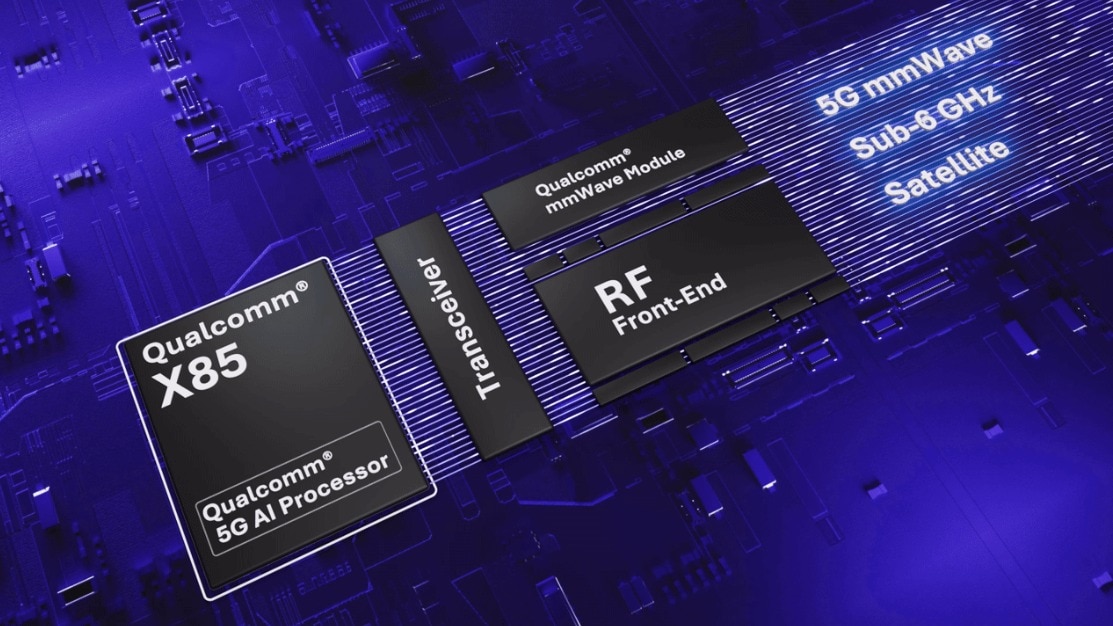
Qualcomm’s X85 5G modem is anticipated to significantly elevate performance standards for premium Android devices compared to Apple’s iPhones, as stated by CEO Cristiano Amon. In a conversation with CNBC, Amon underscored how the X85’s AI-driven capabilities and advanced connectivity features put Qualcomm in a superior position relative to Apple, which has just launched its first in-house modem, the C1, with the iPhone 16e.
Outstanding Features of the X85 Modem
Unveiled at Mobile World Congress 2025 in Barcelona, Qualcomm’s latest modem, the X85, stands out with its next-generation design, offering 5G mmWave support, 400MHz downloading speed in the Sub-6GHz spectrum featuring 1024-QAM modulation, and satellite connectivity. The modem is expected to achieve peak download speeds reaching 12.5Gbps and upload speeds of up to 3.7Gbps by utilising a combination of multiple carrier frequencies for superior performance.
AI-Powered Enhancements for Superior Range
Amon asserts that the most notable advantage of this modem lies in its AI-powered enhancements. According to him, it is the first modem equipped with extensive AI features, which enhances performance range, allowing it to manage weaker signals more effectively. This innovation is likely to create a substantial disparity between the experience offered by Qualcomm-equipped Android devices and that of Apple’s iPhones.
Apple’s C1 Modem – The Start of a New Journey?
The C1 modem introduced by Apple in the iPhone 16e marks a significant initial venture into modem technology, especially following the acquisition of Intel’s modem division in 2019. Apple claims that the C1 modem is their most power-efficient model to date, ensuring maximum battery life for the 6.1″ iPhone. The company also asserts that it consumes up to 25% less power compared to Qualcomm modems used in previous iPhones, a claim which is substantiated by independent evaluations.
Despite these advancements, the C1 modem does not support ultra-fast mmWave 5G technology, resulting in users forgoing the extraordinary speeds available in environments such as stadiums, airports, and busy urban centres. Apple has come forward to acknowledge this limitation, indicating that the C1 is merely the beginning and future versions will bring enhancements. Influential supply chain analyst Ming-Chi Kuo has mentioned that the upcoming iPhone 17 Air will also incorporate the C1 modem.
Qualcomm’s Position in Apple’s Supply Chain
For the foreseeable future, Apple’s dependence on Qualcomm modems is set to carry on. The current agreement with Qualcomm is effective through 2026, giving Apple ample opportunity to refine its modem technology while continuing to use Qualcomm’s hardware in its premium iPhone range.
However, Amon reiterated his previous predictions that Qualcomm might cease supplying Apple with modems by 2027. He also highlighted the increasing significance of modems in AI-integrated devices. Amon remarked that in the AI era, modems will become more crucial than ever, influencing consumer preferences for the best modem available in their handheld devices.
Qualcomm’s X85 modem is projected to be launched later this year with the Snapdragon 8 Elite Gen 2, expected to hit the market in October 2025. Meanwhile, Apple’s pursuit of in-house modem technology remains in its early phases, with aspirations to catch up to Qualcomm’s industry-leading advancements in the years to come.