


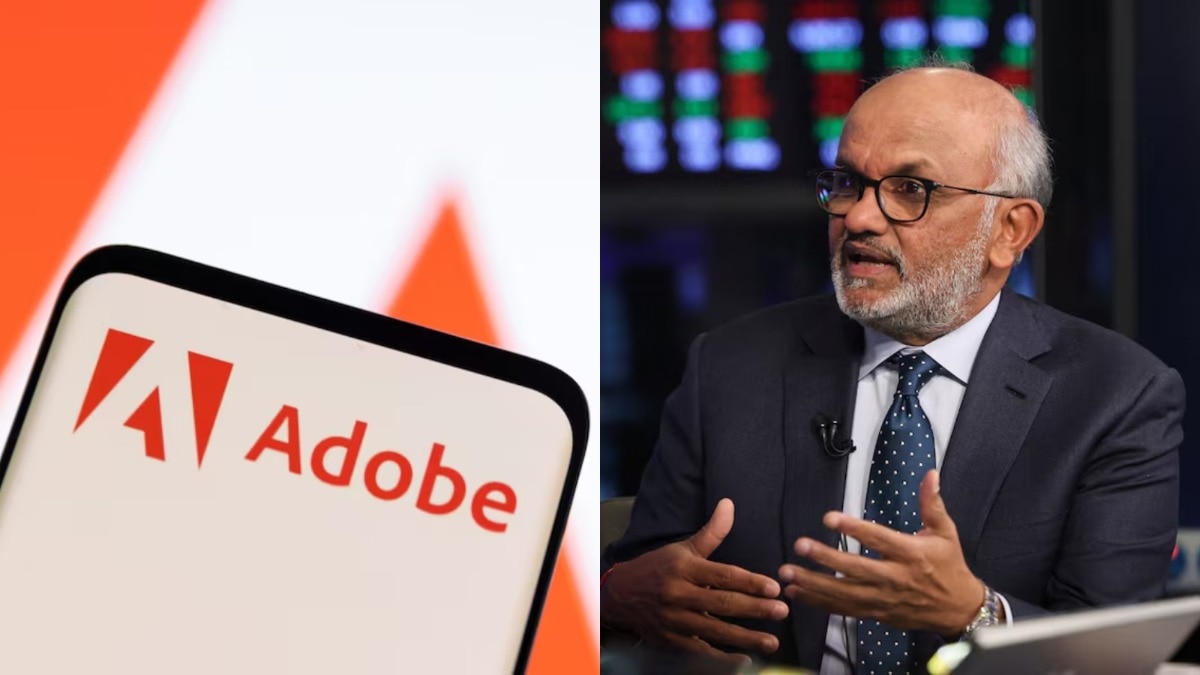
Shantanu Narayen, the CEO of Adobe, will be resigning following an impressive 18-year tenure. His remarkable journey has established him as a leading figure among Indian-origin executives in Silicon Valley, alongside notable leaders like Sundar Pichai from Google, Satya Nadella from Microsoft, and Indra Nooyi from PepsiCo.
In tribute to his impact, Satya Nadella, the CEO of Microsoft, posted a touching message on X (formerly Twitter), commending Narayen for his legendary tenure at Adobe. Nadella expressed that Narayen has built one of the world’s most crucial software companies and expanded possibilities for creators, entrepreneurs, and brands globally.
Nadella highlighted the gratitude he feels for Narayen’s friendship, mentorship, and the considerable contributions made to Adobe and the industry as a whole.
Congrats Shantanu, on a legendary run at Adobe! You’ve built one of the most important software companies in the world, and expanded what’s possible for creators, entrepreneurs, and brands everywhere. What has always stood out to me is the empathy you’ve brought to the creative…
— Satya Nadella (@satyanadella) March 12, 2026
To commemorate Narayen’s contributions, a summary of his milestones, leadership, and innovations during his outstanding journey at Adobe has been compiled.
Shantanu Narayen’s Early Life and Academic Background
Narayen hails from a Telugu Hindu family and spent a significant portion of his childhood in Hyderabad. He originally aspired to study journalism. He attended Hyderabad Public School and subsequently earned a bachelor’s degree in electronics and communication engineering from the University College of Engineering at Osmania University.
He later relocated to the United States, where he completed his master’s degree in computer science at Bowling Green State University, following which he obtained an MBA from the Haas School of Business at the University of California, Berkeley.
Narayen’s Professional Journey and Time at Adobe
Prior to his tenure at Adobe, Narayen worked at several tech firms in Silicon Valley, such as Measurex Automation Systems, Apple, and Silicon Graphics. In 1996, he co-founded Pictra Inc., a digital photo-sharing startup.
Narayen joined Adobe in 1998 as senior vice president of worldwide product development. By 2005, he held the positions of president and chief operating officer, and in December 2007, he was appointed as CEO, succeeding Bruce Chizen.
When he took on the CEO role, Adobe primarily sold boxed versions of Photoshop in retail outlets. Under his leadership, the company has evolved significantly, now influencing multiple sectors within the digital economy, including creative design, marketing analytics, document management, and the adoption of generative AI.
In 2012, Narayen transitioned Adobe from a traditional boxed software model to a subscription-based service known as Creative Cloud, which featured the company’s leading creative tools like Photoshop, Illustrator, and Premiere Pro. This move was seen as a gamble, as many questioned consumer willingness to pay a regular fee for software.
That same year, Narayen was recognised by Barron’s as one of the Best CEOs and received accolades as Fortune’s Businessperson of the Year.
Currently, Creative Cloud reportedly generates over $21 billion in annual recurring revenue, constituting approximately 95% of Adobe’s overall income.
In 2016, Adobe unveiled Sensei, its AI and machine learning platform, which automates editing tasks, content evaluation, and enhances customisation options.
By 2018, Adobe surpassed a market capitalisation of $100 billion and made its debut on the Fortune 500 list.
In 2023, the company introduced its generative AI platform, Adobe Firefly, enabling users to create and modify images and video content through natural language prompts.
Narayen also earned the title of Glassdoor’s No. 1 CEO from 2018 to 2020. In 2018, The Economic Times of India recognised him as Global Indian of the Year. In 2019, the Government of India presented him with the Padma Shri, one of the nation’s highest civilian awards, in acknowledgment of his contributions to trade and industry.