
Highlights
Traffic Challan Scam in India: An Increasing Concern
Traffic challan scams have become a worrying trend in India, with a recent incident involving a Mumbai-based stand-up comedian nearly resulting in a theft of card information. A simple text message triggered alarms when it warned about an alleged traffic fine.
What Occurred?
The comedian, Shridhar V, shared that he received a message from a regular mobile number, claiming his vehicle had been caught speeding by a traffic camera. The SMS urged immediate payment of the fine and contained a suspiciously shortened link that appeared legitimate at first glance. Shridhar decided to investigate further by checking the website domain.
Details of the Scam
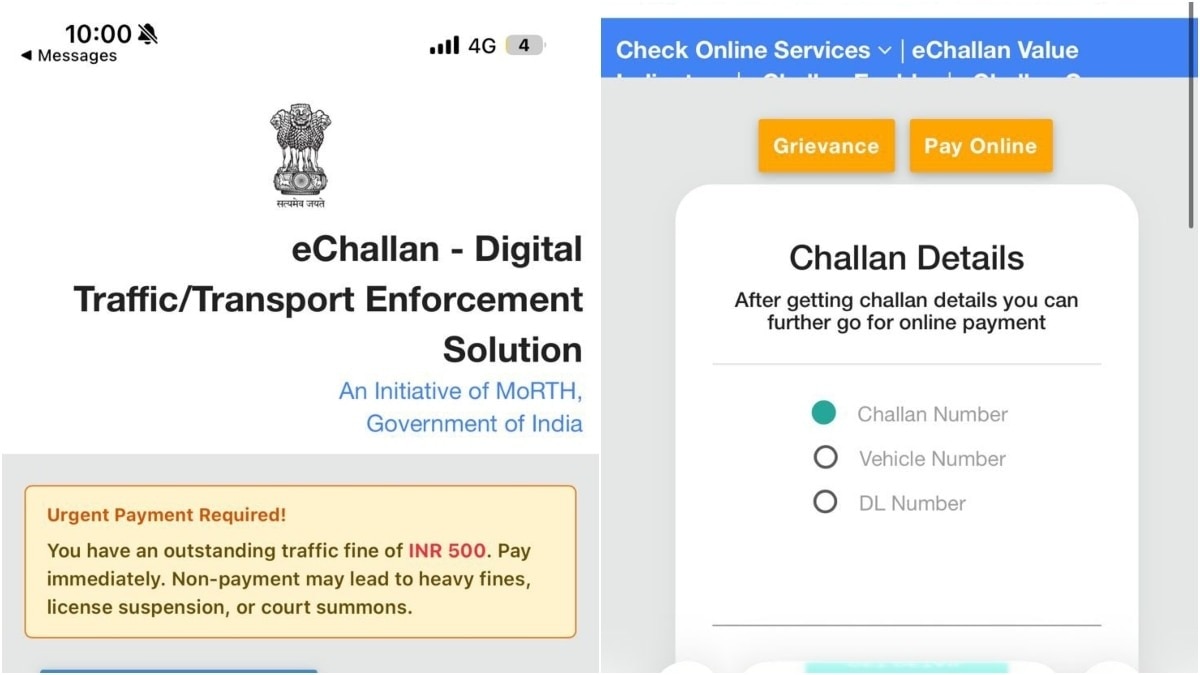
In his post, he expressed that he almost submitted his card details before opting to verify the link. Screenshots he shared revealed a webpage that bore a striking resemblance to the Government of India’s authentic e-challan portal, complete with the Ashoka emblem. The misleading site falsely advertised itself as “eChallan – Digital Traffic/Transport Enforcement Solution,” claiming affiliation with the Ministry of Road Transport and Highways.
The fake site displayed an alarming warning stating, “Urgent Payment Required! You have an outstanding traffic fine of INR 500. Pay immediately.” It included a single traffic challan reference number, labelled the department as “Traffic,” and featured a conspicuous “Pay Now” button in green. To instil further fear, a message indicated that non-payment could lead to hefty fines, loss of license, or even court summons, perpetuating panic among victims.
Understanding the Scam’s Sophistication
A closer examination unveiled a critical flaw—the site’s address was echallan.pasvahan.icu, distinctly different from the legitimate echallan.parivahan.gov.in site run by the Government of India. The shortened URL hidden in the SMS masked the dubious domain, making it challenging to detect the fraud at first sight.
Public Response
Shridhar’s revelation resonated with many online, prompting users to share their similar experiences with fraudulent messages. “Yes. I almost fell for it last week. Something felt off, and upon verification, I discovered it was a fake site. I did lose ₹999 to a counterfeit HSRP number plate website,” one user recounted.
Others appreciated Shridhar for bringing attention to the scam and urged individuals to verify website addresses before clicking on payment links received via SMS. They noted that the authentic Parivahan system does not require immediate payments through unsolicited text messages.