
Highlights
Credibility and Innovation in Education
Credibility has become a central topic following industrialist Harsh Goenka’s recent social media comment regarding Galgotias University. His remarks on the university’s involvement in a recent artificial intelligence showcase have ignited discussions across educational and technological communities.
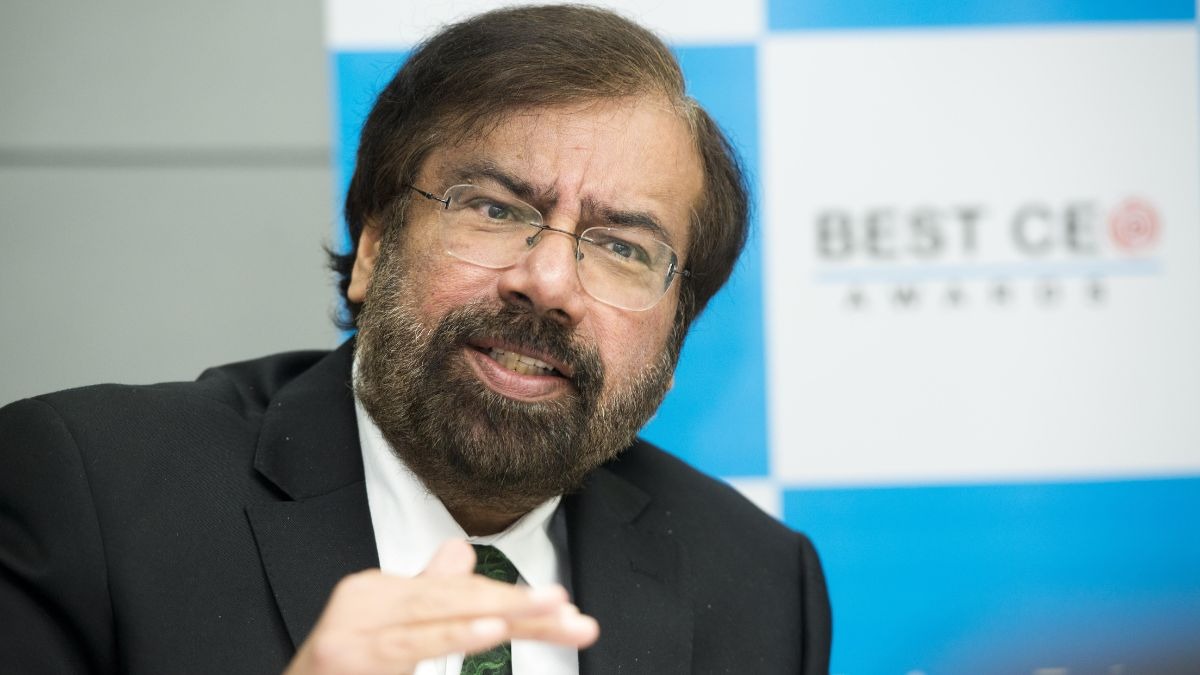
Reactions from Harsh Goenka
In response to the university’s participation in the artificial intelligence event, Goenka referenced a past academic incident involving the institution, extending his sympathy to its students. He stated that Galgotias, now in the spotlight for robotics, is the same university known for a controversial paper suggesting thali and bell vibrations could eradicate the coronavirus. His statement reflects a keen awareness of the students’ emotional struggle regarding their institution.
“Galgotias, now in the news for robots, is the same university whose faculty once published a paper suggesting that thali and bell vibrations could kill coronavirus. My heart goes to the students of this university who will feel ashamed to say where they are studying.”
The Broader Debate on Education
Goenka’s comment resonated widely, sparking a broader dialogue about how reputation, opportunities, and accountability interact within India’s rapidly growing private education landscape.
Challenging Stereotypes
In the aftermath of Goenka’s remarks, numerous social media users rallied to defend the student body, asserting that one’s college affiliation should not solely define individual capabilities within today’s skill-centric economy.
One popular response encouraged aspiring engineers to prioritise their own achievements over institutional reputation, suggesting, “Engineers — stop being embarrassed about your university. Make your name bigger than your college… In the long run; Skills are more valuable than a paper degree.”
The Economic Context
Discussion intensified regarding the socio-economic factors influencing educational decisions. Many pointed out that for numerous families, particularly from agricultural or smaller town backgrounds, private universities embody hope and ambition rather than simply privilege.
“Parents have put everything at stake… imagine their plight, landing a job in an already saturated market.”
The Robot Dog Incident
The uproar was catalysed by an exhibit of a robotic dog named Orion, touted as an original creation from the university’s Centre of Excellence at the ongoing India AI Impact Summit 2026. However, observers quickly noted that the robot bore a striking resemblance to a commercially available model from Unitree Robotics, raising concerns about the authenticity of the university’s claim.
In response, the university issued an apology, clarifying that the individual engaging with the media was not an authorised spokesperson. They denied any intentional misrepresentation of their innovative efforts and reaffirmed their dedication to academic integrity and transparency.
Government Stance on Authenticity
In light of the controversy, government officials underscored the importance of showcasing genuine research at public technology exhibitions.
S. Krishnan, Secretary at the Ministry of Electronics and Information Technology, maintained that these events should highlight “genuine and actual work,” cautioning against using such platforms for promotional ends. He emphasised that misinformation or plagiarism cannot be tolerated, reiterating the need for credibility in public displays of innovation.
Krishnan further clarified that the government was not making a technical judgement on the robot itself but highlighting the essential nature of authenticity in innovation presentations.