
Highlights
Artemis II: The Groundbreaking Mission to the Moon
Artemis II is a significant milestone as NASA prepares for its first crewed mission near the Moon in over fifty years. There is a growing focus on not only schedules and technical evaluations but also the mission’s profound importance for human exploration in space.
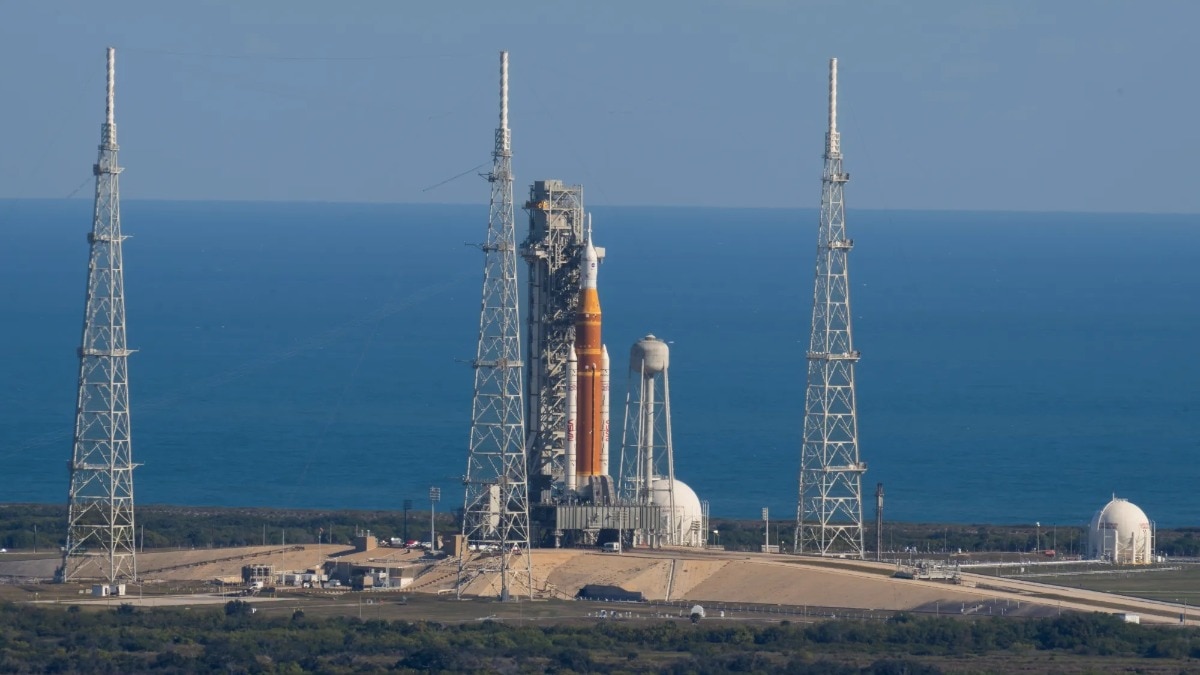
Updates from NASA indicate modifications to pre-launch testing schedules, including the vital wet dress rehearsal, due to unexpectedly cold weather impacting conditions at Kennedy Space Center. Although launch dates are still under consideration, Artemis II is steadily progressing towards launch — a moment that may transform the landscape of human exploration beyond our planet.
Return to Deep Space After 50 Years
Artemis II will be the first human mission venturing beyond low-Earth orbit since Apollo 17 in 1972. Over approximately 10 days, four astronauts will circle the Moon and safely return to Earth, travelling farther from our planet than any crew has in more than fifty years.
Due to weather adjustments, the plan is to fuel the Artemis II Moon rocket on Monday, February 2, at Kennedy Space Center in Florida. With this revision, the soonest possible launch date is Sunday, February 8. A specific launch date will be confirmed after evaluations of the wet dress rehearsal.
Crucial Test for Human Survival Systems
More than just a symbolic journey, Artemis II serves as a mission-critical evaluation. This will be the first time NASA operates its modern Orion spacecraft with astronauts on board in the challenging environment beyond Earth’s protective magnetic field.
The mission aims to validate:
- Life-support systems necessary for extended travels in deep space
- Navigation, propulsion, and communication capabilities far from Earth
- Crew operations and emergency procedures in real mission situations
- Radiation exposure and thermal performance in lunar space
These systems cannot be completely validated through ground testing or uncrewed missions alone, which makes Artemis II an indispensable step before attempting to land astronauts on the Moon again.
Artemis II is the gateway mission for NASA’s long-term exploration initiatives. Its success is essential prior to Artemis III, which aims to bring humans back to the surface of the Moon, particularly the south polar region.
Beyond Moon missions, this mission supports NASA’s broader vision of utilising lunar exploration as a testing ground for future human expeditions to Mars, refining technologies, crew endurance strategies, and operational expertise.
The Artemis II Crew
The mission will carry an international crew of four:
- Reid Wiseman, NASA astronaut, Commander
- Victor Glover, NASA astronaut, Pilot
- Christina Koch, NASA astronaut, Mission Specialist
- Jeremy Hansen, Canadian Space Agency astronaut, Mission Specialist
This crew marks several historic milestones. Christina Koch will be the first woman to travel to the vicinity of the Moon, Victor Glover will be the first person of colour to journey this far from Earth, and Jeremy Hansen is the first non-American astronaut assigned to a mission in lunar vicinity.
Together, the crew will operate Orion throughout the translunar flight, lunar flyby, and return journey, assessing human performance and spacecraft systems during all phases of the mission.
Launch Vehicle, Site, and Timing
Artemis II will launch aboard NASA’s Space Launch System (SLS) Block 1 rocket in conjunction with the Orion spacecraft, departing from Launch Complex 39B at Kennedy Space Center in Florida — a location rich in the history of human spaceflight, spanning from Apollo to the Space Shuttle era.
Before the launch, NASA teams are required to carry out a wet dress rehearsal, a complete simulation of launch-day fueling and countdown operations using cryogenic fuels. This test is considered the final key milestone before confirming a definitive launch date.
NASA has identified various launch windows between February and April 2026, dictated by orbital mechanics that ensure Orion can successfully execute its lunar flyby and free-return trajectory. Ultimately, weather conditions and technical preparedness will dictate the exact launch date.
Artemis II is more than merely returning to the Moon — it involves mastering the safe transportation of humans into deep space, reclaiming capabilities that faded after the Apollo era, and establishing a foundation for sustained exploration beyond Earth.