


Payment Aggregators and the New RBI Guidelines
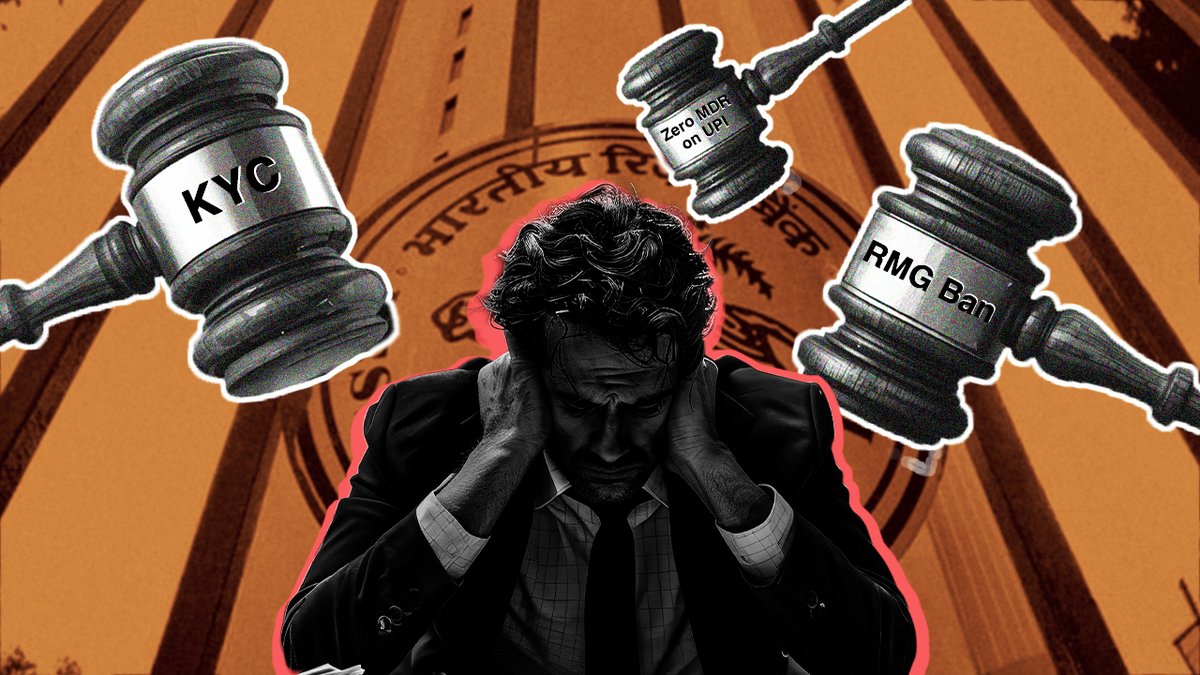
Payment aggregators, including Razorpay, Paytm, PhonePe, and Cashfree, are encountering difficulties due to extremely low margins and no merchant discount rate (MDR) on UPI transactions. The Reserve Bank of India (RBI) has introduced new Master Directions, requiring all payment aggregators to complete re-KYC processes for every merchant by September 2025.
The updated directives necessitate that payment aggregators finish re-KYC of all merchants by December 2026, which entails substantial manual labour to re-conduct KYC without hindering business operations. For new merchant onboarding, extended KYC is required, placing the entire due diligence burden on the payment aggregators. A high-ranking executive from a leading payments company remarked anonymously that this situation makes the onboarding process both more difficult and slower, compelling payment aggregators to enhance their KYC and compliance teams.
New Compliance Mandates for Payment Aggregators
In addition to KYC processes, new mandates require monitoring of suspicious transactions and filing reports with FIU-IND (Financial Intelligence Unit–India). Further, payment aggregators are expected to carry out routine cybersecurity audits and submit the findings to the RBI.
A risk management head at a licensed payment aggregator asserted to Startup Superb that while adding re-KYC and supplementary compliance obligations might seem straightforward in theory, actual implementation is considerably more intricate. He explained that there are numerous merchants requiring re-KYC, and the follow-up phase presents significant challenges. Moreover, cybersecurity and FIU-IND reporting obligations demand large teams, with the associated human effort being immense and the expense of compliance becoming a key concern.
Escrow Account Regulations and New Business Lines
As per the RBI’s guidelines, payment aggregators face restrictions on the escrow account balance from which they can earn interest, allowing revenue only from the specified “core portion” rather than the entire balance. Additionally, the RBI has permitted licensed payment aggregators to diversify into new business lines—such as a digital payment aggregator starting physical POS services—without needing a fresh license, provided they notify the RBI 30 days ahead.
However, the low margins associated with offline POS and the high infrastructure investment make this option less appealing for most payment aggregators.
Challenges for Mid-Sized Payment Aggregators
Given the RBI’s directives, the overall business model seems precarious for mid-sized and smaller payment aggregators. A venture capitalist with investments in licensed payment aggregators mentioned to Startup Superb that, with the gaming ban and the new directives, consolidation within the sector is unavoidable. Larger payment aggregators might navigate these challenges due to scale, but their profit margins will continue to face pressure.
Recent media reports indicate that the profit margins of payment firms have already taken a considerable hit, largely because gaming previously accounted for a disproportionate share of volume and profit compared to other merchant categories. According to the same venture capitalist, acquisitions in the payment aggregator sector will hinge on genuine business merits, asserting that the same technologies are employed across payment aggregators. He stressed that apart from revenue, larger players may not perceive any distinctive advantage in acquiring smaller payment aggregators.
Impact of UPI on Payment Aggregators
In addition to the ban on real money gaming, another significant challenge for payment aggregators lies in UPI’s market dominance, as card payments and net banking contribute a smaller share of the overall volume. The absence of MDR complicates matters further; payment aggregators handle massive volumes of traffic without corresponding revenue. Maintenance and technology expenses are already rendering the business unfeasible for many.
Some banks, such as ICICI, have discreetly begun charging merchants a nominal fee for UPI transactions. The zero MDR rule has effectively been bypassed for some time, with banks characterising these fees as “tech fees” or similar, applying them to specific high-volume merchants. However, these charges do not benefit payment aggregators, resulting in minimal revenue from UPI transactions.
The new master guidelines from the RBI impose stricter requirements regarding KYC, escrow, and compliance, making it increasingly challenging for over 30 licensed payment aggregators to manage costs alongside dwindling revenues. For numerous companies, this situation raises critical questions about the sustainability of the payment aggregator business model. Will they discover a viable model, or will the industry face severe contractions and distressed consolidations?