


[ad_1]
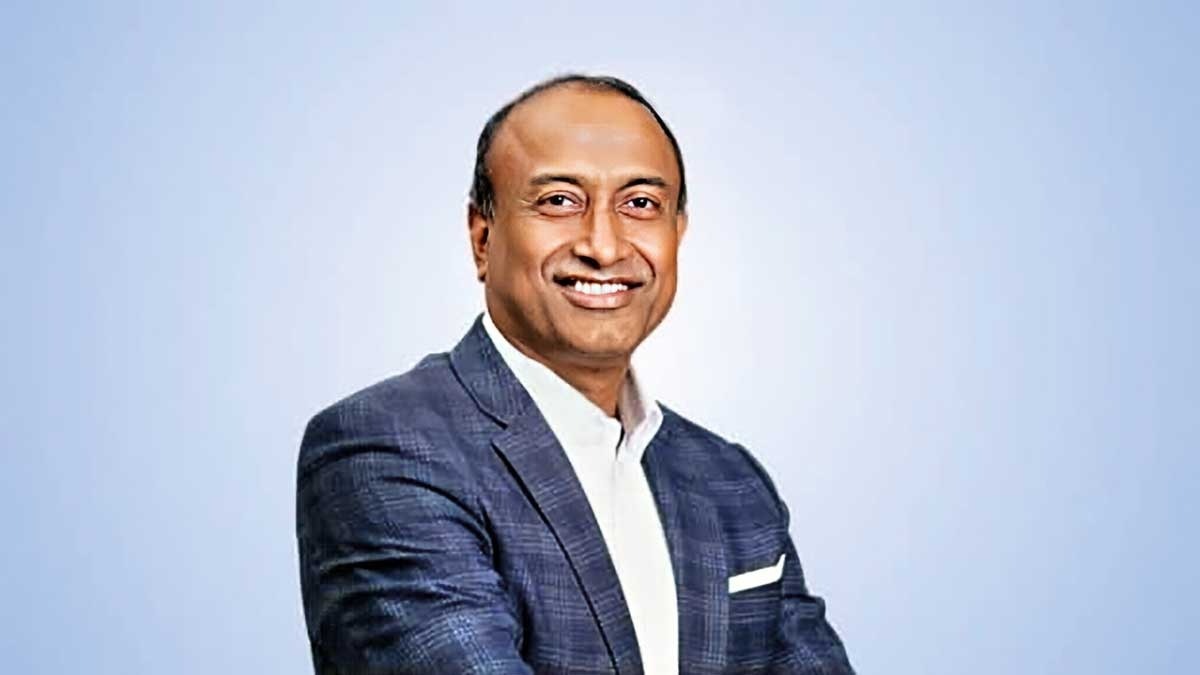
AI has transitioned from being an experimental phenomenon to establishing itself as a critical foundation for governance, economic development, and national capabilities, according to Rajesh Nambiar, President of Nasscom. He emphasised that the quick deployment of this technology has created an essential need for responsibility and trust.
During the Nasscom Responsible Intelligence Confluence (RICON) 2026, Nambiar noted that AI systems are now actively functioning in real-world markets, countries, and democracies, extending far beyond research labs and initial trials.
AI is currently being implemented in ways that allow it to learn, make decisions autonomously, influence behaviour, and operate on a larger scale than human cognitive abilities can manage. This deployment is happening in real life, not merely theorised or reported in papers.
Nambiar stated that AI has progressed from mere experiments to a solid basis for how public services are delivered by governments, how businesses function, and how citizens are engaged at a larger level.
AI has become integral to governance, economic growth, and national capability, he pointed out. Current discussions are more about responsibility rather than scale.
He warned that without robust governance, AI doesn’t just enhance efficiency but also amplifies potential harm. A lack of responsibility can lead not only to efficient scaling but also to various forms of harm.
“Bias can become imperceptible,” he explained. “Decisions can be obscure and hard to trace, leading to systemic errors and a lack of clarity regarding accountability.”
Nambiar highlighted concerns over AI-driven misinformation and deepfakes, particularly in India. He remarked on the difficulty in distinguishing truth from fabricated content.
Automated systems are now making significant decisions with minimal transparency or options for recourse in the event of an error, he added.
The global conversation about AI has also shifted, moving past discussions on model size and parameters.
“Currently, the focus is not on innovation alone,” he remarked. “The dialogue has moved from technological advancements to levels of trust, accountability, and readiness for deployment.”
Trust has taken centre stage in the adoption of AI technologies, he noted, stating that it is no longer a given; it must be intentionally designed into systems.
He dismissed claims that responsible AI hinders innovation, asserting that regulatory measures can actually enhance it.
For AI’s next chapter, the focus must shift from merely having good intentions to effective execution.
“Moving responsible AI from principles to practical applications is vital,” he stated. “It is essential to put such principles into action.”
He expressed that India holds the potential to be a global leader in developing trustworthy AI on a large scale.
“India can set an example not just through AI creation but by establishing responsible, trustworthy, and globally significant AI,” he concluded.
[ad_2]