


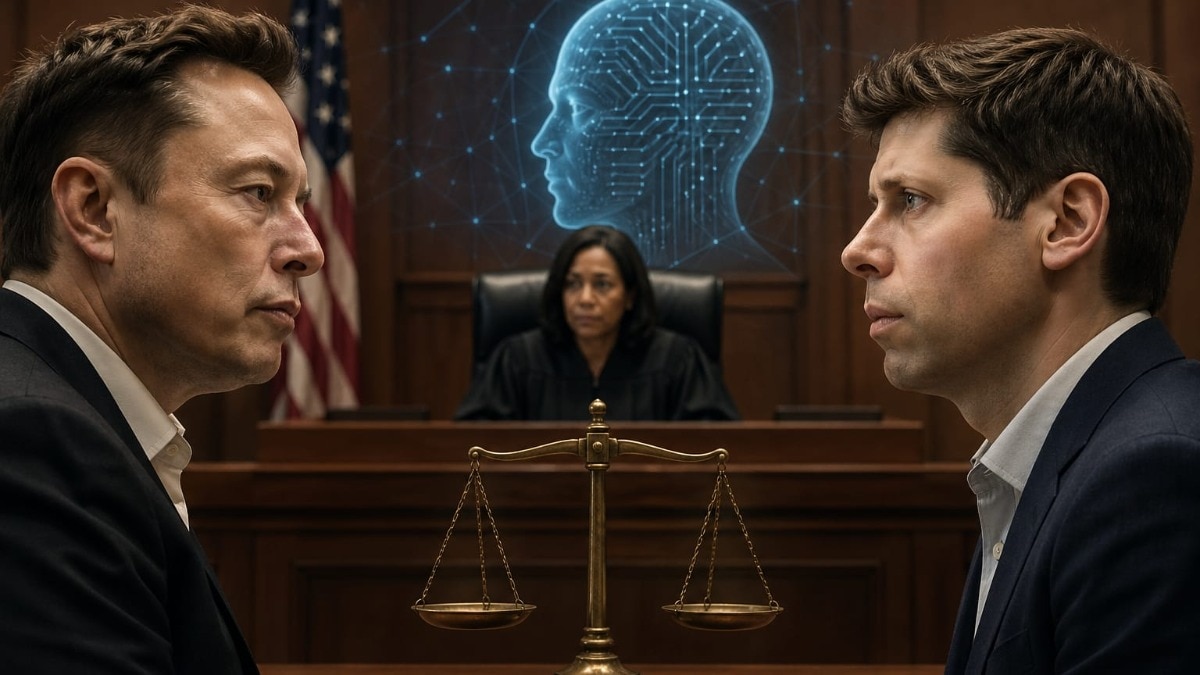
Elon Musk vs OpenAI Lawsuit: A Major Tech Trial Begins
A federal courtroom in Oakland, California, will commence juror selection on April 27 for one of the most significant trials in the American technology sector, involving a lawsuit that places Elon Musk against OpenAI, the artificial intelligence firm he co-founded and subsequently distanced himself from.
Why Did Musk Sue OpenAI?
Musk initiated the lawsuit in 2024, contending that OpenAI had moved away from its founding mission of developing artificial intelligence for the benefit of society, instead adopting a profit-focused strategy through its close partnership with Microsoft. He subsequently included Microsoft as a defendant.
He asserts that he invested approximately £38 million in OpenAI during its early phases with the expectation that the organisation would stay open-source and not pursue commercial interests. He insists that this understanding has been violated.
The lawsuit claims that Altman, alongside other defendants, deliberately misled and took advantage of Musk’s humanitarian concerns regarding the existential threats posed by artificial intelligence.
Details of the Allegations
The lawsuit accuses CEO Sam Altman and President Greg Brockman of persuading Musk to invest in what they falsely asserted would be a ‘nonprofit’ dedicated to the safe and open advancement of AI.
Musk is seeking £134 billion in damages, which he states he does not wish to retain for personal gain but rather to redirect towards OpenAI’s non-profit division. Additionally, he is calling for Altman’s removal as CEO.
How Did OpenAI Respond to Musk?
OpenAI has dismissed the allegations, flipping the narrative back on Musk, alleging that he is orchestrating a “harassment campaign” motivated by competitive self-interest, particularly his desire to undermine OpenAI and promote his own AI enterprise, xAI.
The organisation claims that Musk’s exit stemmed from a power struggle he did not win. In a blog post, OpenAI stated that Musk “sought full control of OpenAI and even proposed merging it with Tesla. When his conditions were not accepted, he departed and claimed we had a ‘0% chance’ of succeeding.”
OpenAI pointed out that Musk donated £38 million to the non-profit, which was utilised precisely as intended in alignment with the mission. Despite receiving a tax deduction for this contribution, Musk is now requesting the court to acknowledge it as an investment that should grant him considerable ownership stakes in OpenAI.
OpenAI’s Continued Mission
The company remains steadfast in its commitment to “creating AGI that benefits all of humanity,” asserting that Musk’s lawsuit is more about rivalry than principle.
Why Does It Matter?
The trial is anticipated to last several weeks and may influence how AI companies balance their original ideals with the commercial realities of expanding cutting-edge technology.
A victory for Musk would deliver a notable legal and reputational setback to a company he once supported and now directly competes against. For OpenAI, the implications are equally significant; an unfavourable ruling could jeopardise its fundraising efforts, governance reform, and its partnership with Microsoft, which has invested billions into the organisation.