


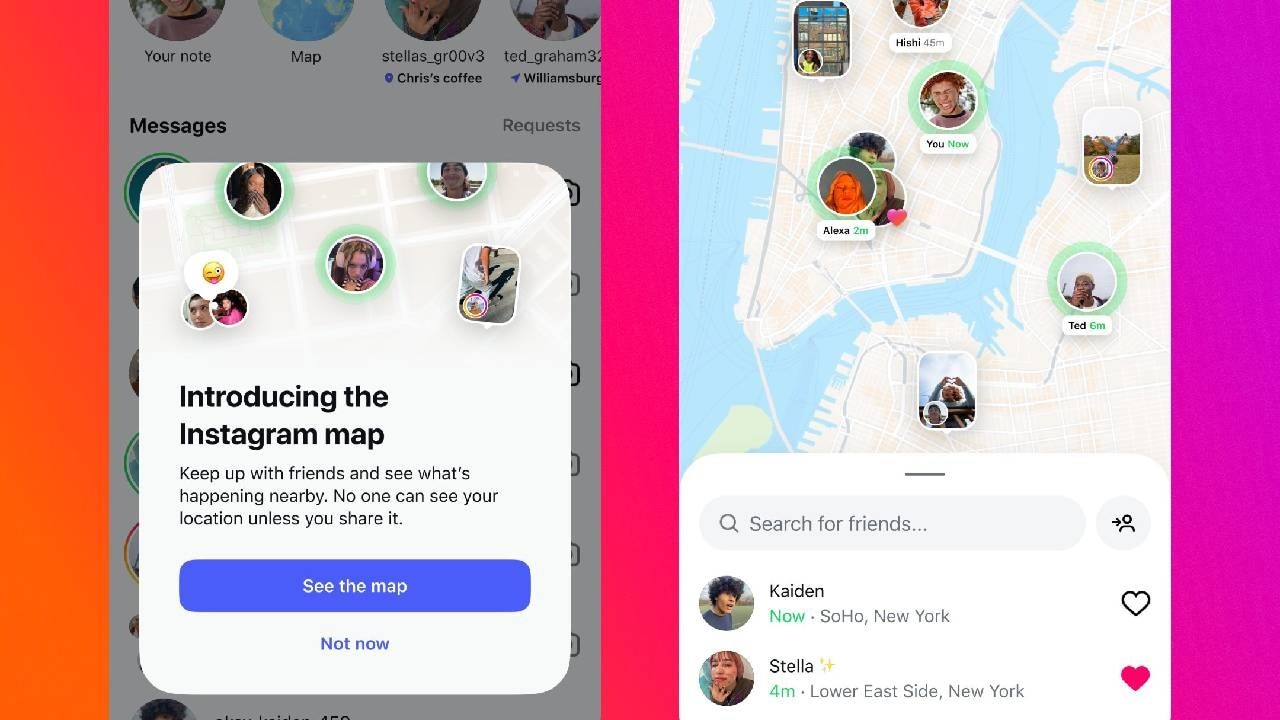
Instagram Map Feature: Understanding Location Sharing
Instagram has introduced a new feature known as “Instagram Map” in the United States, aiming to allow users to share their current location and uncover nearby content, akin to Snap Map. While Meta emphasises that the feature is optional and deactivated by default, numerous users have raised concerns, stating that it may expose their precise location without their permission.
Adam Mosseri Addresses User Concerns
Adam Mosseri, the head of Instagram, addressed the public’s concerns through a post on Threads, clarifying that sharing location data necessitates explicit user consent before any location details are shared. Mosseri mentioned, “We’re double-checking everything, but so far it looks mostly like people are confused and assume that, because they can see themselves on the map when they open, other people can see them too.” He further explained that the sharing process incorporates “double consent by design” with a confirmation prompt following the opt-in process.
User Reactions and Concerns
Despite these reassurances, warnings continue to circulate across social media platforms. Kelley Flanagan, a former participant on The Bachelor, shared a TikTok video labelling the feature as “dangerous” while explaining how to disable it. A viewer, Lindsey Bell, expressed her alarm, stating that her location was visible to all of her followers, prompting her to turn off the feature immediately, leaving her feeling quite distressed.
Clarification on Location Sharing Mechanics
Mosseri insists that much of the trepidation stems from misunderstandings. He clarified that the Instagram Map is filled with location tags derived from recent Stories or Reels that utilise a place tag, rather than providing continuous live tracking. Nonetheless, a segment of users argues that their locations remained visible even after disabling the feature.
How Instagram Map Functions
Instagram explains that the map only updates the location when the application is actively in use or running in the background. In contrast to Snap Map, it does not provide ongoing real-time updates unless the user opts to share them. Additionally, users have the ability to restrict sharing to specific locations or selected individuals.