


NASA’s Artemis 2 mission commenced on April 1 from Kennedy Space Centre in Florida, launching four astronauts into space. This mission represents a crucial phase in NASA’s goal to send humans back to the Moon. Notably, it marked the first occasion where astronauts could bring their personal smartphones to space.
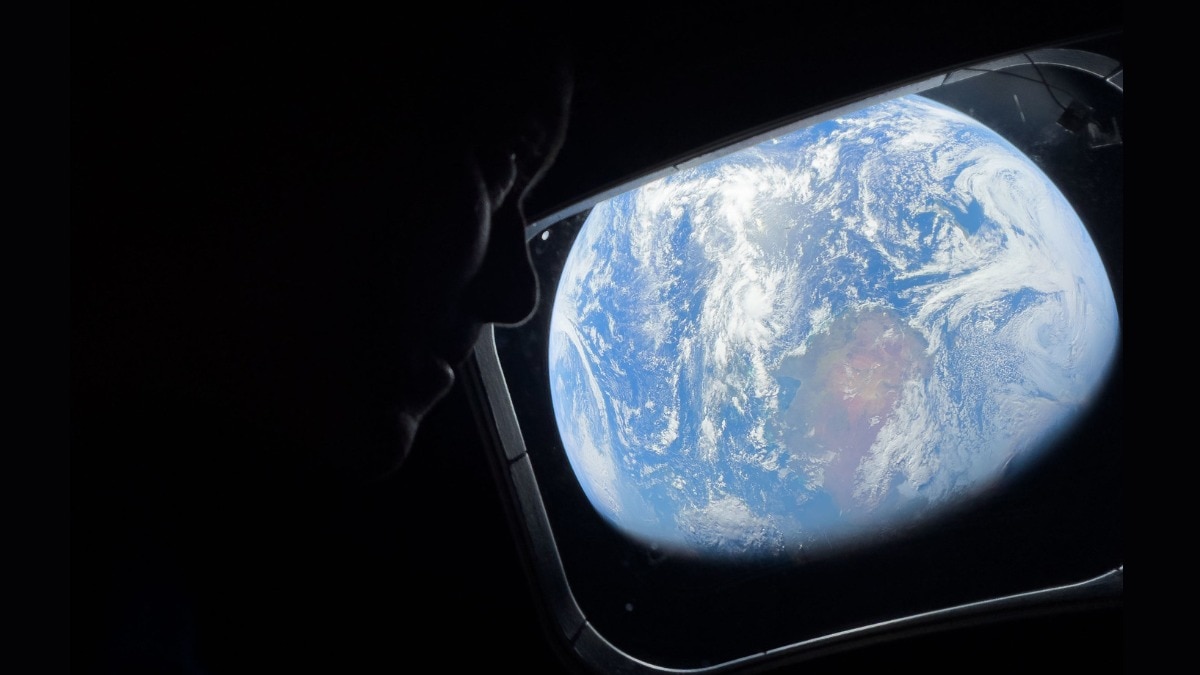
To document the entire NASA Artemis 2 mission, astronauts are equipped with four iPhone 17 Pro Max devices. NASA has already shared three stunning images on Flickr, showcasing the beautiful view of Earth.
These images feature Reid Wiseman and Christina Koch aboard the Orion spacecraft, gazing at the planet below. All photographs were taken on April 2, 2026, according to information on Flickr.
NASA’s post on Flickr stated, “Thinking of You, Earth.”
“Nasa astronaut and Artemis II Commander Reid Wiseman looks out from one of the Orion spacecraft’s main cabin windows, reflecting on Earth as the team journeys towards the Moon,” it provided.
Inside NASA’s Decision to Include iPhones on Artemis 2
In preparation for the Artemis II mission, NASA established a new guideline in 2026 under the leadership of Administrator Jared Isaacman, permitting astronauts to take personal devices, including smartphones. This change allowed the astronauts aboard the Artemis II Orion spacecraft to carry four iPhone 17 Pro Max devices.
These phones are intended solely for capturing personal experiences from space through high-quality imaging. Furthermore, they will be maintained in Aeroplane mode to prevent signals that could disrupt the spacecraft’s systems or attempt to connect to terrestrial networks.
NASA’s Approval Process for iPhones on Space Missions
NASA adheres to a rigorous four-step approval process to permit devices like the iPhone on space missions. This procedure includes a safety evaluation, hazard assessments involving moving parts or materials, planning fixes to mitigate those risks, and, finally, testing to ensure those measures work effectively.
In addition to these protocols, NASA meticulously considers heat management for these devices, along with battery safety, storage, and handling in microgravity conditions. Consequently, each device undergoes extensive testing for safety, durability, and functionality in a zero-gravity environment prior to approval.
Alongside the iPhone 17 Pro Max, the mission is also equipped with essential imaging equipment for mission documentation, including Nikon D5, Nikon Z9, and GoPro HERO4 Black cameras.