


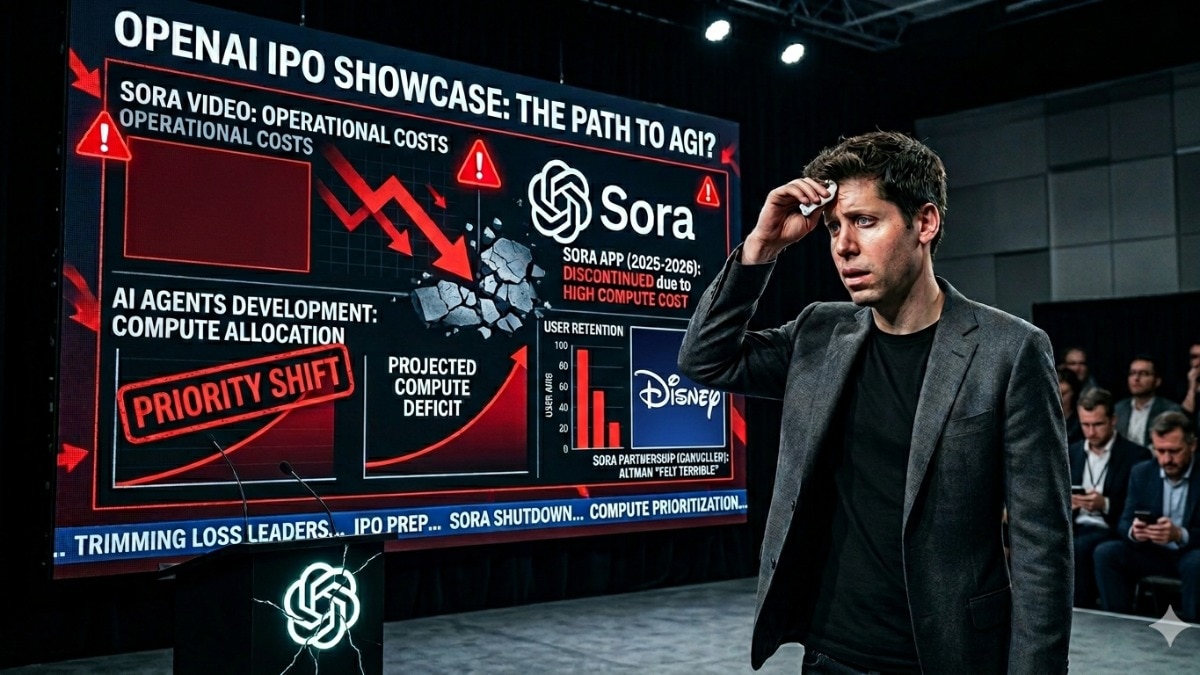
OpenAI is preparing for an initial public offering (IPO), with CEO Sam Altman suggesting that this could happen as early as 2026. However, the path to going public is complex. The company is enjoying high valuations and is active in launching AI products, yet it faces issues with paused projects, changes in leadership, and mounting worries regarding its financial stability and future business model.
Recently, OpenAI has been trying out various products and concepts, but is now narrowing its focus to enhance its enterprise and business AI solutions as it readies itself for a possible IPO.
In line with this strategic shift, the company has ceased operations on its video generation app Sora and has exited a significant agreement with The Walt Disney Company, a collaboration that was reportedly valued at up to $1 billion.
Additionally, OpenAI has begun a reshuffle in its leadership team, indicating a broader commitment to financial prudence and operational efficiency. As it heads towards an IPO, the company seems to be refining its priorities by discontinuing underperforming products and partnerships.
Sora’s Discontinuation and the Disney Deal
In December 2025, OpenAI announced a significant partnership with Disney, which would have permitted the use of over 200 Disney characters in Sora. The arrangement included streaming Sora-generated content on Disney+ and developing new applications driven by OpenAI’s technology. However, with the shutdown of Sora, this collaboration has also collapsed.
During an all-hands meeting in March, OpenAI’s AGI Deployment CEO Fidji Simo conveyed to the staff that they could not afford distractions, referring to them as ‘side quests.’
Instant Checkout for Shopping
In October, OpenAI collaborated with Walmart to introduce “Instant Checkout” in the US, allowing customers to buy products directly through ChatGPT. Unfortunately, this feature was discontinued in March 2026 due to inadequate user engagement.
Integrations with platforms such as Shopify and Etsy also struggled, providing only limited and outdated product options.
ChatGPT Adult Mode
OpenAI had hinted at introducing an “Adult Mode” for ChatGPT and was internally testing the feature. Nonetheless, plans for the erotic chatbot were put on hold indefinitely after concerns were raised by both employees and investors, as reported by the Financial Times.
GPT-4o Discontinued
In February, OpenAI stopped the GPT-4o model, which had caught attention due to its engaging personality. Yet, it faced backlash for being excessively agreeable and sycophantic. Users were later moved to updated models, including GPT-5 and GPT-5.1.
Leadership Changes
In addition to product adjustments, OpenAI has restructured its leadership. Chief Operating Officer Brad Lightcap has been reassigned to manage special projects and will report directly to Altman.
Chief Revenue Officer Denise Dresser has taken charge of commercial operations. Meanwhile, Simo is on temporary medical leave due to a neuroimmune condition, and Chief Marketing Officer Kate Rouch has stepped down to focus on her cancer treatment.
These alterations come at a pivotal time as OpenAI gears up for a possible IPO. The company recently secured $122 billion in funding from existing investors and major tech firms, including Amazon, Microsoft, Nvidia, and SoftBank. Notably, this marks the first time over $3 billion came from individual investors.
Despite robust financial support, OpenAI’s Chief Financial Officer, Sarah Friar, has expressed doubts regarding the company’s preparedness for an IPO. She highlighted concerns surrounding the company’s aggressive spending and long-term obligations.
OpenAI intends to invest more than $600 billion in cloud infrastructure over the next five years and anticipates spending over $200 billion before reaching profitability, leading to questions about how public market investors will view these long-term commitments.