


Nothing Headphone (1): A Step into Bold Design and Custom Sound
Nothing has never shied away from making an impression. Since the launch of its inaugural true wireless earbuds in 2021, the London-based firm has established a unique identity centred around transparency, minimalism, and a significant influence of retro-futurism. Its debut pair of over-ear headphones, aptly named the Headphone (1), elevates this distinctive aesthetic. True to its origins, these headphones boast a design and sound profile that is unlike anything else available.
Head-Turning Design
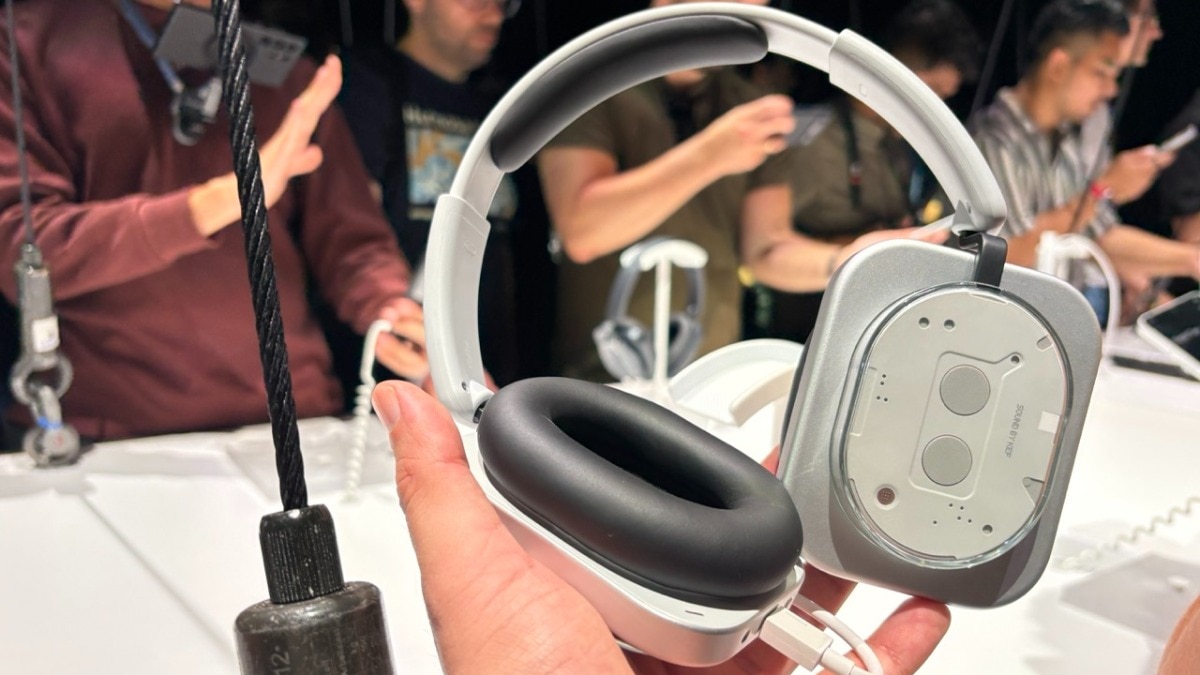
First impressions are crucial, and Nothing certainly understands this. The Headphone (1) resembles a fusion of a Walkman and a gaming console, featuring square aluminium arms that lead to rounded, transparent ear cups, revealing just enough inner components to spark curiosity. The visual style is unmistakably Nothing: clean, industrial, yet playful.
Using them outside felt akin to wearing a conceptual artwork. Passersby noticed, some inquired, and a few even tried them on. They undeniably make a statement. More importantly, they exude quality. The aluminium construction adds substance without causing fatigue, and the memory foam padding in both the ear cups and the generously cushioned headband allows for long listening sessions without discomfort.
However, the sharp edges on the arms could potentially hit against each other if not handled carefully, particularly when hanging around the neck. Additionally, the carry case requires some luggage space since the headphones do not fold, but merely rotate to a flat position.
Effective Physical Controls
This aspect may be the standout feature. While many premium headphones are gravitating towards touch-sensitive surfaces, Nothing opts for tactile controls. A scroll wheel on the right ear cup manages volume, while a paddle switch enables track skipping or audio scrubbing. A multifunction button, customisable through the Nothing X app, completes the control set. The overall experience feels satisfyingly tactile and refreshingly analogue, with no misinterpreted swipes—just genuine muscle memory.
Moreover, there are additional software advantages for users of a Nothing phone. The Channel Hop feature, allowing seamless transitions between audio applications with a tap, is exclusive to the new Phone (3), which may disappoint those using other models.
Smart App with Unique Features
The Nothing X app offers an unexpectedly rich experience. Featuring an 8-band equaliser with Q factor adjustment, users can enjoy a customisation level typically found in professional audio software. Frequencies can be adjusted precisely, or users can select from presets such as ‘More Bass’ or ‘Voice’. There’s also an option for QR code sharing for custom EQ profiles, complete with themed graphics—an amusingly nerdy touch.
The headphones also integrate spatial audio with head tracking, performing adequately for movies and gaming; however, music may sound a tad diffuse, a trait commonly observed in many brands. Unlike Nothing’s in-ear offerings, a hearing test feature is notably absent.
With an IP52 rating, the headphones are resistant to light rain and sweat, placing them ahead of most competitors, who usually offer no water protection. The battery life is impressive at 80 hours without ANC and 35 hours with it, while a mere five-minute charge offers five hours of playback.
Sound That Requires Adjustment
The out-of-the-box tuning is not particularly impressive. These headphones have a bass-heavy profile, slightly muted treble, and somewhat recessed mids, creating a smooth yet subdued listening experience. Vocals may lack clarity, cymbals and hi-hats can sound dull, and guitars may feel distanced.
On the positive side, the equaliser allows for substantial improvement. With some adjustments, vocal clarity and instrumental brightness can be restored. The soundstage feels expansive, with excellent separation between instruments, but achieving optimal sound requires effort.
For those seeking instant audio excellence, alternatives like the Sony WH-1000XM6 may be more suitable. However, those who enjoy personalising their listening experience will discover exceptional audio potential.
Noise Cancellation and Call Quality
The ANC performance competently mitigates low-frequency sounds, such as air conditioning noise and background chatter. Although it may not be as precise as offerings from Bose or Sony, it holds up well in environments like planes and open offices. Transparency mode excels, allowing ambient sounds to filter through naturally without sounding harsh or tinny.
Microphone quality is generally reliable, with calls sounding crisp even amid street noise; however, echoey environments may hinder performance slightly. The four-mic system, enhanced by AI voice technology, performs admirably overall.
Final Thoughts
The Headphone (1) marks a bold entry into the over-ear headphone market. It takes decisive risks in areas that matter—design, controls, and durability—while also delivering satisfactory audio and comfort that justifies its price point of Rs 21,999. However, it’s not designed to cater to everyone’s tastes; it encourages users to experiment and embrace a different approach.
Those seeking neutral sound straight out of the box, or expecting unparalleled spatial audio effects like those from Apple, might find these headphones lacking. Yet, for anyone after a uniquely designed, well-constructed pair of headphones that reward customization and stand out among competitor offerings, Nothing’s initial foray into over-ear headphones is unexpectedly robust.