


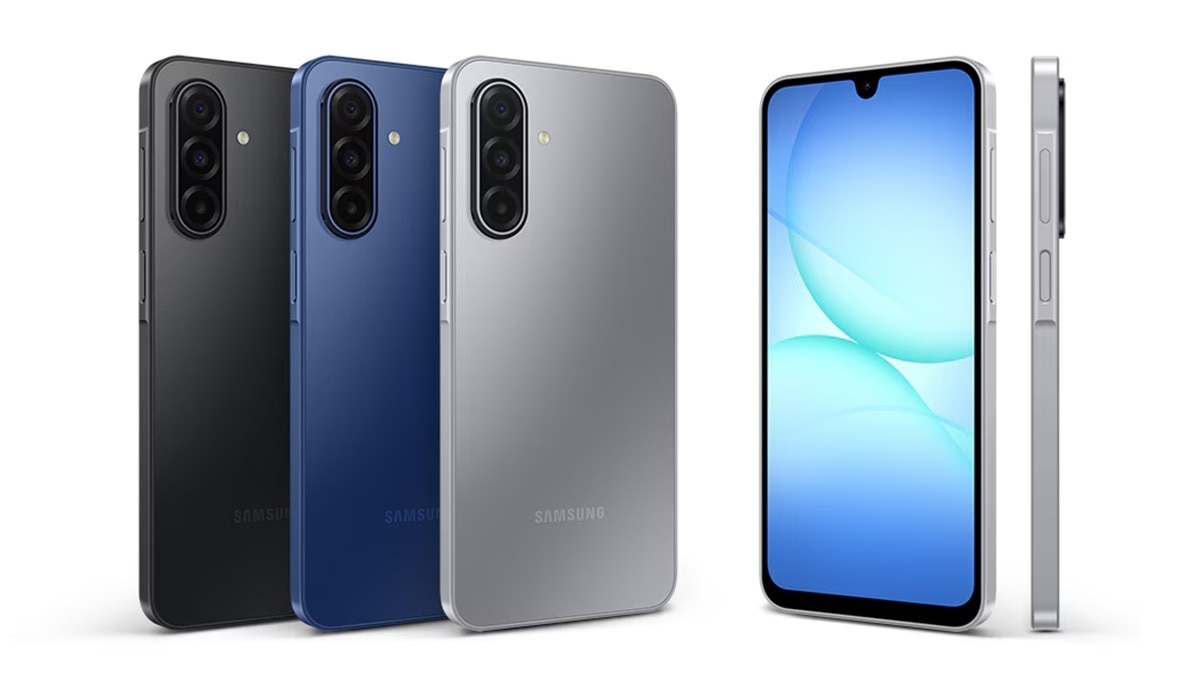
Samsung’s Galaxy A17 is introduced as the successor to the popular Galaxy A16, known for being a top seller in India last year. The A17 retains familiar features such as a 6.7-inch display, a robust 5,000mAh battery, and a similar triple-camera configuration. Notably, it introduces optical image stabilisation (OIS) and includes a charger, addressing a significant grievance of its predecessor. Furthermore, the A17 sets itself apart by providing a feature increasingly rare in this price bracket – long-term software support.
Design and Display: A Blend of Classic and Contemporary
The Galaxy A17 presents a sleek design, featuring a slim triple-camera module at the rear. Despite its larger dimensions, it is surprisingly comfortable to hold. Available in Grey, Black, and Blue, the Blue version echoes the Galaxy Z Fold 7’s Blue Shadow. In sunlight, the back panel reflects light subtly, imparting a premium aesthetic. The front is safeguarded by Gorilla Glass Victus, while its IP54 rating for dust and water resistance is modest compared to others that offer up to IP69.
The front design of the A17 might feel dated, showcasing a U-shaped notch that contrasts with the punch-hole displays now common among competitors. The bezels are thicker than those of some rivals priced under Rs 20,000, slightly detracting from the immersive experience of the AMOLED panel. Nevertheless, the 6.7-inch FHD+ Super AMOLED display remains bright and fluid, benefiting from a 90Hz refresh rate. Colours are vibrant, and visibility is strong, even under direct sunlight, making it one of the more attractive screens in its category.
Performance: Solid for Daily Tasks, but Limited for Gaming
The Galaxy A17 is powered by the Exynos 1330 chipset, engineered on a 5nm process. While reliable for day-to-day activities, it falls short against competitors such as the Realme P4 and Infinix GT 30. Benchmarks reveal that the A17 scores lower in AnTuTu tests but performs reasonably well in Geekbench multi-core assessments.
For typical usage, the device operates smoothly with apps, browsing, and streaming without significant lag. Its gaming performance is acceptable for casual users, though extended gameplay may lead to noticeable heating, particularly with resource-intensive games like Call of Duty Mobile. Less demanding titles, such as BGMI and Real Racing 3, run smoothly without overheating issues. Overall, while suitable for everyday usage, more demanding users may find it underwhelming compared to peers in this price range.
Software and Customisation: Leading the Segment
One of the standout features of the Galaxy A17 is its software. Operating on One UI 7 over Android 15, Samsung pledges six years of updates, an unparalleled offer in the budget sector. The user interface is streamlined, featuring only 49 pre-installed applications, resulting in a cleaner experience compared to many contenders. One UI 7 allows considerable customisation, empowering users to personalise menus, themes, keyboards, and messaging options. Samsung’s Good Lock app enhances customisation capabilities for those who seek to tailor every detail of their device.
Cameras: Strong Low-Light Performance
The camera system in the Galaxy A17 is both practical and adaptable. The 50MP primary camera with OIS performs well in various shooting conditions. Daytime images are satisfactory but may lack the vibrancy and detail seen in competitors. Portraits are striking, exhibiting good skin tone balance and clarity. Selfies are polished and suitable for social media, though detail may not match some rivals.
The A17 excels in low-light scenarios, displaying controlled exposure, minimal noise, and strong detail preservation. Compared to the Moto G96, the A17 often achieves cleaner and more balanced images in dim settings, even without a dedicated night mode. Ultra-wide shots are visually appealing at first glance, although zooming in reveals minor distortions. Overall, the camera capabilities are reliable and effective, particularly for users who appreciate varied lighting environments.
Battery Life: Decent but Not Class-Leading
The 5,000mAh battery is complemented by 25W charging, with Samsung including the charger in the package. Charging from 20 to 100 percent takes slightly over an hour in real-world circumstances, which is acceptable but slower than many other devices boasting rapid charging and larger batteries. In PCMark battery tests simulating everyday usage, the phone achieved just under 10 hours, representing the average for this category. Users can anticipate a full day of regular use, but intensive usage may necessitate an evening recharge.
[ad_2]