


“`html
Galaxy Watch 8 Classic Review: A Standout Smartwatch
The Galaxy Watch 8 Classic represents Samsung’s boldest entry in the wearable market in years. It combines the cushion design and sophisticated appearance of the Ultra model, retains the popular rotating bezel, and integrates Gemini, Google’s AI assistant, right out of the box. With the addition of Samsung’s new Quick Button and enhanced health metrics, the Classic positions itself as a top contender in the smartwatch arena, at least until the price comes into play.
I wore the Galaxy Watch 8 Classic for almost three weeks, alternating between exercise sessions, sleep monitoring, and daily notifications. This review highlights where Samsung excels and where the Classic leaves users wanting more.
Design and Display: Timeless with a Modern Edge
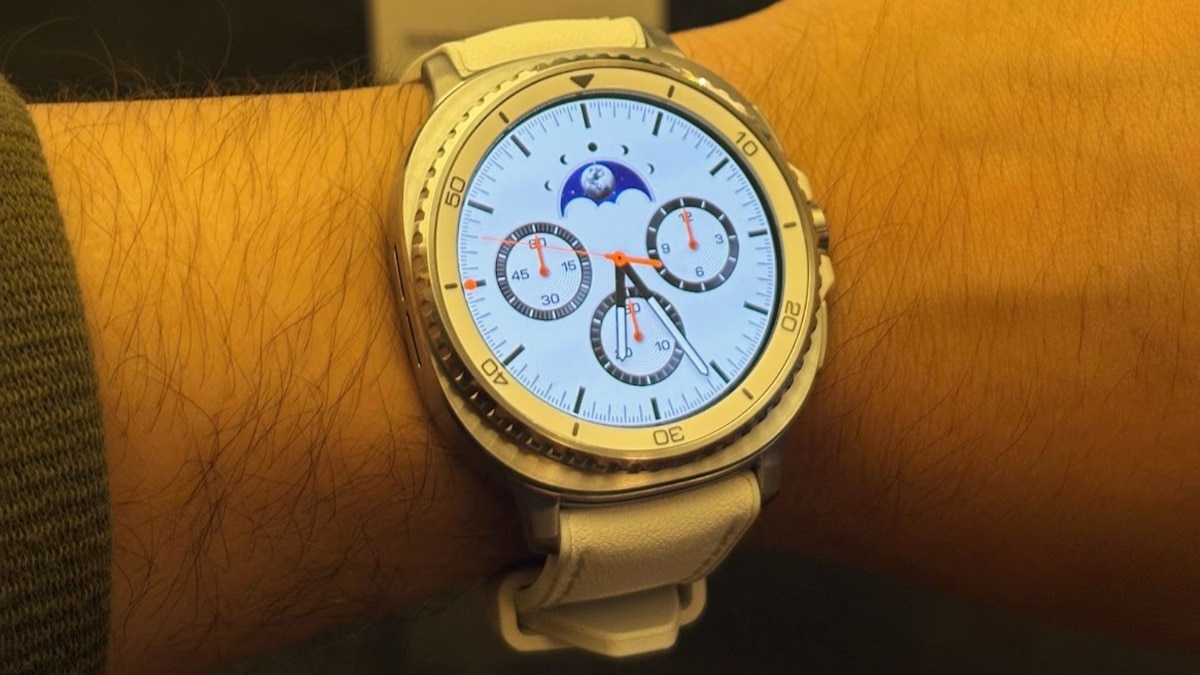
At a first glance, the Watch 8 Classic can easily be mistaken for the Ultra model. It features the same squared cushion frame, stainless steel body, and a substantial wrist presence. The version I tested came in white, which immediately caught attention; people recognised it as “the Samsung watch with the spinning ring.” The bezel remains a pleasure to use, offering one of the few inputs that genuinely enhances the user experience. Navigating through menus without smudging the screen is a definite perk.
However, this “Ultra-like” design comes with a significant size. Measuring 46mm and weighing 64 grams, the Classic may appear oversized on slimmer wrists, and the smaller display does not help. Samsung has reduced the screen size to 1.34 inches from the 1.5 inches found on the Galaxy Watch 6, and although its peak brightness reaches 3000 nits (the brightest on any smartwatch), the screen feels slightly cramped within the robust frame. While its outdoor visibility is impressive, there’s a lingering wish that Samsung had opted for a larger display.
The strap mechanism has been improved with a new Dynamic Lug design, making it easier to swap bands and ensuring a snugger fit on the wrist, ultimately enhancing sensor performance. The bundled Hybrid Band was comfortable for daily use, and Samsung’s extensive strap selection is an added bonus.
Software and Performance: AI at Your Fingertips
This is the first Samsung smartwatch equipped with Google’s Gemini from the outset, and while it’s still in its early stages, it proves to be genuinely useful. Setting reminders, retrieving weather updates, and even asking Gemini to summarise tasks can all be done without reaching for the phone. Occasionally, it cuts off when the user pauses mid-sentence, but when functioning well, it offers a glimpse of the capabilities smartwatches could have by 2025.
The Watch 8 Classic operates on One UI 8 built atop Wear OS 6, powered by the new Exynos W1000 chip. With 2GB RAM and 64GB storage, the performance is fast and responsive. Innovative features like the Now Bar enhance usability by providing a quick overview of running tasks, while multi-info tiles assist in displaying more information in widgets. The combination with the rotating bezel makes the interface feel well-designed, surpassing most Wear OS competitors.
However, users will get more value from this watch if they are part of Samsung’s ecosystem. Certain health features, such as antioxidant index, vascular load, and aspects of the Running Coach, work exclusively with Samsung devices. While the experience on a non-Samsung Android was still positive, it was clear that Samsung aims to reserve its premium capabilities for its own hardware.
Health Tracking: An Array of Metrics
Samsung has equipped this watch with a comprehensive set of sensors: heart rate, SpO2, ECG, bioelectrical impedance, dual-frequency GPS, and even an infrared temperature sensor. On top of that, it introduces new functionalities.
One unique feature is the antioxidant index, which scans carotenoid levels (the plant pigments stored in skin) and provides a score from 0 to 100. Typically landing in the “low” range served as a gentle reminder to consume fewer fries and more vegetables. Its significance will depend on the individual’s lifestyle, yet it’s an innovative approach to linking diet with health data.
The vascular load is yet another novel metric, assessing the stress levels on the vascular system during sleep and integrating that information with lifestyle data for enhanced insights. Combined with sleep tracking, blood pressure monitoring, ECG readings, and the familiar Energy Score, the Watch 8 Classic genuinely acts as a health dashboard on the wrist.
In terms of accuracy, results were solid. Step counts were comparable to those achieved on the Apple Watch Ultra 2, and sleep tracking corresponded closely with data from my Oura ring. The Running Coach feature was practical, offering prompts during runs to adjust pace, representing a notable improvement over previous static coaching models.
Battery Life: Satisfactory but Not Exceptional
The watch houses a 445mAh battery, an upgrade from the Watch 6 Classic. Samsung claims 30 hours with the always-on display and up to 40 hours without it. In personal testing, those claims held true. With the always-on feature disabled, getting a comfortable 40 hours—covering workouts and notifications—was possible. With always-on activated, the duration dropped to around 32 hours.
While these results are reasonable, they do not impress at this price point. Charging is also rather slow, requiring around 90 minutes to reach full capacity via 10W wireless charging. Competitors like the Apple Watch and several budget models offer faster charging times. For a device intended for continuous wear, this can be a limitation.
Verdict: A Premium Smartwatch Yet Not Fully Ultra
The Galaxy Watch 8 Classic is a joy to experience. Its bezel remains one of the finest input methods available on any smartwatch, Gemini adds valuable functionality, and the health-tracking features are among the most extensive on the market.
Nevertheless, at a price of Rs. 46,999 for Bluetooth and Rs. 50,999 for LTE, the value proposition is questionable. The standard Galaxy Watch 8 provides nearly everything at a much lower cost, and for just a bit more, the Ultra 2 offers a larger display and improved battery life. The Classic finds itself in a precarious position.
Yet, for those who cherish the rotating bezel, seek Samsung’s latest health features, and are unbothered by the bulk, this is the Galaxy Watch worth considering. It serves as a testament to how traditional mechanics and forward-thinking AI can harmoniously coexist on your wrist.
“`