


Smartphone Boundaries in Indian Families
Indian families are increasingly focusing on establishing boundaries with their smartphones, particularly noting dinner time as critical for daily connection. This insight emerges from the seventh annual Vivo Switch Off Study, released recently.
Impact of Smartphones on Parent-Child Relationships
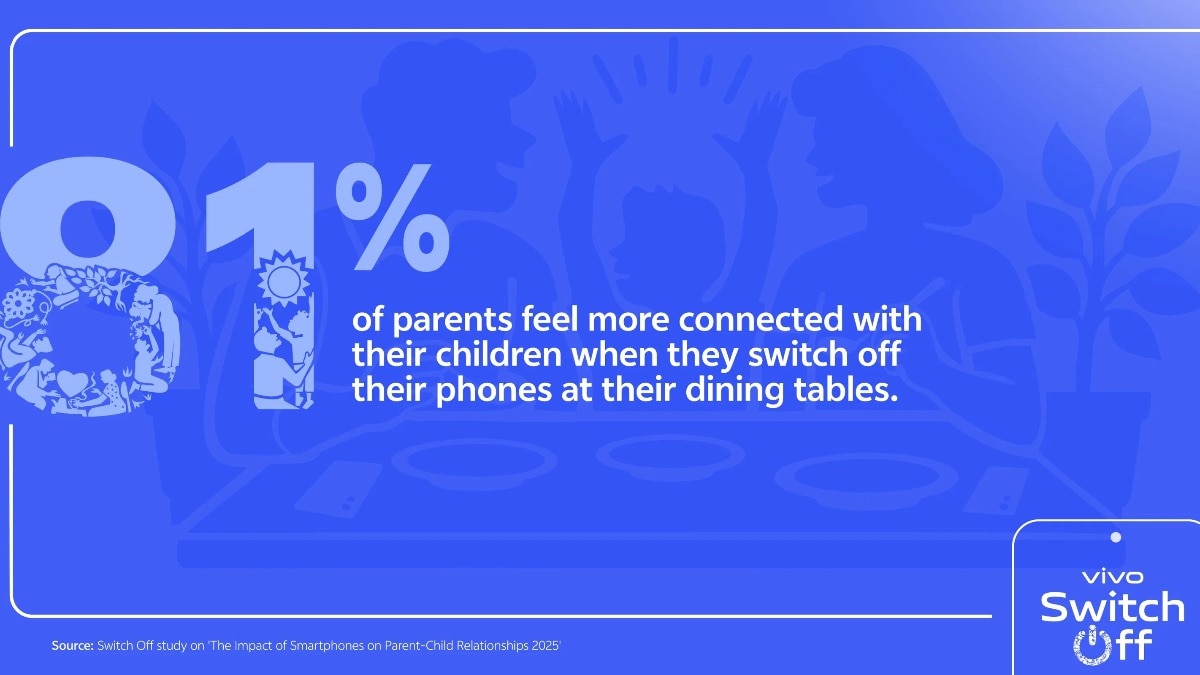
The report titled ‘Impact of Excessive Smartphone Usage on Parent-Child Relationships’ found that 72% of children spend their most quality time with parents during dinner. Remarkably, 91% of children expressed that conversations became more effortless and meaningful when smartphones were not present. This reinforces the idea that dinner time serves as a natural moment for families to bond. Additionally, the data revealed that 72% of parents and 30% of children identified parents checking their phones during dinner as the primary barrier to conversation.
The Rise of AI Companionship
The study, conducted by CyberMedia Research (CMR) in eight prominent Indian cities, identified a notable trend regarding children’s engagement with artificial intelligence (AI). A total of 67% of children reported using AI tools, feeling their parents were too occupied, which has led to less communication with them.
Overall, 54% of children aged 10–16 had embraced AI tools, mainly for homework assistance (61%) and personal development (63%). Interestingly, 33% of children perceive AI as a companion, sometimes replacing real-life relationships. This is further highlighted by the fact that one in four children acknowledged they interact less with their parents due to AI.
Digital Disturbance and Disconnection
The research highlights a noticeable variation in daily phone usage: parents dedicate 4.4 hours a day to their devices, whereas children spend 3.5 hours. This pattern indicates that parents are significantly more active on their phones than children during family activities, such as movie nights (70% vs. 31%) and celebrations (64% vs. 59%).
Commenting on these findings, Geetaj Channana, Head of Corporate Strategy at Vivo India, noted that the results of this year’s Switch Off Study indicate families are striving for balance, seeking to disconnect during significant moments and enhancing their presence in daily life.
The report suggests that families are experiencing positive results from simple behavioural adjustments, including reducing screen time (54% of parents), restricting social media usage during specific hours (51% of parents), and disabling non-critical notifications (50% of children). These approaches result in a greater sense of control over digital habits for the majority of parents (59%) and children (47%).