
Highlights
Mumbai’s Air Quality: Farm Fires and Pollution Issues
Mumbai, often seen as a bustling financial hub, is not immune to the poor Air Quality Index (AQI) that agricultural fires in surrounding regions create. Recent observations have shed light on how smoke from farming practices significantly impacts the air quality in this metropolis.
Reports from the Skies
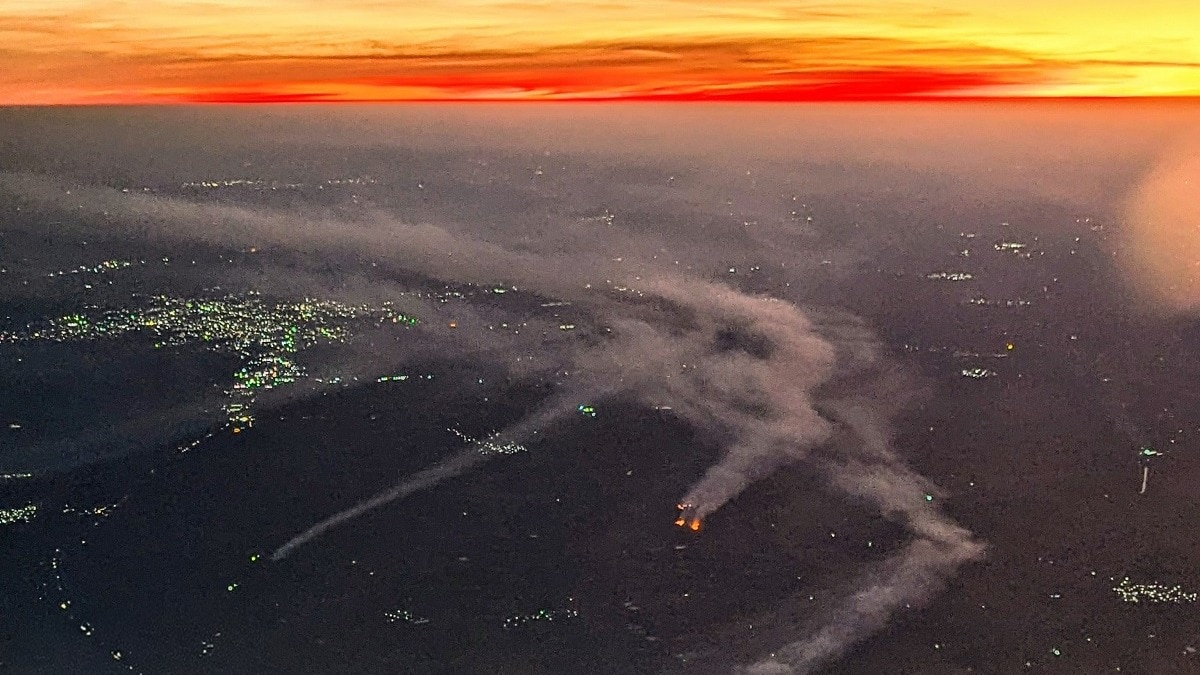
Vishal Jolapara, a frequent pilot over Maharashtra, has raised alarms after witnessing extensive areas of burnt farmland from above. His photographs capture the extent of agricultural burning, a sight largely hidden from the everyday resident.
He articulated the concern regarding Mumbai’s deteriorating AQI, stating that pilots regularly observe fields ablaze during flights in the region. He noted that the combination of winter conditions and easterly winds transports this polluted air directly to Mumbai.
Seasonal Burning and Air Quality Concerns
Jolapara’s observations have revived discussions on how seasonal crop-residue burning, typically linked to northern states, can also affect air quality along the western coastline under certain weather situations.
Health Impact on Residents
Illustrating the health ramifications of poor AQI, Subuhi Jiwani shared personal experiences of continuous sneezing and nasal issues linked to the subpar air quality. Such experiences highlight the adverse effects on local residents and their well-being during these critical episodes.
Recent AQI Levels and Municipal Response
The situation became alarming when Worli reported an AQI of 278, categorising it as ‘poor’ on February 20. In response, the Brihanmumbai Municipal Corporation (BMC) promptly issued stop-work notices for 12 construction sites in the G-South Ward, acknowledging the role of dust from ongoing construction activities in worsening the air quality concerns.
Overall Pollution Trends in Mumbai
Despite the alarm over pollution in certain areas, city-wide readings reflected a mixed scenario. The Central Pollution Control Board recorded Mumbai’s AQI as 130 on February 20, categorised as ‘moderate’. However, the data indicates ongoing elevated pollution levels throughout February.
Mumbai faced AQI readings of 141 and 140 on February 2 and 3, dropping to 134 on February 4, and remaining elevated again on February 15. Notably, only on February 10, 18, and 19 did the AQI levels fall below 100; otherwise, the numbers remained consistently in the three-digit range.
Observations by Environmental Experts
Environmental experts point out that the amalgamation of regional biomass burning, dust from construction sites, and seasonal wind patterns leads to spikes in pollution levels, even in coastal cities like Mumbai that are typically thought to be less affected compared to northern landlocked cities.