
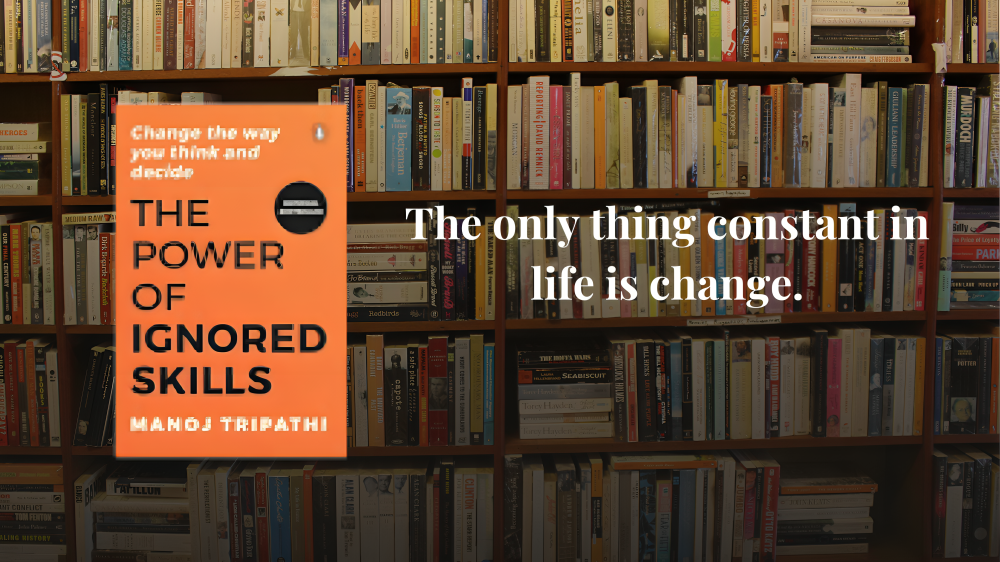
Power of Ignored Skills: Unleashing Hidden Strengths for Success
In a society fixated on mainstream skills such as coding, leadership, marketing, and finance, the power of ignored skills often goes unrecognised. The book Power of Ignored Skills by Manoj Tripathi is a transformative read that contests traditional beliefs about career and personal development. This enlightening text explores the significant, yet often overlooked, abilities that can substantially influence both professional and personal growth.
Consider this scenario: Two employees are employed. One boasts remarkable strategic thinking and exemplary credentials, while the other excels at active listening, adeptly navigates office dynamics, and possesses conflict resolution skills. Who stands a better chance of sustained success? Frequently, it is the latter—the individual equipped with ignored skills like emotional intelligence, resilience, and adaptability.
Tripathi’s book calls for a shift in perspective, urging readers to appreciate these ‘secondary’ skills and their profound impact. Whether someone is an entrepreneur, a corporate professional, or a student, honing these undervalued abilities can alter their life path significantly.
Key Lessons from Power of Ignored Skills
1. Active Listening: The Underrated Superpower
Many individuals may hear, but few genuinely listen. Active listening transcends mere nodding; it involves comprehension, processing, and meaningful engagement. Tripathi highlights how effective listening enhances leadership, fosters relationships, and cultivates trust.
How to cultivate active listening:
- Fully concentrate on the speaker during conversations without premeditating responses.
- Use affirmations like “That’s interesting—tell me more.”
- Summarise the main points to confirm understanding.
By mastering active listening, individuals will enhance their personal and professional relationships, becoming more proficient communicators and leaders.
2. Adaptability: Succeeding Amid Uncertainty
The corporate landscape is rife with unpredictability. With artificial intelligence transforming jobs, market fluctuations, and swift industry changes, the capacity to adapt is no longer a luxury—it is a necessity. Tripathi underscores adaptability as a key, yet frequently disregarded, skill in the contemporary fast-paced environment.
How to enhance adaptability:
- Embrace a philosophy of lifelong learning—constantly refine and expand skill sets.
- Adopt a mindset that regards change as an opportunity rather than a challenge.
- Maintain flexibility in problem-solving and be receptive to feedback.
Adaptability serves as a vital tool that ensures relevance and endurance across various career paths.
3. Emotional Intelligence: The Unseen Leadership Element
While technical skills may earn job offers, emotional intelligence (EQ) influences career progression. Tripathi posits that many professionals struggle due to an overemphasis on IQ, neglecting EQ, which is the ability to understand and manage emotions effectively.
How to improve emotional intelligence:
- Practice self-awareness: Identify emotional triggers.
- Cultivate empathy: Strive to understand others’ perspectives.
- Manage stress efficiently through mindfulness or breathing techniques.
Regardless of the role—leading teams or collaborating on projects—EQ plays an essential role in workplace triumph.
4. Patience: The Distinct Competitive Advantage
In an age governed by instant gratification, it is imperative to remember that significant careers, prosperous enterprises, and rewarding relationships require time. Tripathi reminds readers that patience is a skill often overlooked but crucial for achieving long-term success.
How to develop patience:
- Avoid hasty decisions—gather relevant information before acting.
- Embrace the journey rather than expecting immediate results.
- Build resilience by prioritising progress over perfection.
Cultivating patience fosters endurance, distinguishing those who persevere from those who falter.
5. Writing Skills: A Catalyst for Career Advancement
In today’s digital era, the ability to write clearly and persuasively holds immense value. From emails to reports and social media posts, effective written communication can differentiate professionals. Yet, many fail to recognise the importance of this skill.
How to refine writing abilities:
- Enhance clarity by steering clear of jargon and being concise.
- Logically structure messages—begin with the main idea.
- Engage in daily reading and writing to polish communication skills.
Strong writing capabilities enable individuals to persuade, inform, and influence, making them an invaluable asset in any profession.
[ad_1]