• About Us
  • Contact Us
  • Advertise
  • Privacy Policy
  • Terms and Conditions
Friday, June 5, 2026
  • Login
  • Register
StartupSuperb
  • NewsLatest
    • Trending
    • International Insights
    • Reports
  • Funding FlowJust In
  • Artificial Intelligence
  • Tech
  • Marketing
  • Resources
    • Books
  • Shark Tank
    • Shark Tank India
  • Startup Stories
    • Founder Fridays
    • Superb Shepreneurs
No Result
View All Result
  • NewsLatest
    • Trending
    • International Insights
    • Reports
  • Funding FlowJust In
  • Artificial Intelligence
  • Tech
  • Marketing
  • Resources
    • Books
  • Shark Tank
    • Shark Tank India
  • Startup Stories
    • Founder Fridays
    • Superb Shepreneurs
No Result
View All Result
StartupSuperb
No Result
View All Result
  • News
  • Funding Flow
  • Artificial Intelligence
  • Tech
  • Marketing
  • Insights
  • Resources
  • Shark Tank
  • Startup Stories
  • Social Superb
ADVERTISEMENT
Home Artificial Intelligence

The Illusion of Authenticity: The Rise of Deepfakes and Synthetic Media in Today’s Digital Landscape

Akash Das by Akash Das
May 13, 2025
in Artificial Intelligence
Reading Time: 8 mins read
0
A A
0
The Illusion of Authenticity: The Rise of Deepfakes and Synthetic Media in Today’s Digital Landscape
ADVERTISEMENT
Share on LinkedInShare on FacebookShare on X.comSend on TelegramSend on WhatsApp


Misinformation and AI: A New Challenge for India-Pakistan Relations

Highlights

  • 1 Misinformation and AI: A New Challenge for India-Pakistan Relations
    • 1.1 The Recent Misinformation Surge between India and Pakistan
      • 1.1.1 Example 1: The Phantom Fighter Jets
      • 1.1.2 Example 2: Alleged Anti-India Comments from a Chinese Official
    • 1.2 The Impact of Misinformation
    • 1.3 Media’s TRP Dilemma: The Clash of Verification and Virality
    • 1.4 The Erosion of Trust in the Age of the Internet
    • 1.5 The Need for Government Regulation, Law, and Accountability

Misinformation and AI: A New Challenge for India-Pakistan Relations

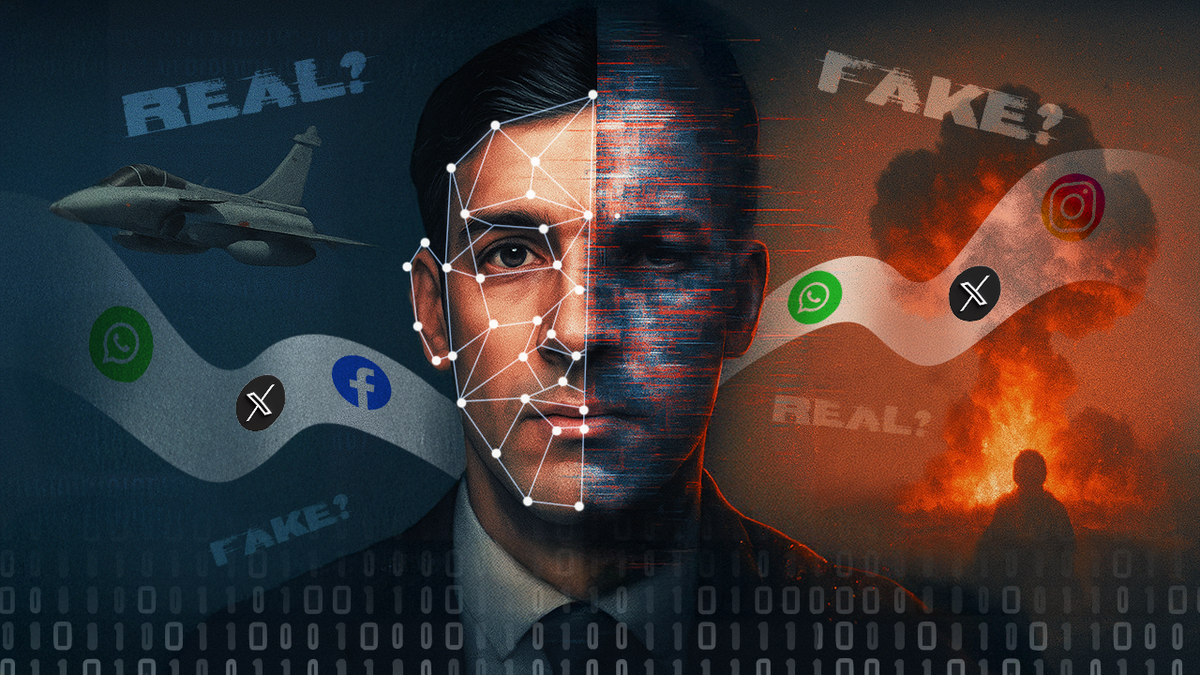
Misinformation is prevalent in the age of AI and can create illusions that are often more deceptive than reality. The internet has transformed into a battleground for information, where technology clashes with truth. From viral falsehoods to real-world crises, the influence of AI in spreading misinformation has raised significant concerns.

ADVERTISEMENT

The Recent Misinformation Surge between India and Pakistan

Amidst heightened tensions between India and Pakistan due to military conflicts, there has been a surge in misinformation through AI-generated deepfakes and digitally modified information. The team at Startup Superb analysed several noteworthy incidents:

Example 1: The Phantom Fighter Jets

A viral video claimed that Pakistan had acknowledged the loss of two JF-17 fighter jets. The content featured a person appearing to be a Pakistani Army spokesperson delivering this message. However, upon close examination by BoomLive fact-checkers, it was identified as a deepfake, showcasing misaligned lip movements alongside audio inconsistencies. Notably, Mohammed Zubair, co-founder of Alt News, highlighted the manipulated audio and inaccurate lip-syncing in a tweet, leading to the video being exposed as a fabricated story.

Example 2: Alleged Anti-India Comments from a Chinese Official

Another video emerged, depicting a Chinese official purportedly stating that “China is more devoted to Pakistan than India.” Sourced from Reddit, this clip intensified scrutiny over its validity. AI experts suggested the presence of manipulated audio overlays, highlighting a disturbing trend where authentic footage serves as a foundation for synthetic voice manipulation.

The Impact of Misinformation

Numerous similar instances have proliferated misinformation, fostering deep-seated distrust between India and Pakistan, even after debunking the original claims. A senior journalist mentioned to Startup Superb that misinformation propagates six times faster than the truth, placing the human brain at a disadvantage. Cognitive biases make individuals susceptible to deepfakes and AI-driven propaganda, and even after false claims are refuted, the residual damage persists. In this highly viral environment, the internet favours sensationalism over credible information, making it imperative for governments to regulate AI and synthetic media as vital for national security and societal stability.

Media’s TRP Dilemma: The Clash of Verification and Virality

What’s even more concerning is that these videos gained traction not only on niche Telegram groups but also among established Indian media outlets. Many of these respected news channels broadcasted or referenced these clips without adequate verification, drawn into a competition for viewership and exclusivity.

Channels that previously focused on reliability fell prey to misleading footage, mistakenly presenting video game visuals as “war zone footage” or AI-generated soldier testimonials. “The media has emerged as the initial victim and the largest promoter of synthetic deception,” articulated a senior digital forensics analyst affiliated with a fact-checking NGO.

The Erosion of Trust in the Age of the Internet

This reality has led to a growing distrust in media sources designed to provide us with accurate information. If a reputable anchor can be altered to convey inflammatory messages or if a news update can be fabricated with cinematic flair, what can we trust? The era of misinformation on the internet has advanced to a level where AI plays a role not just in reporting the news, but in reshaping it entirely. If media, governments, and individuals do not take immediate action, the distinction between truth and falsehood will blur indefinitely.

The Need for Government Regulation, Law, and Accountability

The rise of synthetic media necessitates a swift and coordinated response from governments, tech platforms, and media organisations. India must implement stringent legislation to criminalise malicious deepfakes and enforce transparency in disclosing AI-generated content. Without strong legal frameworks in place, digital impersonation will remain unchecked. Vasundhara Shankar, Managing Partner at Verum Legal, expressed that the concerns surrounding deepfakes within the context of the India-Pakistan situation extend beyond security; there exists a pressing need for legal clarity around synthetic media.

With the likelihood of a legal void not being addressed promptly, social media platforms should take proactive measures to label, demote, and eliminate falsified content—especially during episodes of geopolitical tension. Building partnerships with independent fact-checkers and developing systems for real-time detection must become essential for accountability in the age of AI, rather than optional endeavours.


Tags: AIartificial intelligence
ShareShareTweetShareSend
ADVERTISEMENT
Akash Das

Akash Das

Hi, I’m Akash, an entrepreneur, tech enthusiast, digital marketer, and content creator on a mission to inspire innovation and drive transformation through technology and creativity.My expertise extends to digital marketing, where I craft data-driven strategies for SEO, social media, and branding to empower businesses and creators to grow their online presence. Alongside my entrepreneurial journey, I share my insights and discoveries through engaging blogs, tutorials, and YouTube content.

Related Posts

“Boosting Accessibility: Reliance Digital’s ‘Boot Up India’ Initiative Unveils AI Laptop Deals and Exchange Programs”

“Boosting Accessibility: Reliance Digital’s ‘Boot Up India’ Initiative Unveils AI Laptop Deals and Exchange Programs”

June 1, 2026
0
Neocambrian AI Unveils Cutting-Edge Robotics Data Factory for Physical AI Innovations in India

Neocambrian AI Unveils Cutting-Edge Robotics Data Factory for Physical AI Innovations in India

May 26, 2026
1
Snabbit Explores Physical AI Partnership with Human Archive, Dismisses Home Deployment Plans

Snabbit Explores Physical AI Partnership with Human Archive, Dismisses Home Deployment Plans

May 25, 2026
0
Transforming Indian Homes: Pronto’s Innovative Approach to Investing in Physical AI

Transforming Indian Homes: Pronto’s Innovative Approach to Investing in Physical AI

May 22, 2026
0
Shastra VC Unveils 0 Million Fund to Fuel Deeptech and AI Innovation

Shastra VC Unveils $100 Million Fund to Fuel Deeptech and AI Innovation

May 21, 2026
1
Apple Unveils Exciting Lineup for WWDC 2026: What to Expect from Siri Enhancements to iOS 27

Apple Unveils Exciting Lineup for WWDC 2026: What to Expect from Siri Enhancements to iOS 27

May 19, 2026
0

Leave a Reply Cancel reply

Your email address will not be published. Required fields are marked *

I agree to the Terms & Conditions and Privacy Policy.

This site uses Akismet to reduce spam. Learn how your comment data is processed.

ADVERTISEMENT
StartupSuperb

©️ All rights reserved startupsuperb

Navigate Site

  • About Us
  • Contact Us
  • Advertise
  • Privacy Policy
  • Terms and Conditions

Follow Us

Welcome Back!

Sign In with Google
Sign In with Linked In
OR

Login to your account below

Forgotten Password? Sign Up

Create New Account!

Sign Up with Google
Sign Up with Linked In
OR

Fill the forms bellow to register

*By registering into our website, you agree to the Terms & Conditions and Privacy Policy.
All fields are required. Log In

Retrieve your password

Please enter your username or email address to reset your password.

Log In
No Result
View All Result
  • News
    • Exclusive
    • International Insights
    • Reports
  • Funding Flow
  • Artificial Intelligence
  • Tech
  • Marketing
  • Insights
  • Resources
    • Books
  • Shark Tank
    • Shark Tank India
  • Startup Stories
    • Founder Fridays
    • Superb Shepreneurs
  • Social Superb

©️ All rights reserved startupsuperb

This website uses cookies. By continuing to use this website you are giving consent to cookies being used. Visit our Privacy and Cookie Policy.
Go to mobile version