
Artificial intelligence recruitment has become the new frontier in the competition for dominance in technology, with the spotlight now on talent rather than just chips, data centres or consumer products.
This shift was evident last year when Meta’s chief executive, Mark Zuckerberg, initiated an ambitious recruitment campaign aimed at establishing the company’s Superintelligence Labs, a division dedicated to crafting “personal superintelligence.” This initiative attracted prominent figures from the tech sector, with compensation offers reported to be in the hundreds of millions.
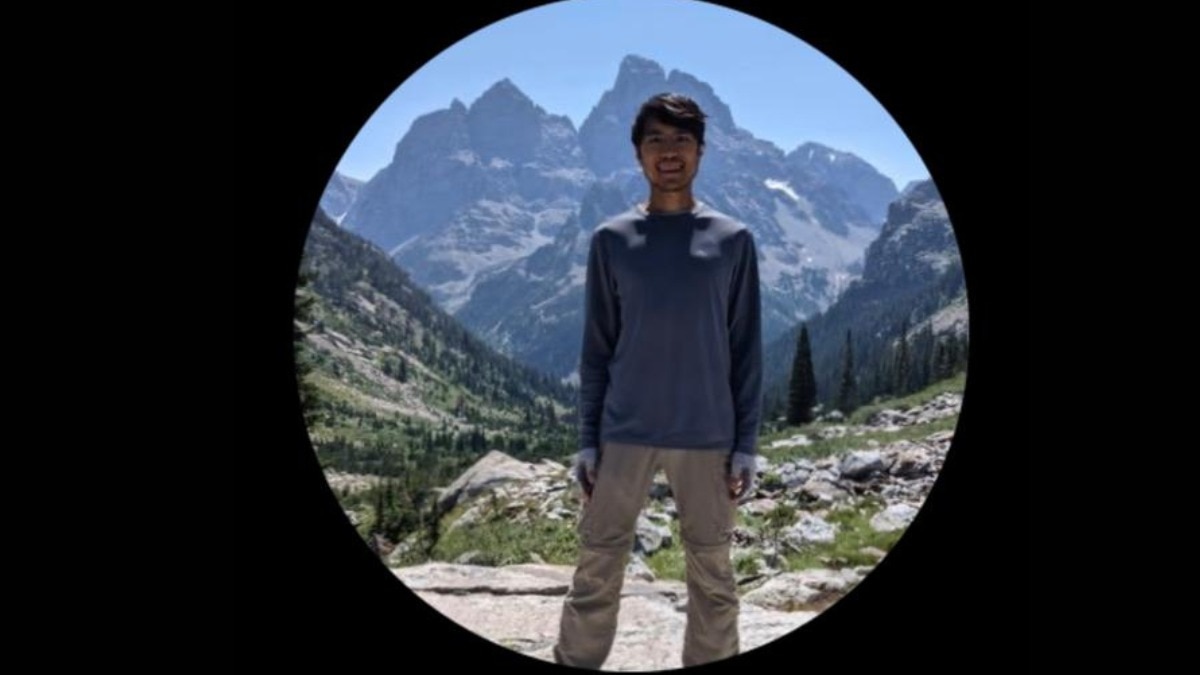
Among the distinguished recruits were Alexandr Wang, the former chief executive of Scale AI, Engj Zhao, a researcher at OpenAI credited as a co-creator of ChatGPT, and Nat Friedman, the former chief executive of GitHub. Yet, perhaps the most significant addition was Ruoming Pang, a highly regarded AI architect who joined Meta in July 2025.
A brief but costly tenure at Meta
Pang’s time at Meta was short-lived, lasting only seven months, despite a compensation package reportedly exceeding $200 million over several years.
According to a report by The Information, OpenAI successfully recruited him after a lengthy pursuit. He joined the company last week, although OpenAI has yet to publicly announce this hire or specify his role.
His exit contributes to a series of significant talent shifts within Meta’s AI divisions, underscoring the notion that competitive salaries do not guarantee employee retention in a landscape where seasoned leaders in large-scale AI systems are in short supply.
Education and early career
Pang obtained a bachelor’s degree in computer science from Shanghai Jiao Tong University, followed by a master’s from the University of Southern California. He later earned a PhD at Princeton University.
Recognised as one of Silicon Valley’s leading AI infrastructure experts, Pang boasts over 15 years of experience, including roles at Google and senior leadership positions at Apple.
At Google, he contributed to foundational systems that support the company’s global services. During his tenure from 2012 to 2017, he co-founded Zanzibar, Google’s well-known authorisation platform that governs access control across its products. His work also included contributions to a large-scale search system using Bigtable, Google’s distributed database technology.
Subsequently, he moved to Apple, where he directed the foundation models team for over four years. His LinkedIn profile indicates that he managed more than 100 engineers focused on developing core large language models that power Apple Intelligence, the company’s AI platform across its devices and services.
Implications of his move for the AI sector
Pang’s transition to OpenAI signifies a broader trend of elite talent consolidating around organisations adept at constructing and managing advanced models on a large scale. For Meta, the loss of such a prominent hire shortly after an extensive recruitment effort complicates its goals to hasten superintelligence developments.
Conversely, for OpenAI, bringing on board an individual with extensive experience from Google’s infrastructure, Apple’s consumer AI framework, and Meta’s research environment enhances its competitive edge in this advancing phase of the AI competition.