
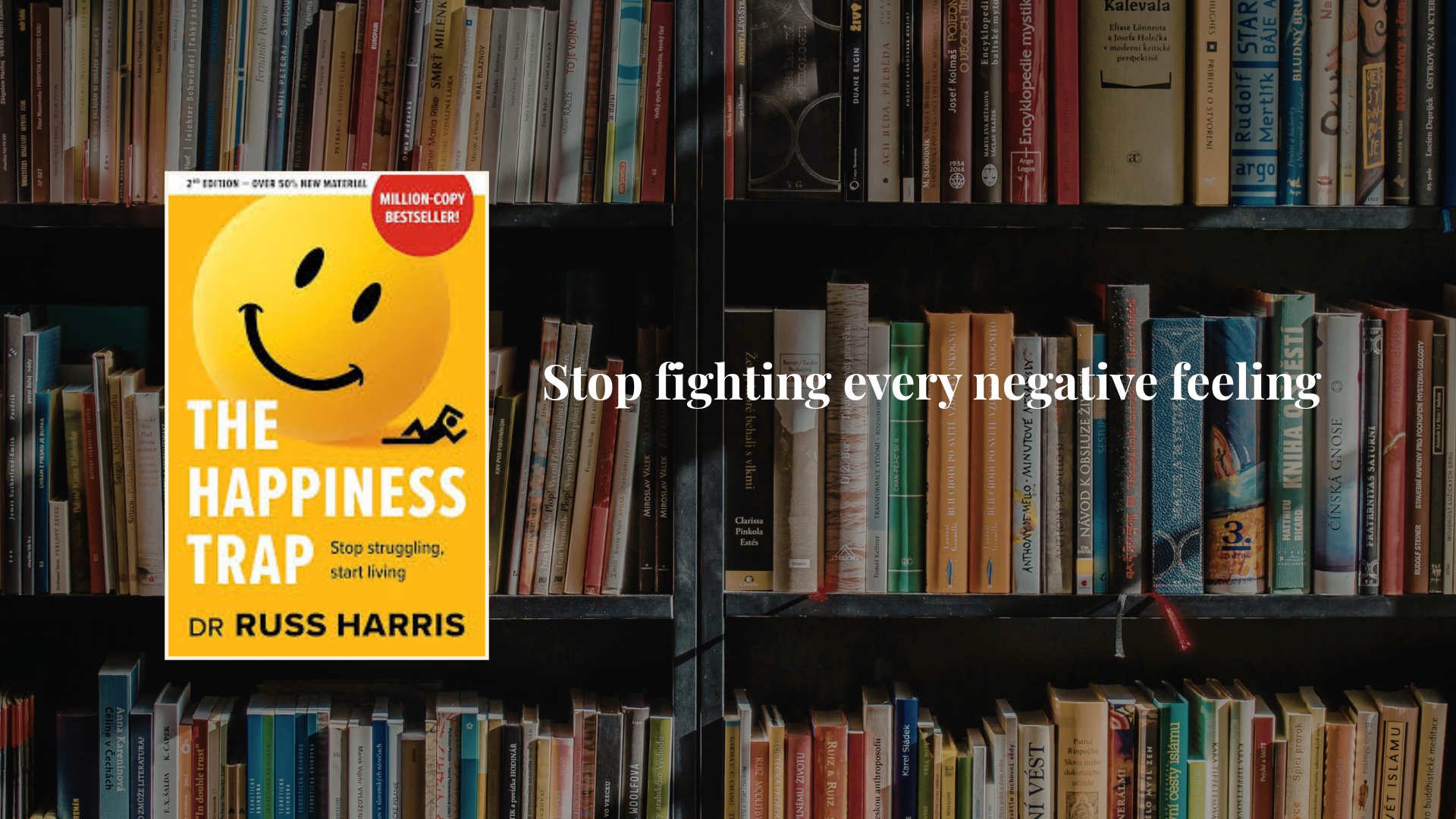
The Happiness Trap: Overcoming Overthinking
Overthinking quietly creeps into the mind. It often begins with a repeated thought, an overly analysed conversation, a persistent regret, or an unfounded worry about future events. Before one knows it, the mind feels overwhelmed. Physical presence is felt, yet mental energy is consumed by loops of anxiety, doubt, and endless “what if” scenarios.
This is where The Happiness Trap, written by Russ Harris, offers a distinct perspective. Grounded in Acceptance and Commitment Therapy (ACT) principles, the book challenges the conventional belief that happiness arises from eradicating negative thoughts. Instead, it guides readers on how to engage with their thoughts differently, without allowing these thoughts to dictate their lives.
5 Effective Teachings from The Happiness Trap
1. Thoughts Are Not Always Facts
A key lesson from the book emphasises that merely thinking something does not equate to it being true. Overthinkers frequently consider thoughts as factual evidence. Questions like “What if I fail?” or “What if they dislike me?” can feel very real, thus influencing emotions and decisions. Russ Harris motivates readers to distance themselves from these thoughts rather than accepting them as truths. Recognising thoughts as just thoughts is liberating, diminishing the hold anxious thinking can have on everyday life.
2. Stop Fighting Negative Emotions
Many hold the belief that peace of mind is achieved by steering clear of discomfort. However, The Happiness Trap argues that constantly battling feelings of sadness, fear, or stress can intensify these emotions. The essential message is one of acceptance; not surrender, but allowing emotions to exist without relentless resistance. For individuals prone to overthinking, this is particularly significant as much of the mental fatigue stems from attempting to control rather than comprehend emotions.
3. Focus on the Present Moment
Overthinking often dwells in the realms of regretting the past or fearing the future, rarely residing in the present. One of the strongest lessons from The Happiness Trap is the importance of redirecting attention to the present moment. What is currently happening? What aspects can be controlled today? Simple mindfulness practices, such as concentrating on breathing, surroundings, or tasks at hand, can halt incessant mental spirals. This doesn’t erase worries but helps manage them more effectively.
4. You Don’t Need to Control Every Thought
Many who overthink assume that achieving a peaceful mind involves fostering only positive or calm thoughts. Yet the book presents a surprising insight: attempting to control thoughts often magnifies them. The more one insists on not thinking about something, the more persistent that thought becomes. Instead of confronting thoughts directly, Russ Harris encourages observing them without attachment. Letting thoughts arrive and depart without immediate reaction provides relief by eliminating pressure. It is not necessary to have a flawless mind to feel content.
5. Build a Life Based on Values, Not Fears
Perhaps the most impactful lesson in the book is to cease allowing fear to drive decisions. Overthinking can lead to delays in seizing opportunities, avoiding risks, or excessively scrutinising choices due to the paralysis caused by fear. The Happiness Trap invites readers to direct their focus on values instead. Questions such as “What type of person do I aspire to be?” and “What truly holds significance for me?” lead to decisions anchored in values, which typically foster greater peace compared to those rooted in fear.
Also Read
5 Books Every Overthinker Needs for Daily Mental Calm