
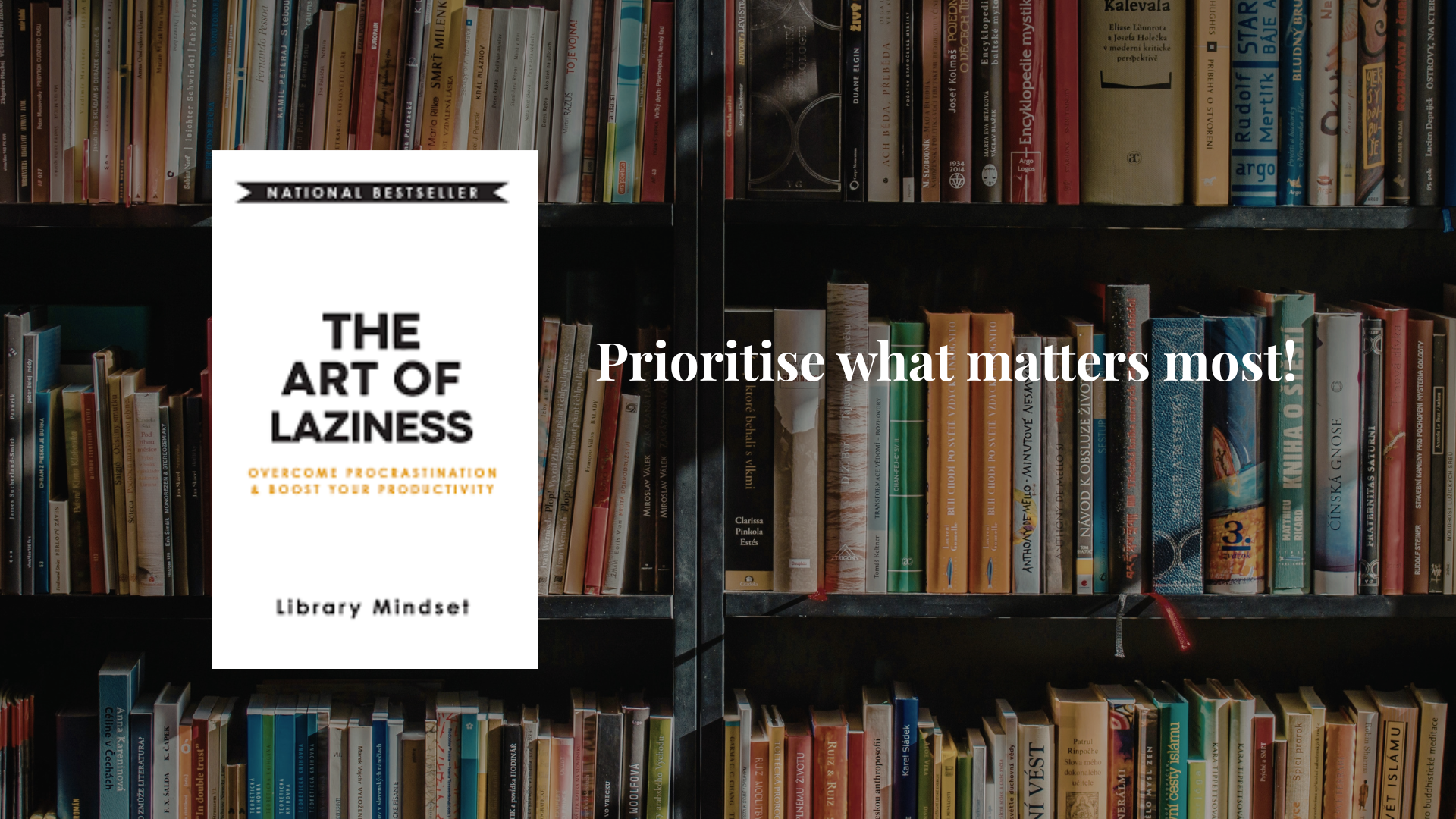
The Art of Laziness: Enhancing Productivity through Smart Work
The Art of Laziness redefines productivity, suggesting that true efficiency lies not in relentless busyness but in smarter work habits. For years, society has equated productivity with long hours and constant activity. While many strive to stay busy, a significant number still feel drained and unproductive despite their efforts. The notion of needing to ‘hustle’ often leads to burnout.
This enlightening book invites readers to reconsider their approach to work, focusing on the merits of energy management and intentional actions rather than just maintaining a hectic pace. Below are ten essential lessons derived from The Art of Laziness regarding how to work more efficiently.
10 Useful Lessons from The Art of Laziness
1. Stop Glorifying Busyness
A key takeaway is that being busy does not guarantee productivity. Many individuals find themselves preoccupied with emails, unnecessary meetings, and constant task-switching without making significant progress. The book encourages focusing on outcomes rather than mere activity. Evaluating the value of tasks can help in moving work and life forward effectively.
2. Prioritise What Matters Most
Attempting to accomplish everything can often lead to inadequate execution. The Art of Laziness promotes identifying high-impact tasks that warrant attention over numerous lesser priorities. Concentrating on fewer significant tasks can yield far better results than trying to do everything at once.
3. Rest is Productive Too
Rest is often unfairly perceived as laziness in today’s society. However, fatigue rarely leads to enhanced performance. The book highlights that taking breaks can actually rejuvenate focus and creativity, which leads to greater productivity. This notion alleviates the guilt associated with taking time off from work.
4. Work with Your Energy, Not Against It
Everyone experiences varying energy levels throughout the day. While some are most productive in the morning, others perform better later in the day. The book advocates for aligning critical tasks with personal energy peaks, suggesting that self-awareness can drastically improve productivity.
5. Automate Repetitive Decisions
Frequent small decisions can contribute significantly to mental fatigue. Establishing routines can mitigate unnecessary cognitive strain. Techniques such as meal planning, time blocking, and organised systems can conserve valuable mental energy for significant work tasks. Simplifying daily life can enhance overall efficiency.
6. Learn to Say No to Distractions
Constant interruptions can severely undermine productivity. Notifications, chats, and multitasking often divert focus more than individuals may realise. The book encourages intentional attention management, suggesting that working smarter may simply involve minimising distractions.
7. Perfectionism Wastes Time
Perfectionism can often disguise procrastination. Many delay progress by seeking perfection before taking action. This tendency can lead to stagnation. The Art of Laziness champions progress over perfection, emphasising that completing a task usually holds more importance than its flawless execution.
8. Simplify Complicated Systems
Many individuals complicate their productivity strategies unnecessarily. Complex schedules and unrealistic routines are often harder to sustain. The book advocates for simplicity, stating that sustainable systems are typically more effective than overly ambitious ones.
9. Focus on Leverage, Not Effort Alone
The limitations of hard work become evident when it lacks scalability. By exploring methods to save time, delegate tasks, or enhance effectiveness, longer-term results can be achieved. Intentional planning is far more advantageous than continuous overworking.
10. Productivity Should Support Life, Not Replace It
The most significant lesson from this book highlights that productivity aims to enhance life rather than overshadow it. Achievements lose their value when health and relationships suffer. Working smarter means establishing a balance to avoid constant exhaustion and burnout.
The Art of Laziness serves as a vital reminder in a culture fixated on hustle: achieving more does not always equate to better results. Slowing down, focusing on priorities, and safeguarding energy can yield enhanced outcomes compared to relentless busyness.
Also Read
Struggling with productivity: Master the Eisenhower Box Method