
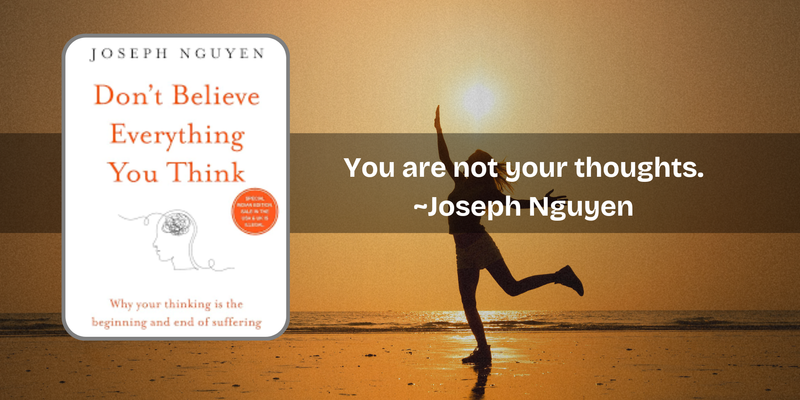
Have you ever found yourself over-analyzing a situation to the point where it drained your energy? Or perhaps you have believed a negative scenario your mind imagined, despite it having yet to occur? If you can relate to this, you are certainly not alone. Many people fall into the trap of believing that every single thought holds truth and significance. However, what if your thoughts are merely narratives your mind constructs, rather than undeniable realities? Joseph Nguyen’s *Don’t Believe Everything You Think* provides a refreshing perspective on this notion. The book challenges a common misconception: the belief that our thoughts shape our reality. Nguyen guides readers on an enlightening journey to understand how our minds can generate unwarranted stress, anxiety, and self-doubt, and most importantly, how to escape these mental pitfalls.
In this article, we will delve into five transformative lessons from *Don’t Believe Everything You Think*. Each lesson is crafted to assist you in reconsidering your thought patterns, embracing mindfulness, and fostering a life that is more peaceful and purposeful. Let’s explore how a mere shift in perspective can result in significant inner freedom.
Lessons from the Book *Don’t Believe Everything You Think*
The charm of this book lies in its straightforwardness and relatability. Nguyen refrains from overwhelming readers with intricate theories. Instead, he provides practical insights and easily digestible lessons that resonate deeply. Whether you are grappling with overthinking, facing self-doubt, or seeking clarity amidst life’s chaos, the concepts outlined in this book can empower you to regain control over your thoughts and your life.
1. Your Thoughts Are Not Your Reality
Many people presume that their thoughts define their identity and reflect the truth. Nguyen clarifies that thoughts are simply narratives formulated by our minds. He encourages readers to observe their thoughts without attachment, facilitating the separation of facts from mental distortions and alleviating unnecessary emotional pain. Learning to perceive your thoughts as fleeting clouds rather than absolute certainties is the initial step toward liberation.
2. Awareness Is the Key to Freedom
Nguyen highlights the significance of awareness in breaking free from negative thought patterns. By becoming mindful of your internal dialogue, you can intentionally steer it in a positive direction. Instead of allowing harmful thoughts to dominate your mind, awareness enables you to question them. This practice empowers you to establish a mindset anchored in truth and optimism.
3. Happiness Comes from Within
Society often teaches us to pursue happiness through external accomplishments. Nguyen challenges this notion by asserting that genuine happiness originates from within. He elaborates that one can discover peace in the present moment by relinquishing the need for external endorsement. This lesson inspires readers to cease seeking validation from outside sources and to start valuing the inner joy that is inherent within themselves.
4. Let Go of Control
A significant source of stress derives from the desire to control every aspect of our lives. Nguyen encourages embracing uncertainty and trusting the natural course of life. Letting go does not equate to surrender; instead, it denotes the acceptance that not everything is within your control. By releasing the need for control, you diminish anxiety and open yourself to new opportunities.
5. Your Mind Is a Tool, Not a Master
Nguyen articulates that your mind serves as a tool designed to assist you, not to dominate you. Many individuals allow their thoughts to dictate their lives, resulting in continual overthinking and worry. By acknowledging that you are not defined by your mind, you can reclaim control and utilise it effectively to solve problems rather than exacerbate them. This alteration in viewpoint can profoundly enhance your mental clarity and emotional wellness.
[ad_1]