Highlights
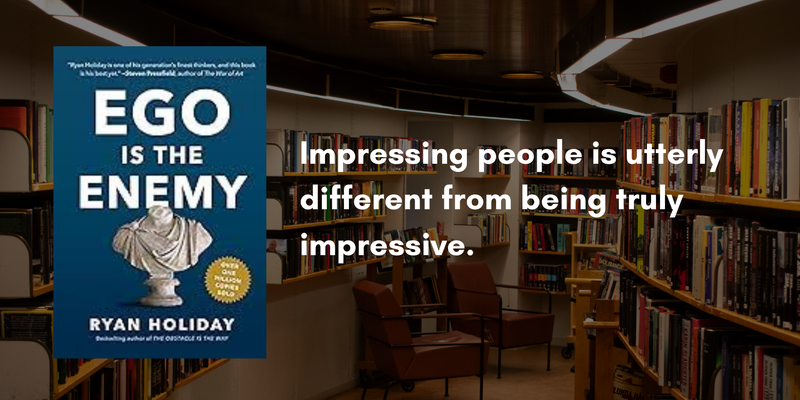
Ego Is the Enemy: A Guide to Overcoming Ego for Success
Ego is a powerful but quiet influence that can either propel us forward or lead us to destruction. It subtly tells us that we are more significant than we truly are, leading to an inflated view of our capabilities, resistance to constructive criticism, and a focus on seeking praise instead of mastering our craft. This detrimental behaviour hinders many individuals from achieving their maximum potential. But how can one recognise and manage their ego before it steers them off course? Ryan Holiday’s Ego Is the Enemy delivers a deep and pragmatic approach to overcoming ego throughout various life stages—whether aspiring, achieving, or facing failure. By utilising historical examples, philosophical insights, and practical experiences, Holiday explores the harmful aspects of ego and presents tangible strategies to keep it under control. This book serves not merely as a plea for humility but as a comprehensive guide towards genuine success grounded in discipline, self-awareness, and lifelong learning.
Key Lessons from Ego Is the Enemy
Regardless of whether one is a driven entrepreneur, a seasoned executive, or simply a person on a path to self-improvement, the following insights can assist in sidestepping the pitfalls of ego and fostering a more rewarding existence.
1. Embrace Lifelong Learning Instead of Perceived Mastery
Ego fosters a false sense of arrival, convincing individuals that they have exhausted their capacity to learn. In contrast, true expertise comes from an unending desire for knowledge. Holiday points out that history’s most accomplished figures consistently viewed themselves as learners. Icons like Bill Gates and Warren Buffett invest extensive time in reading and education, recognising that the pursuit of knowledge is infinite.
How to implement this lesson:
- Maintain a beginner’s mindset and strive to learn from every scenario.
- Surround oneself with individuals who stimulate thought and teaching.
- Welcomely accept feedback and use it for personal growth rather than seeking affirmation.
2. Understand That Success Does Not Justify Arrogance
Removing ego reveals reality. One of ego’s most hazardous pitfalls is the belief that success renders one invincible. Numerous eminent leaders and organisations have faltered due to arrogance, neglecting crucial warnings and failing to adapt. Holiday cites Howard Hughes, the billionaire entrepreneur who fell into isolation and paranoia due to his rampant ego.
How to implement this lesson:
- Maintain humility regardless of achievements.
- Recognise that prior success does not guarantee future accomplishments.
- Engage with mentors and advisors who help regulate ego-discomfort.
3. View Failure as an Educational Experience, Not a Label
Failure is unavoidable, yet ego transforms it into a significant personal setback, obscuring its value as a lesson. Holiday emphasises that many successful individuals, including Steve Jobs and Abraham Lincoln, used their failures to fuel future victories by separating their egos from the situation.
How to implement this lesson:
- Reimagine failure as a catalyst for success.
- Dissect mistakes with an objective perspective to glean essential lessons.
- Take ownership of decisions; abstain from assigning blame and strive for improvement.
4. Prioritise the Effort Over Outside Validation
The sole element that truly counts is daily productivity. Ego seeks affirmation, yearning for applause, recognition, and outside rewards. Nonetheless, the most influential individuals concentrate on the quality of their work, independent of accolades. Holiday posits that true professionals consistently show up for their responsibilities, regardless of any external recognition.
How to implement this lesson:
- Set goals centred around the process, rather than seeking outside approval.
- Maintain consistent effort, even when unobserved.
- Detach from both praise and criticism; remain dedicated to improving one’s craft.
5. Commit to Something Greater Than Yourself
The ego thrives when individuals perceive themselves as the centre of everything. In contrast, those who find fulfilment devote themselves to a larger cause—a mission, a community, or a greater good. Holiday references historical exemplars such as George Marshall, who prioritised altruism over self-aggrandisement.
How to implement this lesson:
- Identify a purpose that transcends personal gain.
- Engage in activities that yield benefits for others.
- Practice gratitude and consistently acknowledge the larger context of existence.
Ego has the potential to be the major hindrance in personal development, obstructing growth, education, and the attainment of genuine success. By adopting a mindset of continuous learning, remaining humble, learning from failure, concentrating on one’s efforts, and committing to a higher cause, individuals can manage their ego and unlock their full potential. Throughout the journey, individuals should continually assess whether their ego is obstructing their path.