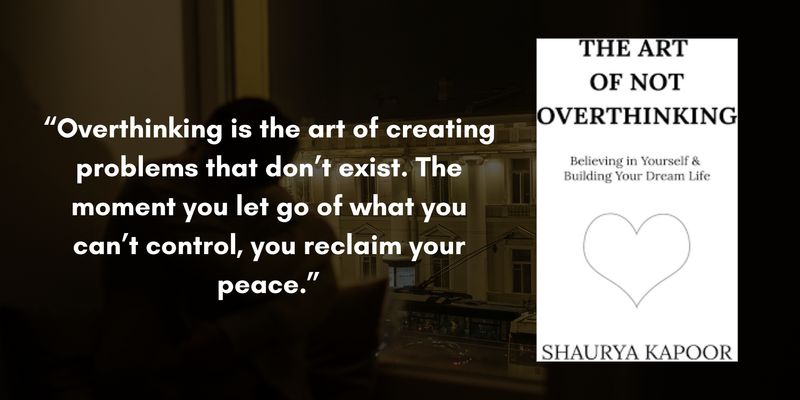
Overthinking can be a subtle thief of both time and inner peace. Many individuals find themselves caught in a cycle of incessant “what-ifs” and “should-haves.” This is a pattern that many are all too familiar with. Overthinking can render us incapable of making decisions, robbing us of present joy and generating unnecessary stress. If this sounds like you, rest assured, you are not alone. In his insightful publication, The Art of Not Overthinking, Shaurya Kapoor offers a valuable guide to breaking free from the unending loop of overthinking. Kapoor not only identifies the issue but also presents practical and actionable strategies that empower readers to regain control of their thoughts and enjoy a more balanced life. Let’s explore the most impactful insights from this essential read.
Highlights
- 1 Key Takeaways from The Art of Not Overthinking
- 1.1 1. Understanding the Root Causes of Overthinking
- 1.2 2. The Power of Decisive Action
- 1.3 3. Shifting to a Solution-Oriented Mindset
- 1.4 4. Letting Go of What You Can’t Control
- 1.5 5. The Importance of Boundaries and Saying No
- 1.6 6. Mindfulness as a Daily Practice
- 1.7 7. Embracing Imperfection
- 1.8 8. Simplifying Your Life
Key Takeaways from The Art of Not Overthinking
1. Understanding the Root Causes of Overthinking
Kapoor stresses that the roots of overthinking often lie in deeper emotional triggers such as fear of failure, past traumas, or societal pressures. He encourages readers to pinpoint their own specific triggers. For example:
– Are you overanalysing a conversation due to past criticisms?
– Or are you hesitant to take action because of a fear of rejection?
Lesson: Self-awareness is the crucial first step towards liberation. By recognising your triggers, you can halt overthinking effectively. Consider journaling or reflecting on instances when your thoughts spiral uncontrollably—identify what sparked them. Acknowledging these patterns will assist you in addressing the underlying issues.
2. The Power of Decisive Action
One of Kapoor’s fundamental principles is that “Action diminishes anxiety.” He believes that overthinking flourishes in situations of inaction. When presented with a decision, we frequently procrastinate, hoping for the “ideal” outcome. However, perfection is an illusion, and such delays only amplify mental turmoil.
Lesson: Begin with small steps and act promptly. Kapoor recommends establishing a “decision deadline.” For example, if you are torn between two career paths, assign yourself a specific date by which to decide. Commit to your choice, recognising that no decision is without its risks.
3. Shifting to a Solution-Oriented Mindset
Kapoor points out that overthinking tends to concentrate on problems rather than solutions. Instead of rehearsing scenarios and picturing worst-case scenarios, train your mind to ask, “What is the next best step I can take?”
Lesson: Reframe your challenges. If you find yourself overthinking a mistake at work, take a moment to reflect: What’s done is done. Consider what lessons you can extract from it and how you might avoid similar mistakes in the future. Adopting a proactive mindset alleviates unnecessary stress.
4. Letting Go of What You Can’t Control
A significant lesson from the book is Kapoor’s focus on zeroing in on what you can control. Overthinking often involves ruminating on external factors—others’ opinions, unpredictable outcomes, or past events. This mental exertion is unproductive and wasted.
Lesson: Pose the question, “Is this within my control?” If the response is no, consciously choose to release it. Kapoor introduces mindfulness techniques, such as deep breathing or grounding exercises, to assist readers in redirecting their focus.
5. The Importance of Boundaries and Saying No
Kapoor delves into the interplay between overthinking and a tendency to people-please. He notes that endlessly agreeing to requests can result in emotional exhaustion and continuous second-guessing of our choices. Establishing boundaries is not a selfish act; it is necessary.
Lesson: Practice saying “no” when requests do not align with your priorities. For instance, if a colleague seeks your assistance while you are overwhelmed with your own responsibilities, kindly decline. By valuing your time, you can reduce situations that lead to overthinking.
6. Mindfulness as a Daily Practice
Kapoor dedicates a complete chapter to mindfulness and its significance in countering overthinking. He explains how staying present can quiet mental chatter and promote clarity.
Lesson: Integrate mindfulness into your daily routine. This could be through meditation, mindful walking, or simply enjoying a meal free from distractions. These moments ground you in the present. Kapoor recommends starting with five minutes each day and progressively increasing the time.
7. Embracing Imperfection
At the core of Kapoor’s message is the idea that perfectionism amplifies overthinking. The yearning to achieve everything “correctly” often leads to procrastination and self-doubt.
Lesson: Acknowledge that imperfection is a natural part of being human. Focus on progress rather than perfection. If you hesitate to embark on a project due to concerns about its perfection, remind yourself that completion is better than perfection.
8. Simplifying Your Life
Kapoor argues that a cluttered mind frequently arises from a cluttered life. Streamlining your surroundings, commitments, and digital habits can greatly reduce mental burdens.
Lesson: Declutter your environment and schedule. For example, tidy your workspace and unsubscribe from emails that offer little value. A simpler life paves the way for mental clarity.