Highlights
Starlink Internet Service: What India Can Expect
Starlink, the satellite internet service from SpaceX, founded by Elon Musk, has swiftly expanded to offer high-speed internet in remote and lesser-served locations worldwide. Although the service has reached over 100 nations, including Bhutan, its entry into India is currently pending due to regulatory approvals and security issues. Once consented, what Starlink plans and internet speeds might be anticipated by users in India?
Understanding How Starlink Operates
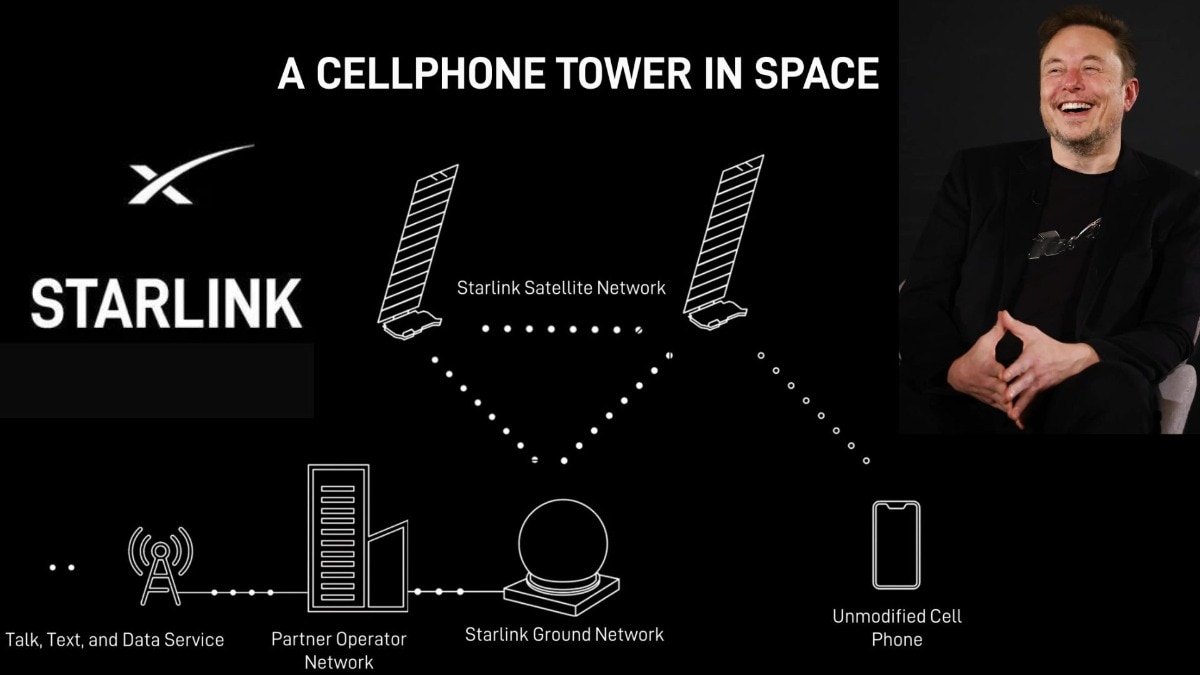
Starlink differs from conventional broadband systems that depend on underground fiber optics or cellular infrastructure. Instead, it operates through a network of low-Earth orbit (LEO) satellites to deliver internet connectivity. As of January 2024, SpaceX has successfully launched nearly 7,000 Starlink satellites, with Musk indicating intentions to update the network with new technology every five years.
Connecting to Starlink:
- Users need a Starlink dish and router which establish communication with the satellites circling the planet.
- The dish automatically adjusts itself to connect with the nearest Starlink satellite cluster to ensure seamless connectivity.
- Although designed for fixed locations, Starlink can also provide internet service in moving vehicles, boats, and planes with additional equipment.
Starlink Plans and Speeds: Anticipations for India
While the specific offerings of Starlink for India have yet to be revealed, Bhutan’s pricing structure and speed options can be used as a benchmark for what might be available.
Starlink Plans in Bhutan:
- Residential Lite Plan – Nu 3,000 (approximately ₹3,001) per month
- Speeds: Ranging from 23 Mbps to 100 Mbps
- Ideal for light browsing, engaging on social media, and streaming videos.
- Standard Residential Plan – Nu 4,200 (approximately ₹4,201) per month
- Speeds: Between 25 Mbps and 110 Mbps
- Provides unlimited data suitable for gaming, HD streaming, and video calls.
If Starlink commences operations in India, it is expected that its pricing and speed offerings will be competitive with other satellite broadband firms, such as OneWeb, supported by Bharti, and Jio-SES. With a 30% additional tax on foreign digital services in India, Starlink’s plans may be somewhat higher than its costs in Bhutan, possibly starting from ₹3,500 to ₹4,500 monthly.
Will Starlink Outperform Traditional Broadband in India?
Starlink’s LEO satellites present lower latency (between 25-50 ms) compared to traditional geostationary satellite internet, which experiences over 600 ms latency. This characteristic makes it suitable for video conferencing, online gaming, and HD streaming. However, in urban locales, fiber-optic internet services such as JioFiber and Airtel Xstream still provide better speeds at reduced prices.
Starlink could prove advantageous in India, especially in rural and remote areas where fiber connectivity is either unstable or absent.
Should Starlink gain the necessary approvals, it has the potential to significantly enhance rural connectivity in India, supporting existing fiber and mobile infrastructures. Nevertheless, factors such as pricing, governmental regulations, and urban availability will dictate its competitiveness against traditional broadband providers.
At this time, India remains on standby, while countries like Bhutan, Bangladesh, and Myanmar continue to progress with their Starlink implementation.