


Impulse Space Revolutionises Satellite Transport to Geostationary Orbit
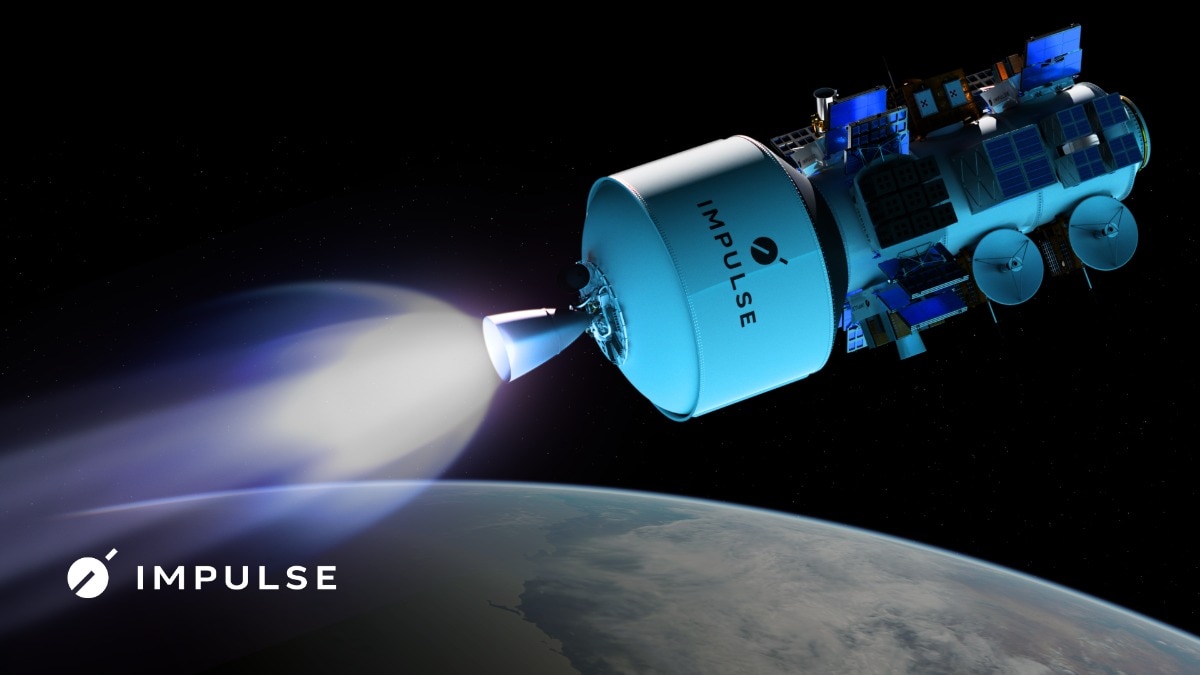
Impulse Space, an in-space transport startup, has unveiled three significant deals intended to change the way satellites access geostationary orbit (GEO). Utilizing its Helios methane-oxygen kick stage, the company plans to reduce transit times from several months to under 24 hours.
Founded in 2021 by Tom Mueller, who previously led propulsion at SpaceX, Impulse is presenting Helios as the “courier service” for space logistics. Mueller, responsible for developing the Merlin and Raptor engines at SpaceX, established Impulse with a focus on final-mile delivery in low Earth orbit (LEO) and rapid transfers to GEO.
Recent Major Agreements by Impulse Space
In the last week, Impulse announced three groundbreaking agreements:
- A demonstration mission scheduled for 2026 with defence contractor Anduril, aiming to highlight rendezvous and proximity operations vital for space domain awareness.
- A transportation agreement with GEO communications startup Astranis in 2027, allowing Helios to transport MicroGEO satellites from LEO to GEO in less than 24 hours.
- A multi-launch contract with France’s Infinite Orbits commencing in 2027, designed to carry satellite-servicing spacecraft through a ride-share scheme known as Caravan.
How Helios Operates
Helios functions as a kick stage attached to larger rockets. Once placed into orbit, its Deneb engine activates, propelling payloads to their designated locations. This system stands out from traditional approaches, which can extend over months, offering almost immediate repositioning—a significant advantage for both commercial operators and the US Department of Defense.
Collaboration with Anduril
In partnership with Anduril, Impulse will develop a demonstration satellite equipped with sensors and processors for approaching, inspecting, and tracking various space objects. Helios will transport this satellite to GEO in less than 24 hours, after which it will perform autonomous manoeuvres and imaging tasks.
Challenges and Opportunities in GEO
Satellites positioned in GEO encounter various challenges such as traversing the high-radiation Van Allen belts, managing communication delays, and executing precise station-keeping. However, GEO holds immense value for sectors like telecommunications, defence, and observational technologies, making quicker access to this orbit a transformative development.
Impact on Commercial Services
Astranis’ expedited activation timeline may result in swifter satellite broadband solutions for customers on Earth. Additionally, the Caravan programme will enable smaller satellite operators to share launch opportunities, replicating SpaceX’s effective ride-share model.
The Future of GEO with Impulse Space
While the space industry has concentrated primarily on LEO in recent years, Impulse identifies GEO as the forthcoming horizon. Should Helios perform as anticipated, it has the potential to redefine timelines for satellite deployment, providing both commercial enterprises and military applications with a significant advantage.