Highlights
India’s AI Initiatives
India is preparing to undertake the majority of its artificial intelligence (AI) projects using home-grown models within a year, as it strives for self-sufficiency in computing and digital infrastructure, according to Ashwini Vaishnaw, the minister for electronics and information technology.
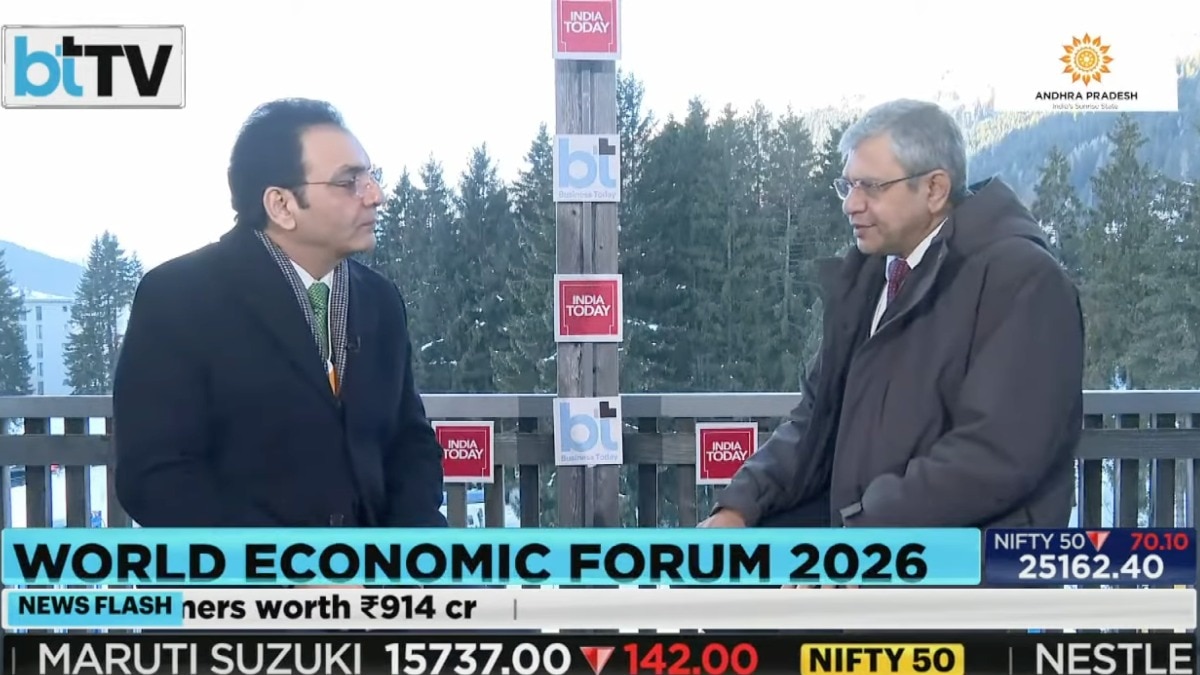
In an exclusive discussion with Startup Superb during the World Economic Forum in Davos, Vaishnaw indicated that India is no longer passively responding to international technology trends; instead, it is proactively influencing them through significant infrastructure investments and a digital-first economic approach.
Future of AI in India
Vaishnaw expressed confidence that in one year’s time, most AI-related activities will leverage the nation’s proprietary models.
India has initiated an ambitious national AI mission focused on escalating domestic computing capacity, models, and applications. The minister emphasized the government’s commitment to democratizing access to cutting-edge technology by establishing a shared national backbone.
“We will introduce a complete suite of AI applications, readily accessible to our citizens, and expand our common computing facility, which currently houses 38,000 GPUs,” Vaishnaw mentioned.
Value Creation Through AI Use Cases
Vaishnaw articulated that India’s considerable size, diversity, and industrial intricacies position it as the “use case capital of the world.” He asserted that while large language models (LLMs) will eventually become standardised, substantial value will arise from their large-scale implementation.
“The genuine value will stem from specific use cases across governance, healthcare, education, agriculture, and manufacturing,” he pointed out.
Progress in Semiconductor Manufacturing
Alongside its AI ambitions, Vaishnaw underscored the rapid advancements in India’s semiconductor and electronics manufacturing sectors, which have become integral to the nation’s overarching industrial strategy.
He stated that India’s chip ecosystem is evolving from mere assembly and testing to advanced design and fabrication.
“We are currently designing 2nm chips domestically, with 24 startups engaged in their own design efforts,” he added.
Building a Comprehensive Semiconductor Ecosystem
According to Vaishnaw, India has established a presence throughout the entire semiconductor value chain, encompassing design, packaging, fabrication, and electronics manufacturing.
“Electronics exports now rank as the third largest category of exported goods,” he noted.
Incentives for Global Manufacturers
The government has introduced production-linked incentive schemes, capital subsidies, and long-term policy support to attract international chipmakers and electronics manufacturers, positioning India as a viable manufacturing hub amidst geopolitical shifts and supply-chain diversification.
Vaishnaw pointed out that this transition is also altering the perspective of global investors and technology firms regarding India.
He mentioned that stable and predictable policies are fostering long-term investments in both digital and physical infrastructure, ranging from data centres and telecom networks to fabs and electronics production facilities.
India as a Trusted Global Partner
Vaishnaw concluded that India is now recognised as a reliable global partner, combining vast scale, skilled talent, and consistent policies to develop what he referred to as a new model of technology-driven growth.