Highlights
Copilot 3D – Microsoft’s New AI Feature for Effortless 3D Models
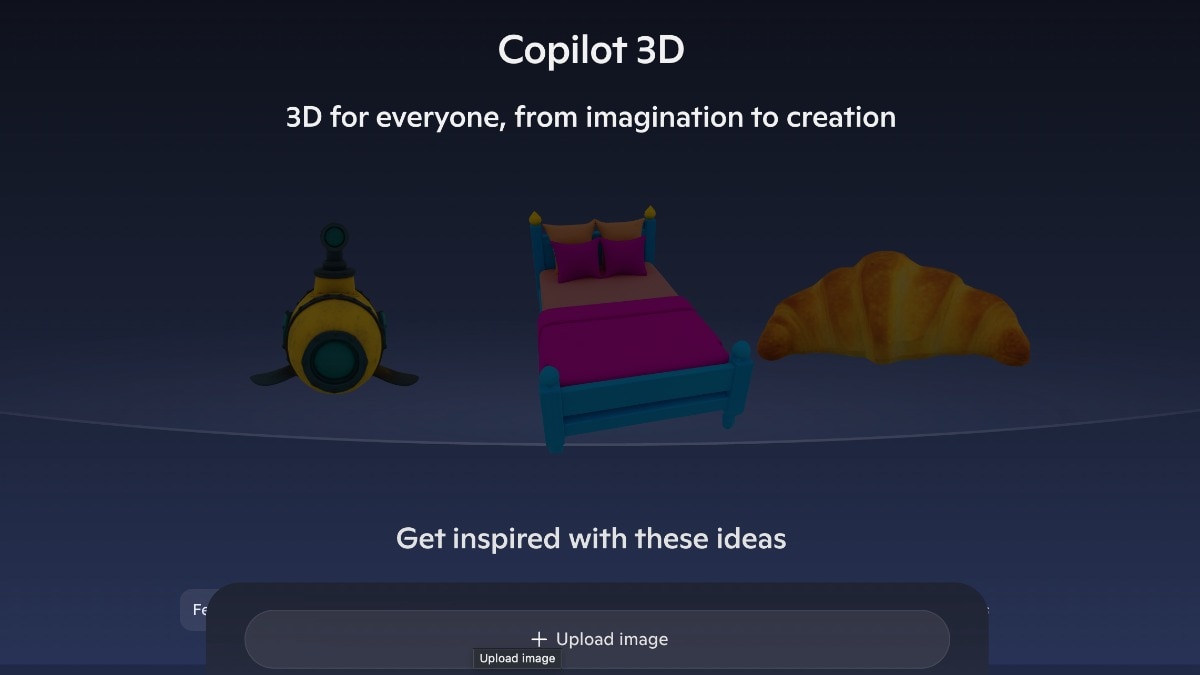
Copilot 3D by Microsoft allows users to transform static 2D images into fully rendered 3D models without the need for any specialised design knowledge. This innovative feature is available through Copilot Labs and can be accessed globally by anyone logged into a personal Microsoft account, with no subscription required.
The Simplicity of Copilot 3D
Copilot 3D aims to streamline the creation of 3D assets, making the process both simple and intuitive. Users can upload an image file with a maximum size of 10MB, after which the AI generates a 3D model that is ready for printing or rendering. These assets are ideal for use in gaming, animation, 3D printing, augmented reality (AR), virtual reality (VR) projects, and those related to the metaverse.
Inspiration and Capabilities
For creative inspiration, Microsoft offers a curated library of unique scenes. Currently, the tool supports only the conversion from 2D images to 3D models and does not feature text-to-3D functionality yet. Users are encouraged to utilise the feature on a desktop for the best experience, although it is also accessible via mobile browsers.
Competing Technologies in the Market
While Microsoft’s Copilot 3D brings a user-friendly solution to the table, it is not the first tool of its kind. Stability AI launched its Stable Video 3D (SV3D) model in 2024. Furthermore, tech giants such as Tencent, Meta, and Apple have developed similar 3D generation tools. Apple’s recent offering, Matrix3D, which was released earlier this year, also facilitates the conversion from 2D images to 3D models.
Practical Applications of Copilot 3D
Microsoft asserts that the assets created using Copilot 3D are both print- and render-ready, ensuring they are suitable for immediate application in various creative and professional environments.