


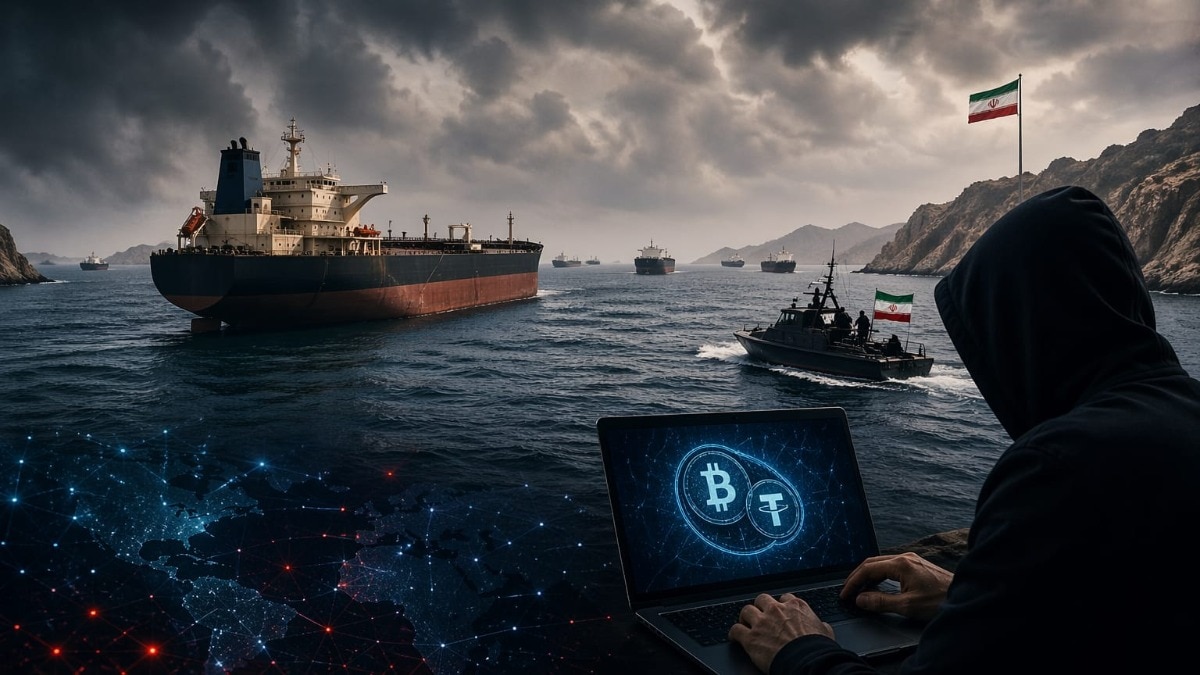
Strait of Hormuz has become a focus of attention as numerous ships remain stranded near this crucial maritime passage. Fraudulent actors impersonating Iranian officials are taking advantage of this predicament by requesting shipping firms to settle payments in cryptocurrency for the passage of their vessels, as highlighted by Greek maritime risk agency MARISKS.
The agency reported that the messages soliciting fees in Bitcoin or Tether were not authored by official Iranian authorities. MARISKS issued a warning to shipowners, declaring, “These particular messages are fraudulent.”
The messages instructed shipping companies to provide vessel documentation for assessment by Iranian security officials. A transit fee would subsequently be established, and only upon payment, the vessel would be permitted to navigate through the strait at a previously agreed time, according to the fraudulent messages cited by MARISKS and reported by Reuters.
This alert has surfaced at a time when the Strait of Hormuz, through which approximately 20% of the global oil and liquefied natural gas flow, has been largely inaccessible for commercial navigation due to ongoing regional conflicts.
The agency indicated that at least one vessel targeted by the scam may have followed the fraudulent directions, as reported by Reuters. On April 18, after Iran temporarily reopened the strait for traffic contingent upon inspections, two vessels, including a tanker, reported coming under fire from Iranian patrol boats, forcing them to retreat. MARISKS noted that it appeared one of these vessels had fallen victim to the scam before making an attempt to pass through.
The Hormuz scam highlights a wider trend of criminal activities linked to cryptocurrency. Data from DefiLlama reveals that losses from hacking events in April 2026 have already exceeded $606 million.
Meanwhile, the situation for shipping in the vicinity continues to be fraught with uncertainty. Over the weekend, LSEG data indicated that at least 20 ships managed to navigate through the strait, but traffic became sparse again following new assaults. In one incident, the Iranian Revolutionary Guard fired upon a tanker, while a container ship was struck by a projectile. Reports indicate that both targeted vessels were flying the Indian flag, and India has expressed serious concerns to Tehran regarding these incidents.
The situation deteriorated after a brief diplomatic effort failed. Iran had momentarily reopened the strait following a US-mediated ceasefire in Lebanon, but subsequently closed it again when Donald Trump declined to lift a US naval blockade on Iranian ports.
The weekend also saw the US Navy engage an Iranian cargo vessel in the Gulf of Oman, leading to its seizure by US Marines. Trump asserted that the vessel had attempted to breach the blockade.
Iran had previously proposed a system in which ships would pay for guaranteed safe passage. Negotiations between the US and Iran, facilitated by Pakistan, are currently underway; however, the prospects for an agreement appear dim. Trump remarked to Bloomberg that extending the ceasefire, which is due to conclude on Wednesday, is “highly unlikely.”