


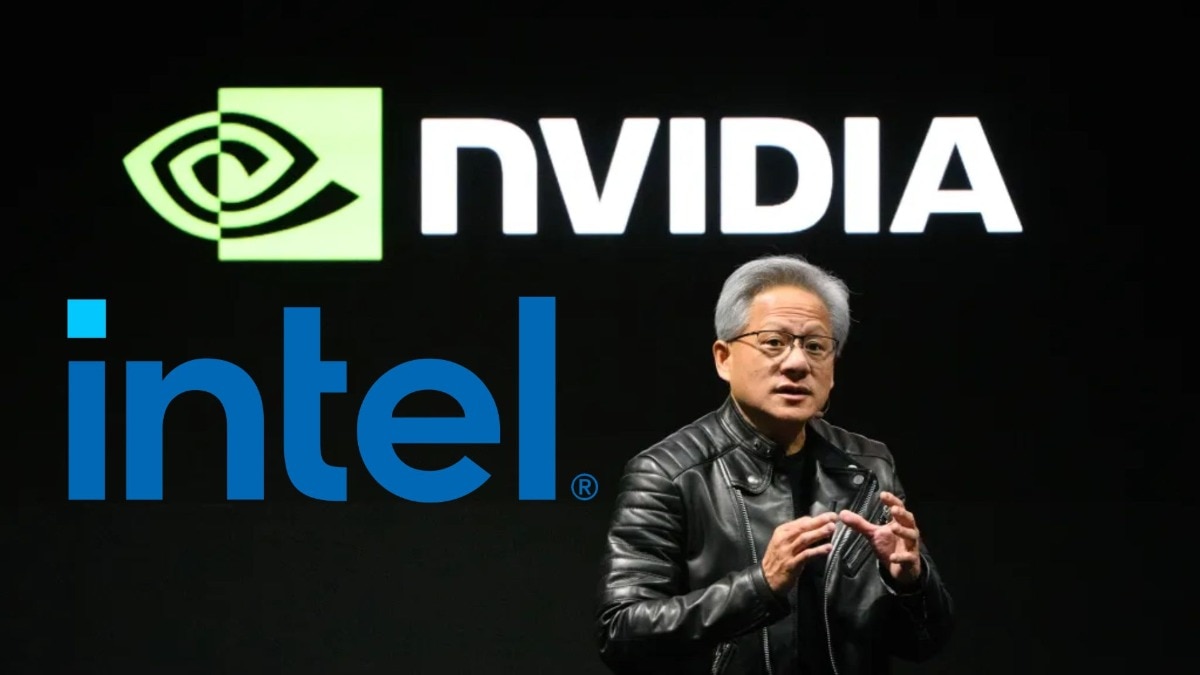
Nvidia Investment in Intel: A New Era for AI and Chipmaking
Nvidia has announced a substantial investment of $5 billion in Intel, which elevates Nvidia to one of the largest shareholders in Intel and provides a significant boost to the struggling U.S. chipmaker.
Details of the Investment
This investment will grant Nvidia a 4% ownership in Intel through the issuance of new shares, leading to a notable increase in Intel’s stock price by 23% on Wall Street. This move follows the U.S. government’s extraordinary decision to acquire a 10% stake in Intel, part of an emergency stabilisation strategy.
Partnership Expectations
Under this new agreement, Nvidia and Intel will collaborate in developing processors for PCs and data centres. However, Nvidia has not signed Intel’s contract chipmaking division to manufacture its GPUs. Instead, Intel’s foundry will focus on supplying central processors and advanced packaging for the combined products.
Leadership Insights
Jensen Huang, CEO of Nvidia, has made it clear that the White House has not played a direct role in this partnership. He indicated that Microsoft and OpenAI have entered into a non-binding memorandum of understanding for their ongoing partnership, adding that the U.S. administration would likely provide support.
Industry Perspectives
Analysts believe that securing Nvidia as a foundry client is essential for Intel to rejuvenate its manufacturing division. Nancy Tengler, CEO of Laffer Tengler Investments, remarked that this could signal the initial phase of a potential acquisition or restructuring of Intel among U.S. chip manufacturers. Nevertheless, there remains a possibility that Intel might continue as a diminished entity but manage to endure.
Financial Details
Nvidia is set to pay $23.28 per share for its investment, which is lower than Intel’s closing price of $24.90 on Wednesday yet above the $20.47 paid by the U.S. government. Following the announcement, Nvidia shares experienced a rise of 3.8%.
Additional Funding for Intel
Intel has also successfully secured $2 billion from SoftBank and an additional $5.7 billion from the U.S. government, significantly bolstering its cash reserves.
Market Implications
Experts caution that this arrangement may pose risks to TSMC and AMD. Taiwan’s TSMC is currently known for manufacturing Nvidia’s leading processors, whereas AMD poses competition to Intel in providing data centre chips. David Wagner, a portfolio manager at Aptus Capital Advisors, noted that while AMD has been gaining market share in desktops and laptops, Nvidia’s partnership with Intel might present a more considerable long-term risk to TSMC’s operations.
Future Outlook for Intel
Lip-Bu Tan, Intel’s new CEO appointed in March, has committed to more efficient operations and careful factory expansions. The collaboration with Nvidia is viewed as crucial in repositioning Intel as a notable contender in the AI sector.
Custom Processor Development
Both companies aim to create tailored Intel processors that will integrate seamlessly with Nvidia’s AI chips using unique interconnect technology. This advancement is expected to foster quicker communication between CPUs and GPUs. Analysts suggest that this could result in Intel benefiting from every Nvidia AI server sold, challenging Broadcom’s current dominance in chip-to-chip solutions.