Oppo K13 Turbo 5G: A Game Changer for Performance
Oppo’s K13 Turbo 5G presents remarkable mobile hardware advancements that tackle a common issue for gamers and heavy users: maintaining sustained performance. From active cooling fans to a robust 7,000mAh battery and the advanced MediaTek 4nm Dimensity 8450 chipset, this smartphone is crafted to handle demanding tasks. It’s loud, unapologetic, and solely focused on heat management and performance.
Starting at ₹27,999, the K13 Turbo 5G does not shy away from being an affordable device. Its goal is to surpass every competitor in its category, and it largely succeeds.
Design and Build: Functionality Before Aesthetics
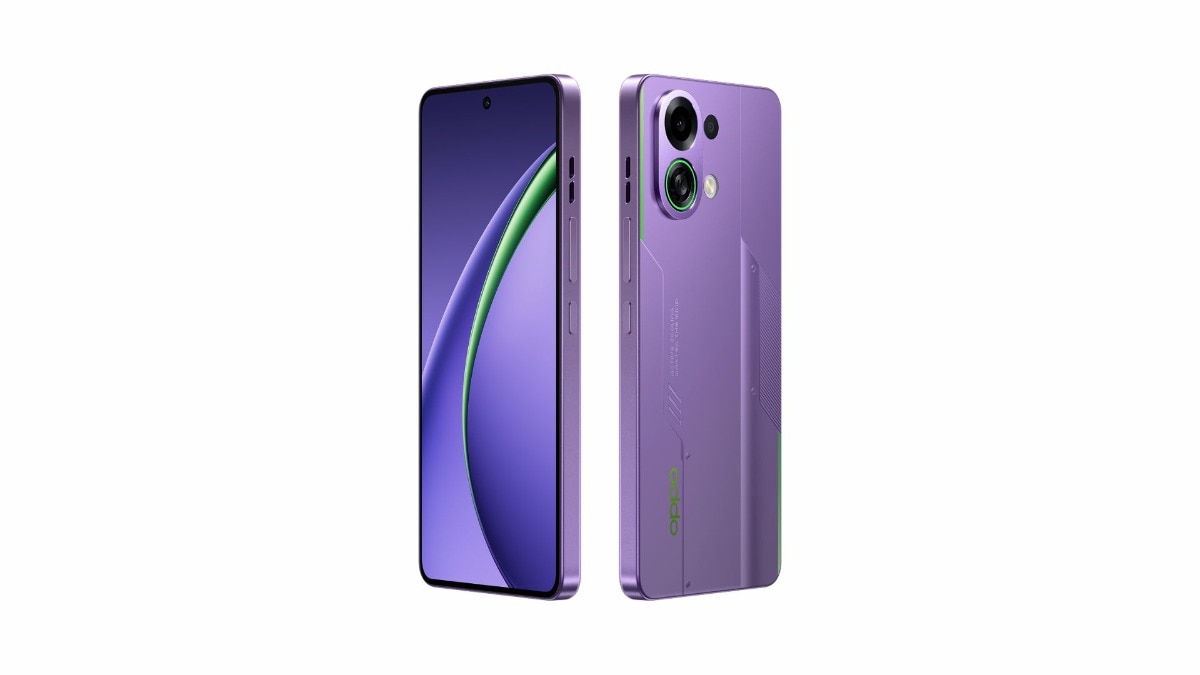
The design philosophy here prioritises practicality over aesthetics. The K13 Turbo is not attempting to blend into the premium segment. Instead, its gaming-inspired design stands out with a uniquely styled back, sharp edges, and two significant cut-outs resembling camera lenses—actually air vents for the built-in fan.
Yes, it features an actual fan—not merely a vapour chamber. This active 18,000rpm centrifugal fan activates when thermal conditions require it, a bold feature typically seen in accessories rather than smartphones. This marks a first in India.
The 6.8-inch AMOLED display is flat, large, and vibrant. It peaks at 1,600 nits, supports a 120Hz refresh rate, and delivers 10-bit colour. Though the bezels aren’t as thin as those on flagship models, the display’s clarity and touch responsiveness are ideal for competitive gaming. It also features glove mode and Oppo’s custom “Splash Touch” technology that enhances accuracy in wet or sweaty scenarios, acknowledging real-world usage.
Weighing 207 grams, the device’s weight is expected given the large battery and cooling system, yet it is well-balanced and comfortable enough for prolonged use.
Performance and Cooling: Superior to Competitors
Now, let’s discuss the standout specification: the Dimensity 8450. This MediaTek system-on-chip is exceptionally capable. Manufactured using TSMC’s 4nm process, it pairs with LPDDR5x RAM and UFS 4.0 storage, which significantly boosts read/write speeds for app launching and file transfers.
In benchmark results, the K13 Turbo achieves over 1.6 million on AnTuTu, comfortably outpacing many Snapdragon 7-series chips and even nearing the lower spectrum of 8 Gen 2 performance.
However, numbers tell only part of the story. The real highlight during practical use is how cool the phone remains under load. A 45-minute gaming session of BGMI at 120FPS showed no frame drops and only slight warmth near the camera area, a common issue with most devices.
The fan makes a difference, but the larger thermal design contributes as well. Oppo has integrated a 7,000mm² vapour chamber, thermal gel rated at 2,000 W/mK, and a sophisticated L-shaped airflow duct. This results in maintaining a temperature difference of just 1.2°C on the hand during gaming, which is remarkable for this price range.
Gamers will enjoy custom features included in ColorOS 15, such as footstep enhancement, one-tap screen recording, and silent launch to limit notifications during gameplay. It’s not solely about hardware; Oppo has optimised the user experience from end to end.
Battery and Charging: A Long-Lasting Companion
A 7,000mAh battery would have seemed absurd just a couple of years ago, but now it’s a sought-after feature.
The K13 Turbo faces demanding tasks with ease and can last through two days with moderate usage. Even with heavy gaming, it rarely pushes users to charge before the day is over.
When it’s time to recharge, the 80W SuperVOOC charger fully charges the device in under an hour. Bypass charging allows for gaming while plugged in without stressing the battery, which should enhance its lifespan. Additionally, reverse wired charging is available for accessories or another device.
Cameras: Functional, Not Impressive
Here’s where the K13 Turbo’s ambition falls short. The camera system prioritises functionality over flair.
Featuring a 50MP primary camera with EIS and a basic 2MP depth sensor, it delivers clear shots in daylight with accurate colours. Detail is satisfactory, but low-light performance suffers from noticeable noise. HDR capabilities are limited, with reduced dynamic range.
Video capturing peaks at 4K 60FPS for the rear and 1080p 30FPS for the 16MP front camera. The absence of optical image stabilisation means stability depends entirely on software.
Essentially, this device is not for creative professionals but rather serves general documentation purposes, suitable for scanning papers, capturing occasional meals, and posting on social media. Anyone seeking DSLR-level output should consider alternatives.
Software and AI Features: Practical Yet Colourful
The K13 Turbo comes equipped with Android 15, layered with Oppo’s ColorOS 15 interface. Users may either appreciate or overlook its visual style, but it undeniably comes packed with features.
AI tools such as Eraser 2.0, Ultra Clear, and Reflection Remover prove useful, even if not always flawless. Additionally, the voice assistant offers real-time translation and document summarization functionalities, aimed more at practicality than gimmickry.
Oppo guarantees two years of Android OS updates and three years of security patches, which is a fair commitment but not industry-leading.
Verdict: A Serious Choice for Gamers on a Budget
The Oppo K13 Turbo 5G doesn’t pretend to be all things to all people. It strategically focuses on performance, thermals, display, and battery life, excelling in these areas.
With a starting price of ₹27,999 (or ₹24,999 during promotional offers), this device is designed for users prioritising frames per second over photographic quality. If a phone serves as a gaming console, a screen for videos, or an all-day productivity tool, this is a strong value proposition.
It may not suit everyone; casual users might find it overly engineered, and content creators might desire more from its camera capabilities. However, for mobile gamers and power users looking for a device that avoids overheating, lag, or rapid battery drain, the K13 Turbo 5G is the standout choice in the mid-range segment.