“`html
Galaxy A17: The Evolution of Mid-Range Smartphones
The Galaxy A17 is positioned as the successor to the Galaxy A16, which enjoyed significant sales success in India last year. In terms of specifications, the A17 maintains familiar features: a 6.7-inch display, a 5,000mAh battery, and a similar triple-camera setup. Key new features include optical image stabilisation (OIS) and the inclusion of a charger in the box, addressing a prevalent concern with its predecessor. Additionally, the A17 aims to stand out by offering long-term software support, a feature that is becoming increasingly rare in its price range.
Design and Display: A Combination of Classic and Modern
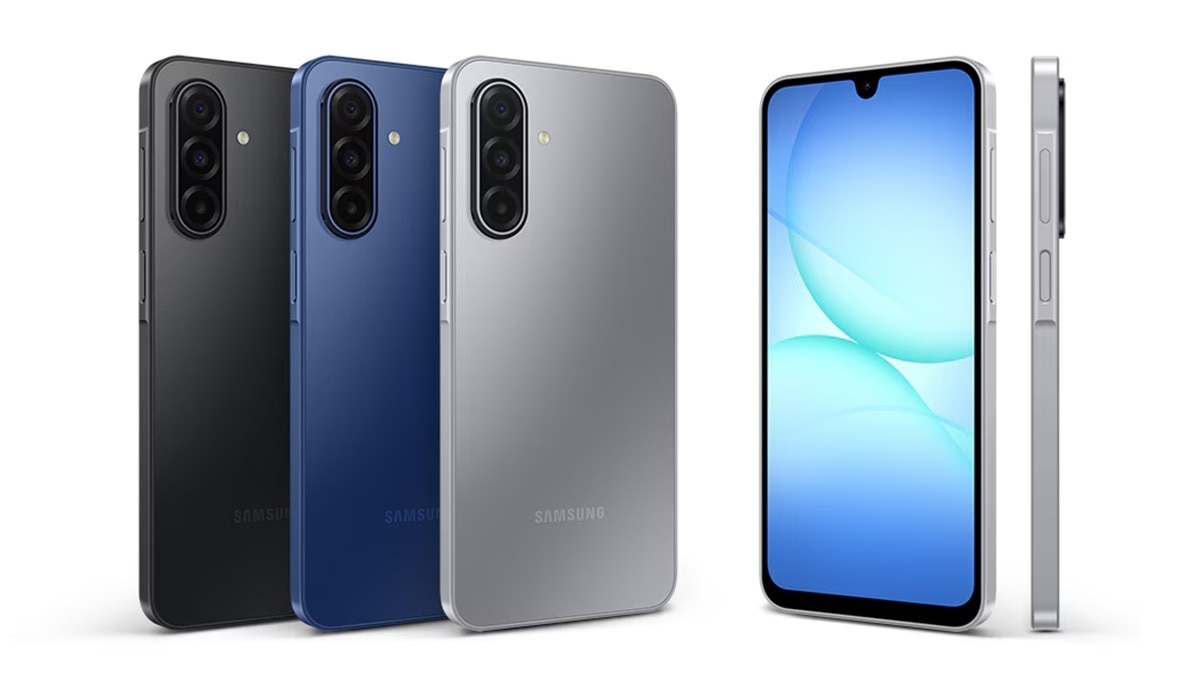
The Galaxy A17 showcases a minimalist design with a slender triple-camera module positioned on the back. Though larger in size, it remains surprisingly easy to handle. Samsung provides the A17 in Grey, Black, and Blue, with the Blue variant reminiscent of the Galaxy Z Fold 7’s Blue Shadow. The back panel has a subtle shimmer under sunlight, adding a touch of elegance. Protected by Gorilla Glass Victus, the front has an IP54 rating for dust and water resistance, although this is modest compared to other models that offer up to IP69 protection.
However, the front design of the A17 could be seen as outdated, featuring a U-shaped notch while many competitors favour punch-hole designs. The bezels are thicker compared to other offerings under Rs 20,000, which slightly detracts from the immersive experience provided by the AMOLED display. Nonetheless, the 6.7-inch FHD+ Super AMOLED screen remains bright and fluid, with a 90Hz refresh rate. The vibrant colours and high visibility during direct sunlight make it one of the standout displays in its class.
Performance: Adequate for Everyday Use, but Limited for Gaming
The Galaxy A17 runs on the Exynos 1330 chipset built on a 5nm architecture. While it performs reliably for daily operations, it falls short against competitors like the Realme P4 and Infinix GT 30. Benchmark scores show that the A17 is lower in AnTuTu tests but performs adequately in Geekbench multi-core assessments.
For general tasks, the device is capable of managing apps, browsing, and streaming without much delay. However, for gaming enthusiasts, the performance is only satisfactory for casual play, with prolonged gaming sessions potentially leading to noticeable heat, especially during intensive titles like Call of Duty Mobile. Less demanding games such as BGMI and Real Racing 3 operate smoothly without overheating issues. Overall, it serves daily users well, but power users may find it lacking when compared to similar devices.
Software and Customisation: Leading the Budget Segment
A standout feature of the Galaxy A17 is its software. Operating on One UI 7 layered over Android 15, Samsung guarantees six years of software updates, which is unmatched in the budget segment. The interface is streamlined, comprising only 49 pre-installed apps, making it less cluttered than many rivals. One UI 7 boasts significant customisation options, allowing users to personalise menus, themes, keyboards, and messaging settings. The Good Lock app from Samsung offers even deeper customisation for those keen on fine-tuning every aspect of their smartphone.
Cameras: Strong Capabilities in Low-Light Conditions
The camera arrangement is both practical and versatile. The 50MP primary lens equipped with OIS performs well across various shooting conditions. While daylight photos are decent, they may not outperform photos taken by rivals in terms of colour accuracy and detail clarity. Portrait shots exhibit impressive skin tone reproduction and sharpness, while selfies are generally smooth and ready for social media, though lacking in detail compared to some competitors.
The Galaxy A17 excels in low-light photography, producing night images with well-controlled light, minimal noise, and excellent detail retention. Compared to the Moto G96, the A17 tends to offer cleaner and more balanced low-light images without necessitating a dedicated night mode. Ultra-wide images are visually appealing, although slight distortions become noticeable upon zooming in. All things considered, the camera system is reliable, especially for photography enthusiasts who favour varying lighting conditions.
Battery Life: Solid Yet Not Market-Leading
The 5,000mAh battery is accompanied by 25W charging, and Samsung now includes the charger with the device. Real-world charging from 20% to full takes slightly over an hour, which is decent but falls short of many competing devices that emphasise faster charging and more substantial batteries. In battery endurance tests conducted with PCMark, the phone achieved nearly 10 hours of usage, which is fairly average for its segment. Generally, users can expect a full day of standard usage, with heavy tasks possibly necessitating an evening recharge.
The Galaxy A17 brings valuable enhancements over the A16, including OIS for the main camera, a charger bundled in the box, and an impressive commitment to six years of software updates. It offers a vibrant display, sleek design, and reliable low-light photography. However, the performance is relatively modest, charging speed is slower than some competitors, and the notch design may seem dated. Priced starting at Rs 18,999, it remains a commendable option for those prioritising display quality, long-term software support, and dependable cameras over raw performance.
“`