Highlights
- 1 Galaxy XR: A Revolutionary AI-Native Headset
- 1.1 First Product of the Android XR Platform
- 1.2 Statements from Leadership
- 1.3 Intuitive Multimodal Experiences
- 1.4 Advanced Features and Comfort
- 1.5 Compatibility and Flexibility
- 1.6 Enhanced Productivity and Entertainment
- 1.7 Powerful Performance with Snapdragon Technology
- 1.8 Enterprise Applications
- 1.9 Future Developments in XR Technology
Galaxy XR: A Revolutionary AI-Native Headset
Galaxy XR is Samsung’s latest introduction, an AI-native headset poised to redefine immersive experiences across various domains like work, play, and exploration. The device was unveiled in Seoul and signifies the inception of the Android XR ecosystem, developed in partnership with Google and Qualcomm Technologies.
First Product of the Android XR Platform
As the inaugural product on the new Android XR platform, Galaxy XR combines cutting-edge AI with extended reality (XR), enabling seamless interactions through voice commands, visual recognition, and gesture control. This launch represents the commencement of Samsung’s long-term journey in XR, which aims to include AI-oriented glasses and further innovative hardware.
Statements from Leadership
According to Won-Joon Choi, who serves as the Chief Operating Officer of the Mobile eXperience (MX) Business at Samsung Electronics, Galaxy XR initiates an entirely new ecosystem of mobile devices. The combination of Android XR and Galaxy XR unveils a new frontier for mobile AI, advancing XR from a conceptual stage to tangible everyday use for both consumers and industries.
Sameer Samat, President of Android Ecosystem at Google, remarked that Android XR represents the first platform designed specifically for the Gemini era. He expressed excitement over the substantial advancements made with the launch of Galaxy XR, emphasising that the collaboration with Samsung will foster innovative ways for exploration, connection, and creation, forging a unified platform for the next chapter in computing.
Alex Katouzian, Group GM of Mobile, Compute & XR at Qualcomm Technologies, indicated that Galaxy XR reflects a forward-looking vision where AI and XR synergise to enhance personal computing possibilities. He expressed enthusiasm about the collaboration, noting that Galaxy XR will introduce new applications across various sectors and facilitate compelling multi-device experiences.
Intuitive Multimodal Experiences
The Galaxy XR is built on multimodal AI capabilities, allowing for intuitive experiences that integrate sight, sound, and motion. With Gemini AI embedded at the system level, it is capable of understanding users’ environments and responding in a natural manner, leading to fluid interactions reminiscent of human communications.
Advanced Features and Comfort
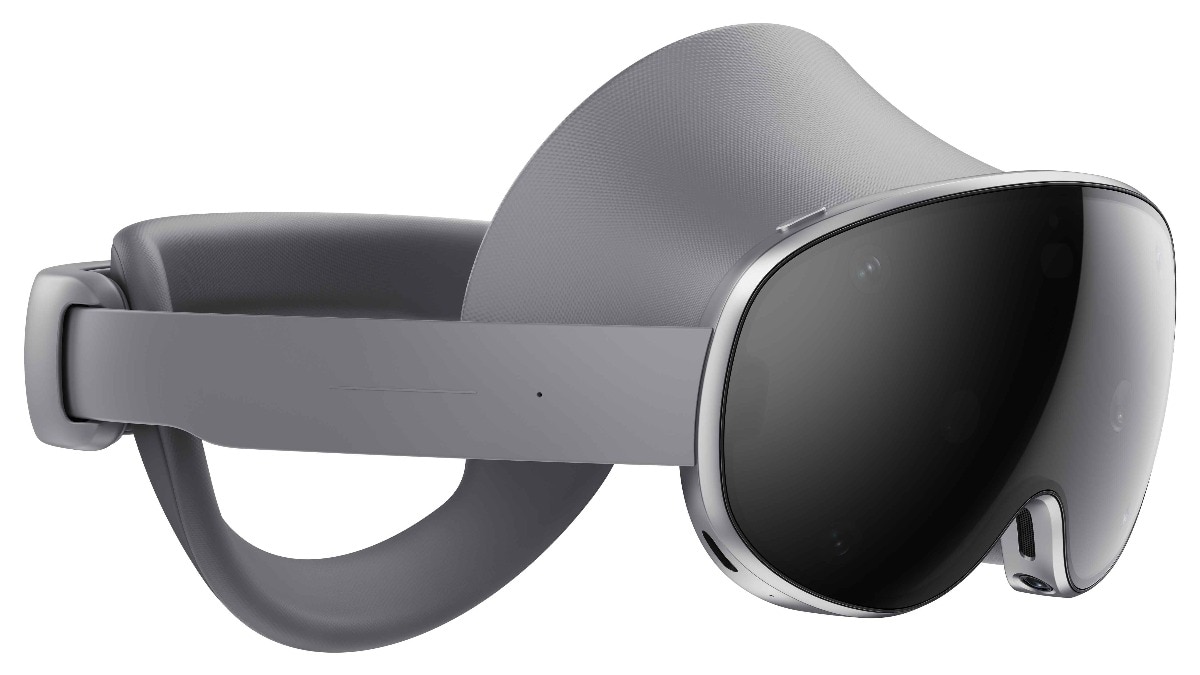
This headset is equipped with sophisticated sensors and cameras that effectively track head, hand, and eye movements, ensuring precise user control. It features a separate battery pack to minimize weight for enhanced comfort, along with a detachable light shield that permits users to alternate between immersive and open viewing contexts.
Compatibility and Flexibility
Galaxy XR is part of an open, scalable ecosystem, allowing support for existing Android applications while adhering to OpenXR standards. This compatibility ensures developers can easily modify applications built on OpenXR, WebXR, or Unity, promoting cross-platform flexibility and a smoother experience for both users and developers.
Enhanced Productivity and Entertainment
The headset introduces unprecedented levels of productivity and entertainment. Users can navigate 3D maps via Google Maps, interact with YouTube and Circle to Search through gestures, and even transform 2D images and videos into 3D immersive experiences.
Powerful Performance with Snapdragon Technology
Powered by the Snapdragon XR2+ Gen 2 chipset, Galaxy XR delivers superior graphics and on-device AI capabilities thanks to the Qualcomm Hexagon NPU. The headset promises up to 2.5 hours of battery life, boasts 4K Micro-OLED displays, and incorporates spatial audio for deeply immersive entertainment.
Enterprise Applications
Samsung has also identified enterprise use cases for Galaxy XR, collaborating with Samsung Heavy Industries to investigate virtual shipbuilding training and productivity applications. Working with Qualcomm Technologies and Snapdragon Spaces, Galaxy XR aims to support enterprise-grade solutions aimed at design, training, and collaborative efforts.
Future Developments in XR Technology
Samsung’s roadmap for XR goes beyond the headset, envisioning the release of AI glasses developed alongside Google and prominent eyewear brands such as Warby Parker and Gentle Monster. These upcoming devices are designed to blend style with functionality, integrating smoothly within the Android XR ecosystem.
Galaxy XR is set to be launched on October 21 in the US and October 22 in Korea.