


[ad_1]
Vivo V60 stands out in the mid-range smartphone market. Unlike competitors focused solely on high performance, Vivo has prioritised a combination of premium aesthetics, exceptional battery longevity, and photography capabilities that users will cherish. Arriving five months after its predecessor, the V50, the V60 comes equipped with a notable 6,500mAh battery, an enhanced display, a fresh design, and Qualcomm’s Snapdragon 7 Gen 4 processor. While not the fastest device under ₹40,000, it caters to those who value endurance and style over sheer speed.
Design: Sleek and Surprisingly Tough
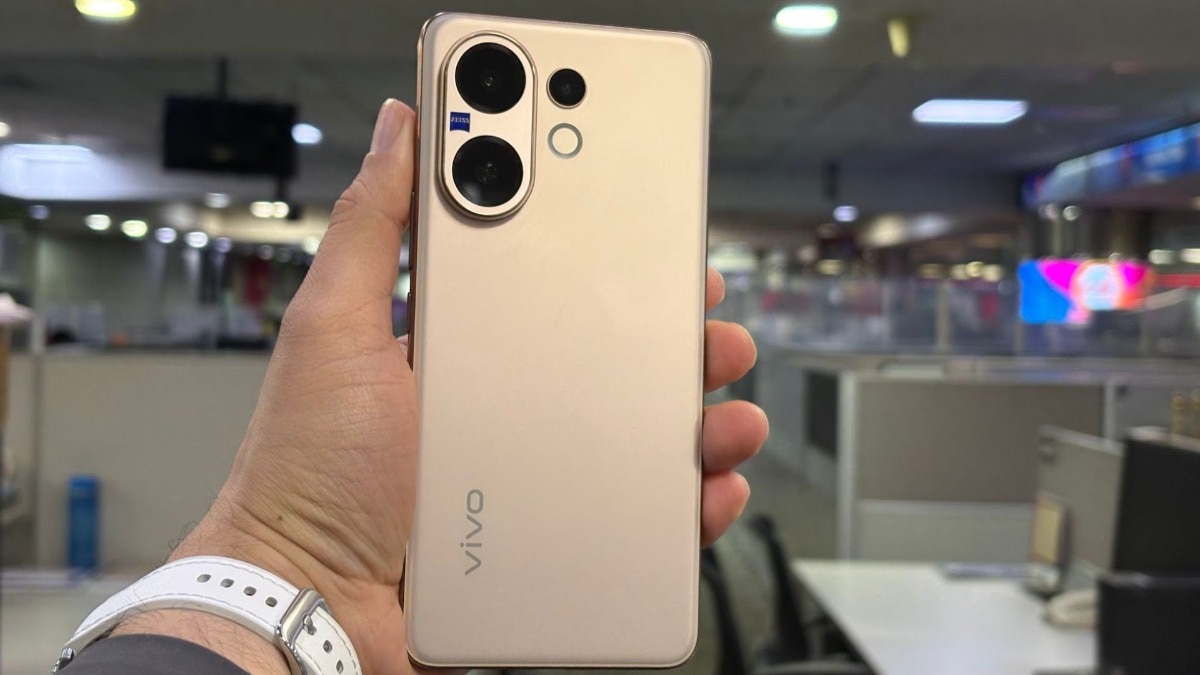
The V60’s design resembles the higher-end X series models more than its V-series predecessors. The prominent circular camera from the V50 has been replaced with a more streamlined pill-shaped module, featuring three sensors and Zeiss branding. The Auspicious Gold variant has a rather bold logo, but its matte finish effectively resists fingerprints better than most glass surfaces.
Durability is a standout feature of the V60. It boasts both IP68 and IP69 ratings, ensuring protection against dust, rain, and even high-pressure water jets. Vivo utilises Schott Core glass for superior drop resistance, offering a level of durability rarely found in this price segment.
All of this is encapsulated in a body measuring just 7.5mm thick and weighing under 200 grams, even with a substantial battery included. The curved edges enhance comfort during use, although the glossy finish can feel somewhat slick.
Display: Bright Enough to Outshine Flagships
The 6.77-inch AMOLED display maintains the same specifications as the V50, with a 1.5K resolution and a 120Hz refresh rate, but Vivo has increased peak brightness to an impressive 5,000 nits. HDR content appears vibrant, from the dramatic shadows of The Batman to the vivid explosions in action films. At night, the panel dims to a gentle 2.3 nits, easing eye strain, and its default colour tuning is slightly warm, making extended viewing comfortable.
Slim bezels and delicately micro-curved edges give the device a premium feel compared to competitors. One minor drawback is the always-on display which remains fixed at 120Hz, potentially wasting battery.
Performance: Not Geared for Gamers, and That’s Acceptable
The Snapdragon 7 Gen 4 processor performs adequately but lacks top-tier credentials. Benchmarks indicate around 1 million points on AnTuTu, falling short of the Snapdragon 8 Gen 3 and Dimensity 9400e that power rivals like the OnePlus 13R and Realme GT 7. Daily tasks, including scrolling and app management, run smoothly, especially with the 12GB of RAM present in this model.
However, gaming reveals its limitations. Genshin Impact can only be played at lower settings, and while BGMI performs well on high graphics, it is not designed as a gaming powerhouse. The positive aspect is its thermal management; even after significant gaming periods, the device remains only moderately warm.
Vivo has improved software support, promising four years of OS updates and six years of security patches, which is competitive with many flagship devices, although FunTouchOS still includes numerous pre-installed applications.
Cameras: Zeiss Influence with Some Quirks
The V60 features a triple-camera configuration akin to the Vivo X200 FE: a 50MP Sony IMX776 main sensor, an 8MP ultrawide, and a 50MP telephoto lens with 2x optical zoom. Zeiss branding is prominent, offering portrait filters and bokeh modes named Sonnar and Planar, along with a dedicated Wedding Portrait Studio and Wedding Vlog mode that conveniently incorporates filters and music.
In daylight, images are vibrant and ready for Instagram, though sometimes at the cost of realism. The default settings tend to oversaturate colours, but enabling the Zeiss mode helps recreate more natural hues. Portrait photography impresses, particularly with the telephoto lens delivering sharp skin tones and cinematic backgrounds.
However, low-light performance tends to struggle. Images often exhibit grain and lens flares, and while the night mode assists, it doesn’t quite match the low-light capabilities of competitors like OnePlus and Realme at this price point.
The selfie camera is competent, capturing ample detail and offering similar portrait features as the rear cameras.
Battery: The True Highlight
The pivotal reason to choose the V60 is undoubtedly its battery. The 6,500mAh cell ranks among the largest in its category and supports 90W fast charging. In PCMark’s battery benchmarks, it surpassed 19 hours, and in typical usage, it consistently provided a day and a half of active use, with around 10–11 hours of screen-on time. Recharging takes approximately an hour from zero, which is reasonable for a battery of this capacity.
Verdict: For Those Seeking Balance, Not Just Specifications
The Vivo V60 does not dominate in benchmark comparisons, and while its cameras are enjoyable and versatile, they are not without flaws. However, as an everyday smartphone, it excels in the essentials: a slim and sturdy design, a stunning display, impressive battery life, and reliable performance. While gamers or those seeking top-tier night photography might want to consider other options, those in search of a dependable and stylish phone that remains functional after others have drained will find significant value in the V60.
[ad_2]