Highlights
Nobel Prize in Physics 2025 for Breakthroughs in Quantum Mechanics
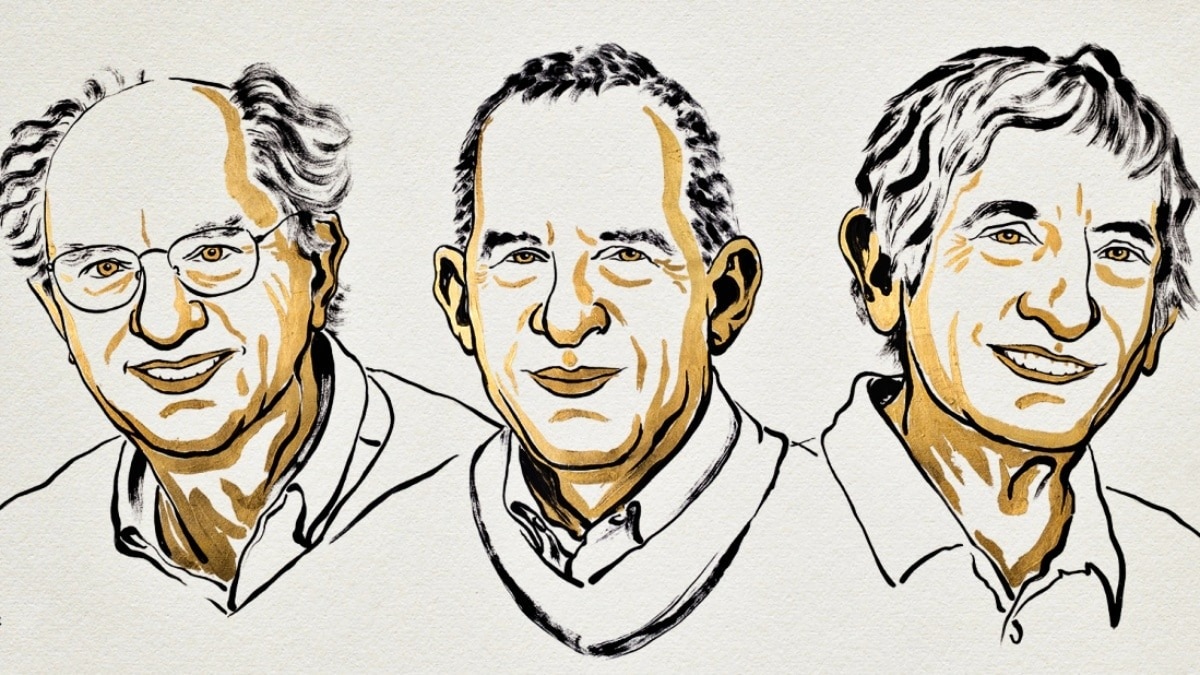
The Nobel Prize in Physics 2025 has been awarded to John Clarke from the University of California, Berkeley, Michel H. Devoret of Yale University and the University of California, Santa Barbara, and John M. Martinis from the University of California, Santa Barbara.
The Royal Swedish Academy of Sciences acknowledged their innovative contributions to the discipline, honouring them for their discovery of macroscopic quantum mechanical tunnelling and energy quantisation in an electric circuit, marking a historic achievement in showcasing quantum phenomena at a human scale.
BREAKING NEWS: The Royal Swedish Academy of Sciences has announced the 2025 Nobel Prize in Physics to John Clarke, Michel H. Devoret, and John M. Martinis “for the discovery of macroscopic quantum mechanical tunnelling and energy quantisation in an electric circuit.”
— The Nobel Prize (@NobelPrize) October 7, 2025
The Groundbreaking Experiment
For many years, a key question in physics has concerned whether quantum mechanical effects, typically observed at the atomic and subatomic levels, could be detected in larger, more tangible systems.
Clarke, Devoret, and Martinis achieved a historic milestone by designing superconducting circuits during the 1980s, incorporating Josephson junctions that separate a superconductor with a thin insulating layer. Their experiments defied conventional expectations by revealing that substantial circuits could demonstrate quantum effects.
By channeling current through these circuits, they discovered the collective charge behaviour of the circuits to be perceived not as separate particles but as one coherent macroscopic quantum object. Their revolutionary work illustrated that these large circuits could experience quantum tunnelling—a phenomenon where a quantum system traverses a barrier instead of overcoming it, challenging classical physics.
Even more impressively, the trio confirmed that the energy levels of their circuit were quantised. Following the predictions of quantum theory, they found that the circuit absorbed and released energy only in specific increments, thus validating essential quantum principles.
This discovery artfully transitioned quantum physics from the microscopic domain into the realm of engineered devices, altering academic perspectives and igniting a revolution in quantum technology. Their pioneering efforts have paved the way for advancements in quantum computing, cryptographic systems, and extremely sensitive quantum sensors—fields poised to radically transform the technological landscape.
Olle Eriksson, Chair of the Nobel Committee for Physics, remarked on the importance of celebrating the continuous surprises offered by century-old quantum mechanics. Eriksson emphasised the profound impact of the laureates on both the foundation of science and the trajectory of digital technology.
The Legacy of the Laureates
The contributions of these three scientists hold a lasting legacy in modern technology, influencing everything from the transistors and microchips that are essential in today’s electronic devices, to the futuristic potentials of quantum computers. These advancements are set to tackle challenges that surpass the limits of classical computing.
History of Nobel Prizes
The Nobel Prizes, initiated by Swedish inventor Alfred Nobel in 1896, come with a cash award of 11 million Swedish kronor (over €997,000). Since their inception, there have been 118 Nobel Prizes in Physics awarded, with legendary figures like Marie Curie, one of only five women to receive this accolade, winning in 1903.
Last year’s Nobel Prize in Physics was awarded to John Hopfield and Geoffrey Hinton in recognition of their contributions to artificial intelligence and machine learning.
The remaining Nobel Prizes for 2025, encompassing chemistry, literature, and peace, will be revealed later this week, with the announcement of the economics prize set for October 13.
This December, the Nobel laureates will be presented with their awards during a highly anticipated ceremony in Sweden, an event that captivates both the scientific community and the general public.