Highlights
The Future of Work: AI’s Impact on Middle Management
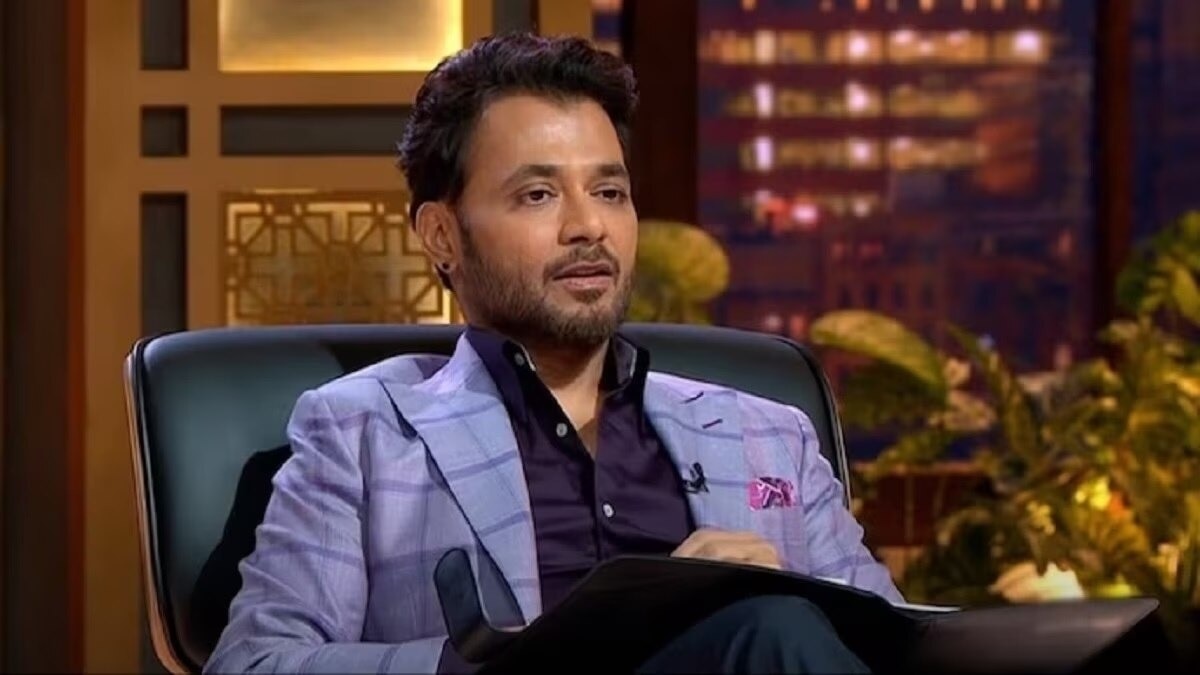
For many years, the predominant concern regarding artificial intelligence has centred on the belief that it will displace engineers, developers, and various other skilled technical professionals. However, Anupam Mittal, who is the founder and CEO of People Group and a judge on Shark Tank India Season 5, suggests that this anxiety may be unfounded.
In a recent post on LinkedIn, Mittal contended that AI’s primary disruption target is not coders but rather middle management. He noted that AI is set to change fundamentally how businesses define productivity and value.
Why Coders Are More Secure
Even with the swift development of AI-driven code-generating tools, developers remain indispensable to contemporary enterprises. Important tasks such as software writing, product creation, system debugging, and making architectural choices still necessitate human insight, creativity, and accountability.
While AI might hasten the coding process, it does not eradicate the necessity for individuals who comprehend entire systems.
Mittal emphasises that the companies he supports are more streamlined than ever while maintaining a strong technical foundation.
He stated that he invests in businesses generating ₹300-1,000 crore in annual recurring revenue, employing around 50 personnel, and using comprehensive stacks of AI agents. The common denominator here is not a decrease in engineers but a reduction in management layers.
The Knowledge Premium Has Declined
Mittal argues that the actual risk lies within positions that focus on process knowledge instead of tangible output.
He mentioned that in the traditional landscape, seniority served as a means to demonstrate process knowledge and facilitate work coordination. Individuals were compensated for understanding who to contact and how to achieve results. That knowledge premium has now diminished to zero.
AI systems excel in these very functions—routing tasks, summarising data, coordinating workflows, and managing unstructured information—capabilities that were once the main strengths of middle management.
These processes are becoming increasingly automated.
Why Middle Management Faces Risks
Mittal’s evaluation of positions lacking direct responsibility was straightforward. He identified roles like the “VP of Operations” who does not have actual operational duties as being at risk.
In a context of heightened interest rates and stricter capital controls, organisations are scrutinising overheads more closely. Roles focused on coordination that lack quantifiable outcomes are increasingly difficult to justify when AI can perform similar tasks more quickly and affordably.
Mittal stated that if a position primarily revolves around coordination without measurable results, it is viewed as overhead, and in an environment with high-interest rates, overheads are often reduced.
The Emergence of the ‘Individual Contributor Plus’
Instead of a future where AI entirely replaces humans, Mittal envisions one enhanced by empowered individuals.
He refers to this concept as the “Individual Contributor Plus” — professionals capable of building, coding, creating, selling, or aligning teams, all while utilising AI to amplify their effectiveness. He stated that these individuals can perform the work of a 20-person team with the help of AI.
This transition favours practical skills, decision-making, and responsibility over traditional hierarchies and job titles. It also clarifies why engineers, designers, product creators, and sales experts who actively engage with AI are becoming more sought after.
Adapt or Be Automated
Mittal is emphatic that AI is not a cure-all and will not resolve every issue. However, it excels in managing non-deterministic workflows and handling complex data, areas where human managers previously added significant value.
His guidance is straightforward: focus on building, not just managing. He urged individuals to challenge conventional thinking, synthesise quickly, discern critical information from noise, and translate that into informed decisions.