
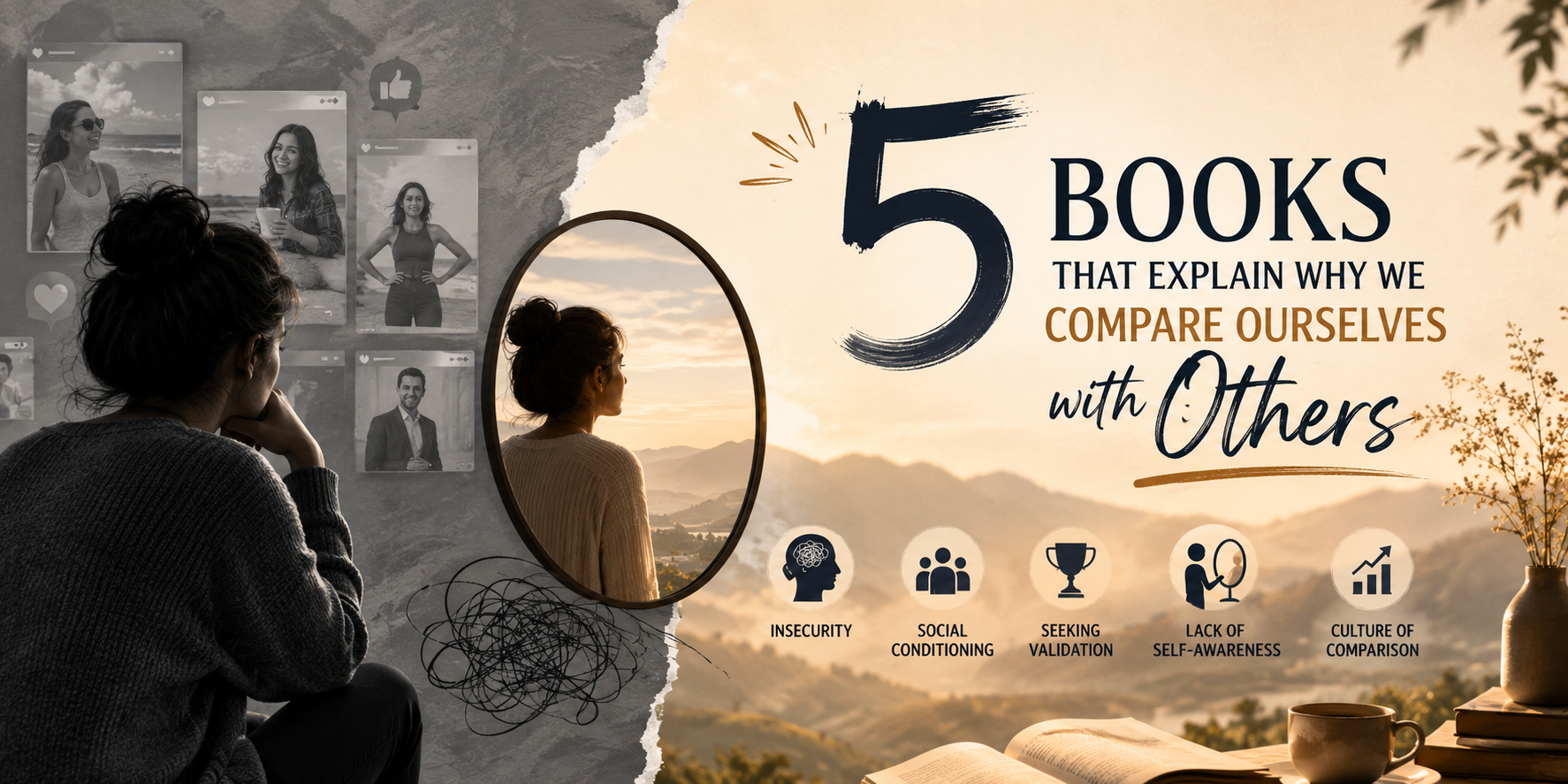
Understanding Comparison: Why We Compare Ourselves with Others
Comparison is a fundamental aspect of human behaviour. Whether it involves measuring one’s achievements against those of colleagues, evaluating lifestyles on social media, or questioning the happiness of others, individuals consistently assess themselves in relation to others. While this act of comparison can sometimes foster growth, it frequently leads to dissatisfaction, anxiety, and a skewed perception of self-worth. Numerous writers, psychologists, and theorists have investigated the reasons behind this tendency and its impact on happiness and personal development. The following five books offer valuable insights into the origins of comparison and provide practical strategies for cultivating a healthier relationship with oneself.
5 Books that Explain Why We Compare Ourselves with Others
1. The Social Animal by Elliot Aronson
Elliot Aronson’s renowned book delves into the psychological mechanisms that influence human behaviour, particularly the inclination to evaluate oneself through social comparison. Drawing from years of research, Aronson illustrates how individuals form self-perceptions based on their observations of those around them. This text clarifies that comparison is not merely a personal flaw; it is an inherent part of human psychology. Gaining an understanding of this natural tendency allows readers to identify when comparison serves a constructive purpose and when it becomes detrimental. Aronson also emphasises the role of social environments in shaping self-esteem and identity.
2. The Happiness Trap by Russ Harris
Russ Harris explores the reasons behind the pervasive feelings of inadequacy that many experience despite achieving success. He asserts that a significant factor is the relentless habit of comparing one’s life to idealised portrayals of others’ experiences. Integrating concepts from Acceptance and Commitment Therapy (ACT), Harris encourages readers to redirect their focus from external standards to personal values. He explains that happiness often eludes individuals when their self-worth is tethered to surpassing others. Genuine fulfilment, he posits, arises from living in alignment with what truly matters to oneself.
3. The Gifts of Imperfection by Brené Brown
Brené Brown’s work concentrates on themes of vulnerability, self-acceptance, and the quest for authenticity. She examines how comparisons often stem from a fear of inadequacy and the pressure to meet unrealistic expectations. Brown contends that comparison flourishes when people believe their worth is contingent upon achievements, appearances, or acceptance from others. Through research findings and personal anecdotes, she motivates readers to embrace their imperfections and cultivate a robust sense of self-worth that is not contingent on relative comparison.
4. Stolen Focus by Johann Hari
In an era defined by social media and perpetual connectivity, comparison has intensified significantly. Johann Hari investigates how contemporary technology influences attention, behaviour, and mental health. His book articulates how digital platforms present carefully curated depictions of success, beauty, and accomplishment. Consequently, individuals frequently measure their mundane experiences against others’ highlights. Hari assesses the psychological ramifications of this trend and offers insights into how to regain focus and diminish unhealthy comparison practices.
5. Mindset by Carol S. Dweck
Carol Dweck’s impactful book introduces the ideas of fixed and growth mindsets. Those with a fixed mindset tend to compare themselves to others, as they perceive their abilities as static indicators of worth. Every success or failure is viewed as a reflection of their value. Conversely, a growth mindset promotes learning and progression over competition. Dweck illustrates how shifting one’s focus from proving oneself to enhancing oneself can mitigate the need for incessant comparison. The book assists readers in viewing the accomplishments of others as sources of inspiration, rather than as threats.
Also Read
5 Teachings from The Happiness Trap for Overthinking Less