
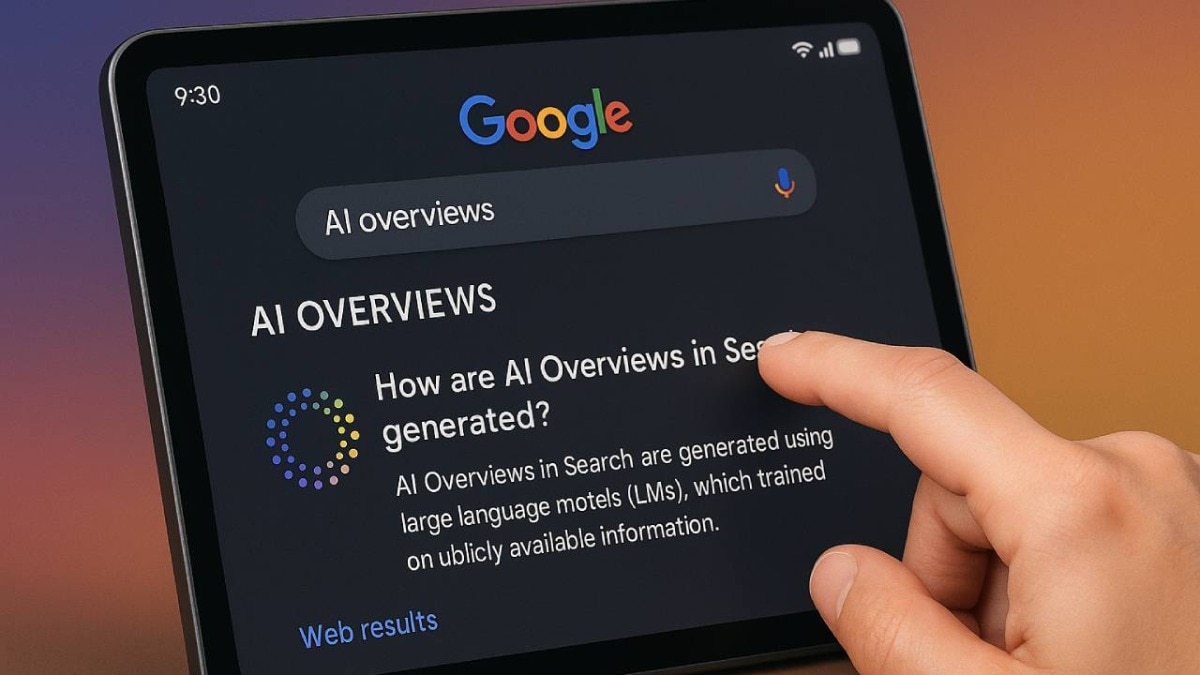
Google Tests AI-Powered News Headline Rewriting
Google is currently evaluating an innovative AI feature that rewrites news headlines in Search results, potentially transforming user content discovery and publisher control.
The AI Experiment in Search
A recent article by The Verge reveals that Google is trialling the replacement of original news headlines from publishers with AI-generated versions in its Search results. The company has confirmed to The Verge that it is conducting a limited trial to modify titles of news articles and content sourced from various websites using artificial intelligence.
The purpose of this initiative is to identify content on a page that aligns well with user queries and serves as a relevant title.
Publisher Concerns Over AI-Powered Headlines
This experiment raises serious concerns for publishers as it targets one of the most essential elements of journalism—the headline.
According to Tarun Pathak, Research Director at Counterpoint Research, journalists carefully craft headlines, considering not only the information but also elements like skepticism, irony, and various perspectives, which require human insight. He noted that the involvement of AI could turn this crucial aspect of journalism into a neutral statement or, worse, something misleading that undermines the content’s intent.
The Impact on Editorial Integrity
Pathak further explained the issue extends beyond the tone of headlines. Headlines serve as a reflection of editorial judgment, context, and positioning. Algorithmically rewriting them could risk losing nuance or altering the intended meaning entirely.
Moreover, Pathak highlighted potential issues surrounding accuracy and proper attribution. There could be prevalent misattributions of authorship due to AI-generated errors or hallucinations in headlines, resulting in reputational damage for publishers.
The Decline in Traffic for Publishers
This headline initiative coincides with an ongoing decline in search traffic that publishers are already facing due to AI changes.
Google’s AI Overviews, which display summarised answers at the top of Search, have notably diminished click-through rates. Reports from Ahrefs indicate that AI Overviews led to a 34.5% decline in clicks in 2025, with a 58% drop affecting top-ranking results.
Simultaneously, zero-click searches, where users find answers without navigating to a website, are sharply increasing. Data from Similarweb illustrates that such searches jumped from 56% to 69% from May 2024 to May 2025.
The Consequences for Publishers
Together, AI-driven summaries and AI-generated headlines could further sever the connection between publishers and their audiences, leading to decreased traffic and monetisation opportunities.
Shifting Focus from Readers to AI
A broader concern revolves around the structural implications of this shift. If AI systems dictate how content is displayed and framed, publishers may begin to prioritise optimisation for machines rather than their human readers.
Pathak mentioned that publishers might shift their focus to make content more snippet-friendly, which could transfer cognitive load onto AI and reduce originality.
He raised the alarm about a scenario where publishers might write primarily to appease AI systems, neglecting the needs of human audiences.
The Future of Media in a Two-Tier System
Pathak painted a picture of a potentially divided future for the media industry if current trends prevail. He indicated a split could occur between mass-market SEO sites that may eventually be fully replaced by AI and high-trust publications that would prosper behind paywalls. This divide appears likely as the situation continues to evolve.