
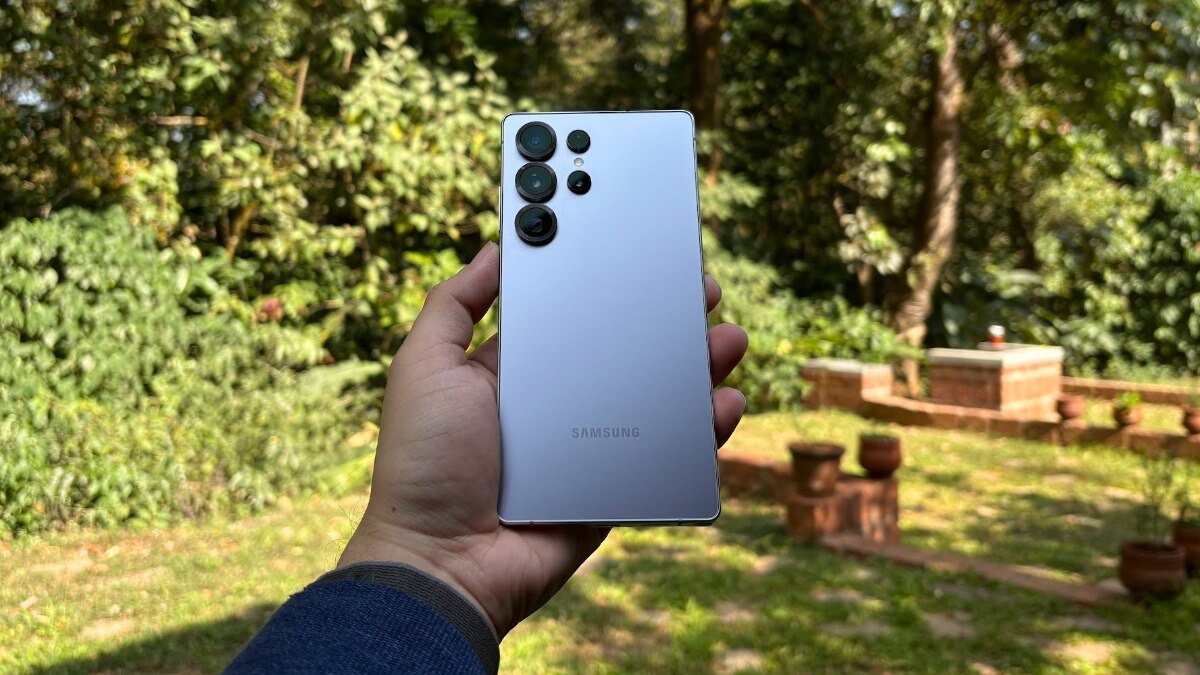
Samsung Galaxy S25 Ultra Review: The Focus on AI
Samsung Galaxy S25 Ultra lands with an emphasis on artificial intelligence, but not much else has changed. The updates this year seem more like software enhancements rather than significant hardware advancements. While it remains Samsung’s most robust flagship, the AI-centric approach may not warrant an upgrade for those who own an Ultra model from the past few years.
Design: Lighter, Squarer, and Still Slippery
A prominent update in the Galaxy S25 Ultra is its reduced weight, as Samsung has trimmed approximately 15 grams from the device, making it easier to hold for prolonged periods. The flatter edges contribute to a more contemporary look, reflecting the design language of Samsung’s foldable devices. Nevertheless, the titanium back is still quite slippery, leading the phone to easily slide on surfaces without a protective case.
The S Pen has also undergone a redesign, becoming slimmer but lacking Bluetooth connectivity. This eliminates the option for air gestures, a function that was seldom used by many. It remains effective for note-taking and sketching, albeit with slightly less versatility than its predecessor.
The Dynamic AMOLED 2X display from Samsung continues to impress. At 6.9 inches, it boasts a Quad HD+ resolution, vibrant colours, and an impressive peak brightness of 2,600 nits. The new Gorilla Glass Armor 2 enhances durability, and after a week of regular use without a screen protector, the display remains scratch-free.
However, there is still no indication of magnetic wireless charging. While Qi2 is supported, this capability is limited to compatible cases. Given the popularity of Apple’s MagSafe ecosystem in the premium market, it is disappointing that Samsung has not fully adopted this technology.
Camera: A Familiar Setup with Minor Tweaks
The camera configuration on the S25 Ultra closely resembles last year’s version, with the noticeable addition of a 50MP ultrawide sensor replacing the earlier 12MP one. This upgrade leads to sharper and more detailed ultrawide photographs, particularly beneficial for landscape and architectural photography.
The primary 200MP camera remains unchanged, delivering excellent detail retention and satisfactory low-light performance. The telephoto system includes a 50MP 5x zoom and a 10MP 3x zoom, with Samsung asserting improved algorithms for clarity at higher zoom levels. However, real-life usage reveals little noticeable improvement in 10x zoom shots compared to last year’s model.
Samsung’s camera processing is known for its bold colours and strong contrast, sometimes compromising the natural appearance of images. When compared to Google’s Pixel 9 Pro, which aims for a more balanced rendering, the S25 Ultra delivers richer reds and blues, which some users may perceive as oversaturated.
For videography, the S25 Ultra supports 4K recording at up to 120fps, a feature that makes it a standout among its smaller counterparts. While 8K recording remains an option, it is limited to 30fps. The introduction of a Log video mode enhances post-production flexibility, making it more akin to professional video recording.
One notable AI feature is Samsung’s Audio Eraser, designed to eliminate background noise from videos. While it performs well in quieter settings, it encounters challenges in noisier environments, similar to Google’s Magic Audio Eraser.
Performance: AI at the Forefront
The Snapdragon 8 Elite for Galaxy powers the S25 Ultra, ensuring seamless performance overall. With 12GB of RAM, multitasking is straightforward, and demanding applications function smoothly. However, the primary emphasis is on AI.
Samsung’s Personal Data Engine analyses usage habits to provide predictive insights, such as Now Brief, which summarises daily schedules and notifications. While it provides convenience, it may feel like an unnecessary addition for those already adept at managing their own digital routines.
AI Select, Samsung’s response to Google’s Circle to Search, enables users to highlight text or images for quick actions like translation or shopping recommendations. While it is functional, it is not revolutionary, especially given that similar tools are already offered by Google.
Battery life remains impressive, with a 5,000mAh capacity allowing for all-day usage. The efficiency gains from the Snapdragon 8 Elite contribute to battery longevity, though the real-world improvements are modest. Users can expect around 24 hours of usage on a full charge, similar to the previous model.
Is the Upgrade Justified?
For individuals already using a Galaxy S24 Ultra or even an S23 Ultra, there is little impetus to rush for an upgrade. The decrease in weight is a positive change, the ultrawide sensor is improved, and the AI features offer added convenience; however, these do not significantly transform the phone’s performance.
Those transitioning from older devices or switching from different brands will find the S25 Ultra to be one of the most powerful Android flagships currently available. Nevertheless, with few hardware alterations and a heavy reliance on AI, Samsung’s latest Ultra seems more like a modest update rather than a significant innovation.
With a price tag of ₹1,29,999 for the 512GB/12GB variant, unless a favourable trade-in deal is available, it may be wise to wait another year to see if Samsung can provide more than mere AI advancements.